Decoding Pappy: A Deep Dive into the Van Winkle Lineup from 10 to 25 Years
Welcome back, whiskey lovers! If you have ever stared longingly at a back bar behind velvet ropes, wondered what all the fuss is about regarding allocated bourbon, or tried to wrap your head around why some bottles command the price of a used car, you are in the right place. Today, we are taking a long, comprehensive look at arguably the most famous family of whiskeys in the world: the Old Rip Van Winkle lineup. From the ten-year-old introductory expression all the way up to the ultra-rare twenty-five-year bottling, we are going to break down every single nuance of these legendary pours. More importantly, we are going to explore why many seasoned enthusiasts and industry insiders consider the fifteen-year expression to be the ultimate sweet spot.
Before we dive deep into the tasting notes, barrel strategies, and market realities, I want to invite you to check out our related podcast episode, Pappy Van Winkle Bourbons & Cigars with Preston Van Winkle; Ep. 81. In that conversation, we sat down with Preston Van Winkle himself to talk shop, unpack family history, and enjoy a pour alongside some fantastic Pappy-branded cigars. If you want the inside scoop straight from the family's mouth, you definitely want to give that episode a listen after you finish reading this piece!
Introduction to the Legend of Old Rip Van Winkle
It is nearly impossible to talk about American whiskey without mentioning the name Van Winkle. For better or worse, the brand has become a cultural touchstone. It represents the pinnacle of unicorn hunting for collectors and the holy grail for casual fans walking into a liquor store hoping to strike gold. But beneath all the glittering hype, the secondary market absurdity, and the annual release day frenzy lies a genuine historical whiskey legacy. The story of Pappy Van Winkle is not just about fancy bottles and astronomical price tags; it is a story of resilience, independent blending heritage, and an unwavering commitment to a specific style of wheated bourbon.
When people talk about the Van Winkle lineup, they are usually referring to a family of whiskeys that spans several age statements and mash bills. But what makes these bottles taste so distinct? Is it purely the age, or is there a deliberate methodology behind the craft that keeps people coming back decades after the brand's modern resurgence? To truly understand the lineup from 10 to 25 years, we need to take a step back and look at how this legendary brand came to be.
The History and Heritage: From Pre-Prohibition to Stitzel-Weller
The roots of the Old Rip Van Winkle label stretch way back before Prohibition. Julian Julian P. "Pappy" Van Winkle Sr. started his journey in the whiskey business as a salesman for the W.L. Weller and Sons company, eventually working his way up to partner and helping build the iconic Stitzel-Weller Distillery in Louisville, Kentucky. Stitzel-Weller became famous for its wheated bourbon recipes—substituting wheat for the traditional spicy rye grain in the mash bill, resulting in a much softer, sweeter, and more approachable spirit.
However, the turbulence of the twentieth century brought massive changes. The family eventually sold off the Stitzel-Weller distillery in the early 1970s, but they held onto an old label: Old Rip Van Winkle. For years, the brand operated as an independent bottler and blender, hunting down old barrels and keeping the name alive through lean times when the rest of the bourbon world was practically giving whiskey away in favor of vodka and tequila. It was a labor of love that kept the family name floating until the modern bourbon renaissance finally caught up to them.
Growing Up Van Winkle: Distillery Memories and Family Lore
Imagine growing up in a household where whiskey isn't just a luxury hobby, but a literal way of life. For members of the Van Winkle family, the business was woven into daily childhood memories. In our conversation with Preston Van Winkle, he shared fascinating stories about what it was like growing up around the distillery, absorbing bourbon knowledge almost by osmosis.
From watching the bottling lines and helping out in warehouses to experiencing bourbon as a normal, everyday family staple, the next generation learned the trade from the ground up. This deep, generational familiarity with how whiskey behaves over time is precisely why the brand has maintained its distinct profile even as production moved to Buffalo Trace. It is one thing to read about barrel aging in a textbook, and entirely another to grow up smelling damp oak, aging distillate, and warehouse floors.
Decoding the Lineup: Comparing the 10, 12, 15, 20, 23, and 25-Year Expressions
The core of the Van Winkle mystique rests on its distinct age-stated expressions. Each bottle offers a wildly different experience, proving that older does not automatically mean better in the world of whiskey. Let us break down the lineup:
Old Rip Van Winkle 10 Year Old (Old Rip 10)
Bottled at 107 proof, this younger expression packs a punch of vibrant, youthful energy. It is bold, sweet, and bursting with bright caramel, vanilla, and oak notes. Because it is bottled at a higher proof than some of its older siblings, it stands up exceptionally well in a cocktail, though it is usually savored neat.
Van Winkle Special Reserve 12 Year Old ("Lot B")
Stepping up two years and dropping down to 90 proof, Lot B is often viewed as the most approachable, smooth-drinking bottle in the entire family. It trades some of the fiery intensity of the 10-year for deeply integrated fruit notes, honey, and subtle baking spices. It is a masterclass in elegance and balance.
Pappy Van Winkle's Family Reserve 15 Year Old
Widely regarded by critics and connoisseurs as the crown jewel of the lineup, the 15-year is bottled at a robust 107 proof. It hits that magical intersection of deep, mature oak influence and lingering sweet wheated character without tasting overly woody or dry.
Pappy Van Winkle's Family Reserve 20 Year Old
A legendary heavyweight bottled at 90.4 proof. For a long time, the 20-year was the ultimate status symbol of the luxury bourbon world. It brings massive layers of dark chocolate, leather, tobacco, and rich, syrupy caramel. It is a meditative pour that demands your full attention.
Pappy Van Winkle's Family Reserve 23 Year Old
Pushing the absolute boundaries of how long bourbon can age in Kentucky's climate without tasting like a splintered fence, the 23-year is bottled at 95.6 proof. Oak is undeniably the star of the show here, accompanied by deep leather, cedar, and dried dark fruits. It is an intellectual whiskey that rewards patience.
The 25-Year Expression
The ultimate expression of rarity. Released in extremely limited quantities in specially commissioned metal decanters, the 25-year represents an experimental peak in long-term oak aging for wheated bourbon. It is profoundly rich, dark, and scarce.
Why the 15-Year is Considered the Ultimate Sweet Spot
While people often obsess over owning the oldest bottle on the shelf—the 23 or 25-year expressions—anyone who regularly drinks bourbon will tell you a secret: the 15-year is where the magic truly happens.
Why is that? It comes down to a delicate balance of age, proof, and wood interaction. Bourbon aged in Kentucky experiences intense seasonal temperature swings. In the summer, the wood expands, pushing the whiskey deep into the staves; in the winter, the wood contracts, pulling those sugars and tannins back out. After 15 years, the whiskey has absorbed all the rich vanilla, caramel, and structural complexity that the charred white oak has to offer. Push it much past 15 or 20 years, and the climate begins to over-oak the spirit, introducing drying tannins that can overpower the delicate wheated mash bill. Combined with its punchy 107 proof, the 15-year delivers both the structural intensity and flavor concentration that enthusiasts crave.
The Science of Aging: Barrel Entry Proof and Warehouse Strategy
Making great bourbon is not just about waiting around for years; it is an active, highly strategic science. Two major factors heavily influence the final taste profile of the Van Winkle line: barrel entry proof and warehouse placement.
Many modern commercial distilleries enter their distillate into barrels at the legal maximum of 125 proof. Higher entry proofs mean the whiskey requires more water dilution when it is finally dumped to reach bottling strength, which can strip away certain congeners and delicate flavor compounds. The Van Winkle family utilizes a lower barrel entry proof of 114. By entering the barrel at a lower proof, the spirit interacts with the wood in a fundamentally different chemical way, preserving a richer, more robust flavor profile that requires significantly less water dilution later on.
Furthermore, warehouse strategy plays a critical role. Where a barrel rests inside a multi-story rickhouse dictates its exposure to heat and airflow. The family often prefers strategic placement—such as lower or middle floors in specific warehouse environments—to prevent excessive evaporation, commonly known as the angel's share, and to keep the aging process slow, steady, and balanced.
Supply, Demand, and the Reality of Allocated Bourbon
Let us address the elephant in the room: why is it so impossibly hard to find a bottle of Pappy at retail price? The answer is simple math combined with a decades-long planning horizon. You cannot simply decide to make twice as much Pappy tomorrow. If you want to release a 15-year bourbon today, you had to make the business decision to lay down those specific barrels fifteen years ago.
When the modern whiskey boom exploded, demand skyrocketed overnight while inventory remained strictly constrained by physical barrel aging limits. The family cannot magically accelerate time. This creates a deeply restricted allocation system where thousands of retail accounts across the country are fighting over a tiny handful of bottles each year. Understanding this reality helps put the scarcity into perspective—it is not an artificial marketing trick; it is a genuine physical limitation of supply.
Navigating Secondary Pricing and Market Realities
Because demand vastly outweighs supply, a thriving secondary market has emerged over the years. Walk into certain specialty shops or look online, and you will see bottles priced at massive multiples of their suggested retail price (MSRP).
It is worth noting a crucial economic reality that Preston Van Winkle emphasizes: the distillery and the family do not capture those inflated secondary prices. Once a bottle leaves the warehouse and is sold to distributors and retailers at standard wholesale prices, the family does not see a dime of the thousands of dollars a collector might pay on the secondary market. For the average enthusiast, navigating this reality means building strong relationships with local liquor store owners, entering state lottery systems, or enjoying these pours at reputable whiskey bars where you can taste the history without breaking the bank.
Conclusion: Appreciating the Craft Beyond the Hype
The story of Old Rip Van Winkle is ultimately a testament to family tradition, patience, and uncompromising standards. Whether you are fortunate enough to own a bottle of the 10-year, dreaming of landing a bottle of the 15-year sweet spot, or simply savoring a pour at a local lounge, understanding what goes into these bottles adds an entirely new layer of appreciation to the experience. Behind all the secondary market noise and collector obsession is a genuinely stellar line of historic wheated bourbons crafted with care and deep respect for the past.
If you want to dive even deeper into the heritage, hear incredible family stories, and learn more about how these iconic whiskeys come to life, make sure you listen to our full conversation on Pappy Van Winkle Bourbons & Cigars with Preston Van Winkle; Ep. 81. Cheers, and until next time, keep exploring the wonderful world of great spirits!
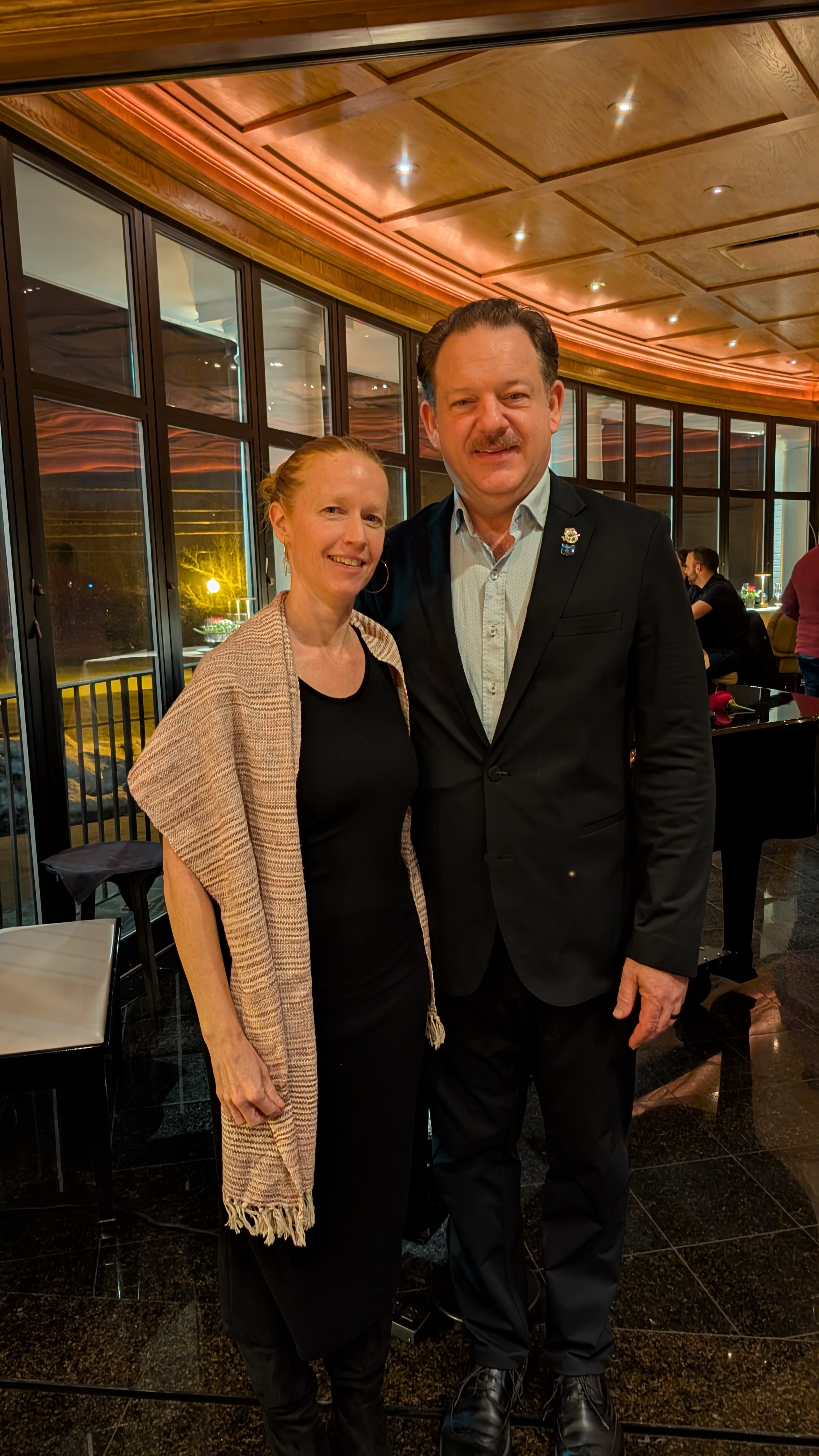
Pilot / Dad / Trumpeter / Contract Negotiator / Martial Artist
In his 26th year as an airline pilot, Dan resides in Youngstown, Ohio with his high school sweetheart Stephanie. Combined they have 5 kids (teenagers...). They enjoy travel as a family, and as a couple. Dan has had a bourbon affinity since smelling his Grandfather's JW Dant and Grapefruit soda as a kid. Dan started collecting bourbon in 2015. He has been actively involved in Martial Arts since he was a kid and has Black Belts in two different styles. Dan still plays trumpet. Originally he went to college for music at Ohio University, but after his sophomore year decided he would much rather spend 3 hours in an airplane instead of a practice room. He still helps teach high school band camps, and has assisted with 5th and 6th grade Trumpet, Low Brass, and Percussion. Dan has been a Pilot Union Representative, Contract Negotiator, Merger Specialist, and Contract Compliance Administrator for over 20 years. Dan received the President's Lifetime Achievement Volunteer Service Award in 2024.
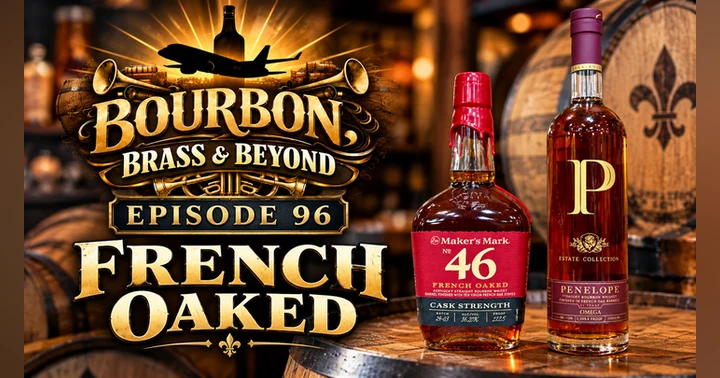
Penelope Omega 11 Year vs. Maker's Mark 46 Cask Strength: The Ultimate Breakdown