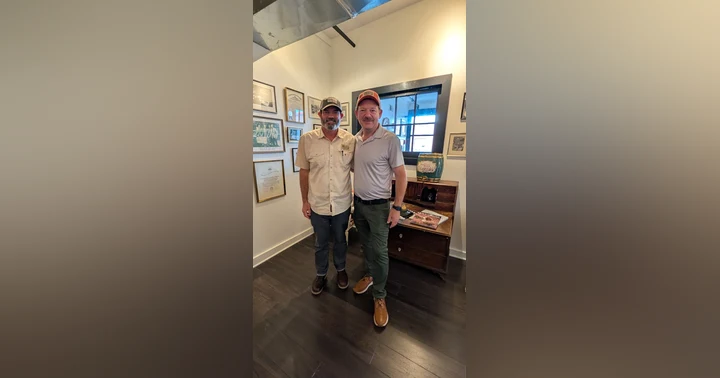
Pappy Van Winkle Bourbons & Cigars with Preston Van Winkle; Ep. 81
Old Rip Van Winkle, Bourbon Heritage, and the Reality of Allocated Whiskey
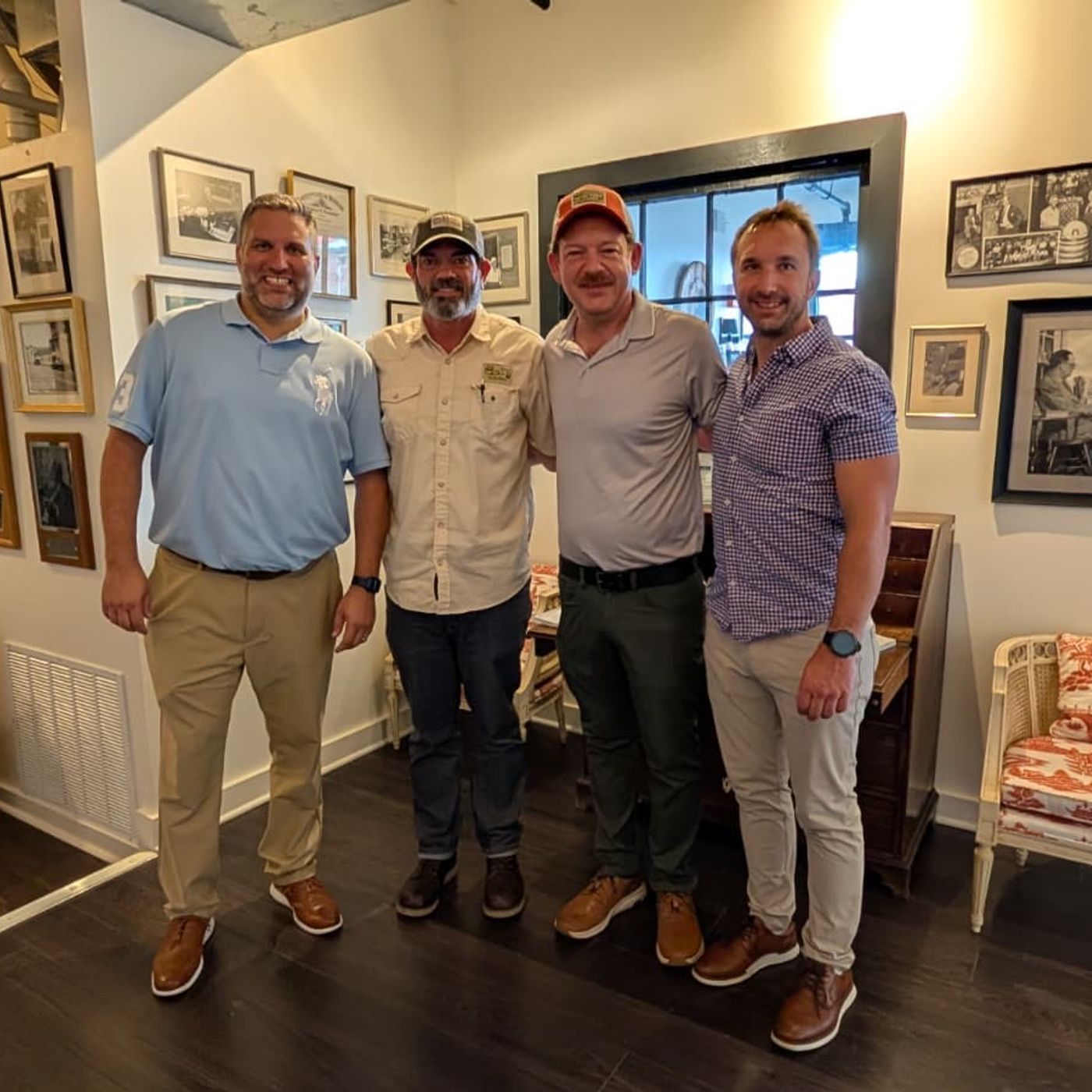
This episode is a compilation of multiple conversations with the very awesome and down to earth Preston Van Winkle. Dan Sneddon and Bob Hird were joined by Alex Derthick, and after a technical failure wiped out most of the first recording, Dan came back for round 2. The discussion covers the Old Rip Van Winkle family story, how the lineup evolved, and why production, warehouse space, and barrel entry proof matter so much in bourbon. It is especially useful for listeners who want the history behind the bottles and the practical realities behind limited supply. At the end, they also toast with Pappy 23 Year and Pappy Traditional Cigars from Pappy&Co. See our links below! Please like, follow, and subscribe!
#bourbon #whiskey #pappyvanwinkle #buffalotrace #pappyandco


Old Rip Van Winkle, Bourbon Heritage, and the Reality of Allocated Whiskey
This episode is a compilation of multiple conversations with the very awesome and down to earth Preston Van Winkle. Dan Sneddon and Bob Hird were joined by Alex Derthick, and after a technical failure wiped out most of the first recording, Dan came back for round 2. The discussion covers the Old Rip Van Winkle family story, how the lineup evolved, and why production, warehouse space, and barrel entry proof matter so much in bourbon. It is especially useful for listeners who want the history behind the bottles and the practical realities behind limited supply. At the end, they also toast with Pappy 23 Year and Pappy Traditional Cigars from Pappy&Co. See our links below! Please like, follow, and subscribe!
#bourbon #whiskey #pappyvanwinkle #buffalotrace #pappyandco
Key topics
Preston Van Winkle traces the Old Rip label back to its pre-Prohibition origins, its revival after Stitzel-Weller, and how the family inherited and reshaped the brand in the 1970s.
In this episode, Preston explains why the lineup shifted from multiple proofs to the 107 proof expression, including the logic of removing the lower-proof bottling and keeping the more versatile whiskey.
We discuss how bourbon knowledge in the Van Winkle family was absorbed by osmosis, with childhood memories of bottling, barrel rolling, and growing up around whiskey as part of daily life.
The conversation compares the 10, 12, 15, 20, 23, and 25 year expressions, with repeated emphasis on the 15 year as the sweet spot for age, proof, and versatility.
Preston shares how the rye line was effectively created to meet demand for a customer seeking aged rye, and how the family helped define that category with a 13 year age statement.
We discuss warehouse strategy, including why first and second floor placement in the heart of the warehouse is preferred to avoid excess heat, airflow, and evaporation.
Preston explains barrel entry proof, noting that the family uses 114 proof rather than the industry standard 125, to preserve flavor and reduce dilution later in the process.
The discussion gets candid about supply constraints, long planning horizons, and why making significantly more whiskey is not as simple as increasing volume.
The episode also addresses pricing and the secondary market, with Preston noting that the family does not benefit from inflated resale prices once the whiskey leaves their warehouse.
Timestamps
00:00 - Technical reset and round two introduction
01:57 - The Old Rip label’s pre-Prohibition roots
04:21 - Childhood memories in the distillery
08:00 - Bourbon as everyday family medicine
10:01 - Comparing the 10, 12, and 15 year expressions
13:22 - How the family created the aged rye category
16:05 - Why warehouse space limits production
17:36 - Barrel entry proof and flavor preservation
19:23 - Why overproducing whiskey is a long-term risk
21:26 - The top shelf as a measure of a bourbon bar
22:49 - Secondary market pricing and who captures the margin
25:23 - Finding rare bottles while traveling
26:30 - Why the 20 and 23 year expressions stand out
27:20 - How the 25 year compares to the 23
28:29 - Why the rye is softer than most ryes
29:35 - Climate change and lower barrel yields
Bourbon, Brass & Beyond - https://www.bourbonbrassandbeyond.com
Pappy & Co - www.pappyco.com
Old Rip Van Winkle Distillery - www.oldripvanwinkledistillery.com
Dan, Bob, Alex, and Preston: Good afternoon. How's everybody today? Welcome to Bourbon Brass and Beyond. A very, very special day. Today we're at the offices of Old Rip Van Winkle with Preston Van Winkle. we'll be tasting through some of the old rip lineup and having a few cigars and talking about the product. Very lucky to have my friend Alex, Alex Derthick from down here in Louisville. Nice to meet everybody. Able to join us. So Alex is the reason I got into this whole mess of tasting bourbons. And it's not your fault. It's a good problem to have. Yeah. So we're down here in in Louisville and and we're ready. thanks for having us. Yeah. Appreciate it. Yeah. Thanks for coming. Yeah. Welcome. the old Rip Van Winkle. So this is your oldest label, correct? Oldest in terms of years of In existence, yes. Yeah, it's been around since in this iteration, since seventy two. Since seventy two. But does this predate the original stitzel weller. predates that. It was a pre prohibition brand that my grandfather acquired, I believe, in the fifties. it died with Prohibition. he liked the name and the well yeah, the symmetry between the symbolism. Rip was asleep in the woods for many years and the whiskey's asleep in the wood for many years. So and obviously the Van Winkle portions. Yeah, it doesn't get much closer than that. Nope. Kind of a no brainer. Yeah. so yeah, he he bought the rights to the old Rip label back in the fifties and didn't do anything with it until seventy two or three after he had sold Stitzelweller. And he resurrected the old rip label with some stocks he had made at St at Stitzelweller. Nice. And started selling it.
Daniel: Well, good afternoon. welcome back This is take two. this is Preston Van Winkle we did a awesome podcast on Monday. had my friend Alex here, my cohort Bob, and we spent about an hour and a half talking about all of the bourbons, tasting through them, drinking them. your sister Louise came and we did the cigars and talked about Pappy and Co. and the bourbon for good. we ended up leaving the next morning, yesterday morning, I got up to start, you know, watching the video and editing. And after the first two and a half minutes, the audio went dead. And then there was an hour and thirty minutes of silent film. now we do have the video from the outside and that that all came out perfect because Steph took the video but I I just wanna say thank you so much. Round two. For round two. I I appreciate it. I know it's a busy schedule. God bless technology. It happens. Yeah. a another learning experience. I I feel like since we started this, it has been Constant learning. And I like that. You know, that's sure that's part of the thing for me. I I I I really enjoy it. just just like the bourbons. But one of the things we were talking about, I think early on was the old Rip Van Winkle label and where it derived from. And I didn't know if you could walk me through that again. Sure. so the old rip label was originally a pre prohibition label. died off with prohibition. We didn't own the rights to it back then. a friend of my grandfather's ended up with the rights to the brand and my grandfather bought the label in the 50s I believe and didn't do anything with it until shortly after they sold the Stitzelweller distillery in 72 and he resurrected the Old Rip Van Winkle label with stocks from Stitzelweller. They aged and bottled everything for him at the old distillery. And he was just selling seven year old ninety proof and one seven proof Old Rip Van Winkle. And eventually the brand skewed to a a little bit older age. so they updated the label to reflect the age of the barrels that they had access to. And it became the 10-year-old 90 proof and 107 proof. We subsequently eliminated the 90 proof from the lineup because the barrels were you know, two brands were kind of cannibalizing one another. And Julian and I thought it made more sense to eliminate the lower proof one one because we both preferred the 107 proof to the n ninety proof to begin with, and also Because you can still add your own water to the 107 proof to bring it down to a lower proof, you can't add the alcohol back. So, it became just the 10 year one hundred seven proof and we ultimately put it in the cognac style bottle, updated the label to reflect the different bottle shape, and it's been the same ever since. When they left Stitzelweller your dad started bottling in Lawrenceburg, right? Mm-hmm. So what how old were you when you started working in the distillery? boy. I I'd go down there as a young kid and mostly just play around when I got a l a little bit older, old enough to complete certain tasks, I would go down and help bottle. I did a lot of filled a lot of minis, miniature decanters. I remember filling hundreds, if not thousands, of miniature Statue of Liberty decanters one afternoon down there with my cousins in tow. but my sisters and I would go down and treat the place like a playground and help out a little bit along the way, mostly just on the bottling line. occasionally roll some barrels around and punch buttons and twist valves and stuff like that, but mostly just on the bottling line. when's the first time you think you remember the smell or the taste or the I always grew I grew up with it. Always recognized it. my grandfather drank JW Dant and I I can remember the smell to this day that when he'd make a drink, he'd he always did highballs. Mm-hmm. You know, if he'd make a drink and I I I'd smell it and I d I still love that smell today. Sure. But and I think that's where I like the sweetness is because he used grapefruit soda, so but Grapefruit soda and bourbon, interesting. That's that was his old highball. I remember it was back when they had like the the local bottling plants of grapefruit soda, you know, with the recycled bottles that you'd take back every every Saturday we'd go in. Bottles were scuffed up and Yeah. But he that is what he drank. so he loved the JW Dant because he liked that burnt high rye. Mhm. because when he was a kid, when he'd go visit his great uncle, he was a fiddlemaker and moonshiner. So they'd have a still, he'd go down to the still, get a quart every day for his uncle, take it up to him, and he was probably five, five years old at that time. but he remember that Get him working early. Yeah. Yeah. But they were they were in the hills of North Carolina. so that was the stories I always got. Now my grandfather had seven daughters and then I was the first grandkid. So I I I was grandpa's boy. I got to experience bourbon, I got to experience all of it, you know, from him. Which which is part of the reason I think I love your family's story, 'cause it's it's like your grandfather and your great grandfather, that's Yeah. We had I'm generation four, so we had three generations literally grow up in the business. Grandfather, father, and now me and now you know, my kids and nieces and nephews as well. And that also I I guess that's where you you would have found your taste, you know. Certainly. I don't know if there's much instruction passed down or is it No, just kinda through osmosis pick it up. you know, our whiskey was really all we e ever had in the house growing up, so it's what I became familiar with from a taste and smell standpoint. Yeah. cut my teeth on bourbon. I remember realizing that there was a product that you could go buy in a store called cough medicine when I was probably twelve years old. Prior to that it was just bourbon, water, honey, microwave, lemon juice maybe. and that was cough medicine. Yep. Hot toddy. Mhm. Yeah hot. I remember sitting on the you know, being a kid young, sitting on the Kitchen counter waiting for the microwave to ding and slugging back a you know, a half a jigger full of whiskey water and honey. Mm-hmm. I learned that trick. Actually I was when I first started the airlines, I was on an overnight and I was based out of New York City. Mm-hmm. And this old lady had a Italian restaurant right by where I was staying and she kind of adopted me. I it's like where whenever I was working, she took care of me. but I came in one night all stuffed up from flying all day, all congested and she goes, sit down, sit down and she goes, I'll I I'll make you something and she made my first hot toddy and man. Lemon tea and and bourbon and just Clear your right up. Clear your right up? Mm-hmm. It's perfect. When you go from the the ten year is the one seven, and then you go to the twelve, I I I think I I like the oakiness as it adds. and then it drops down in proof a little bit. do you think that's helps with the the oakiness Probably. With the wheated recipe it doesn't really pick up that much oak after ten or twelve years anyway. Okay. But the lower proof may mask what little it would pick up. I just think the twelve year old's so light, clean, crisp. it's really indicative of the wheated style of bourbon. It's sweet but not sugary, candy sweet. get get the sweetness from the barrel and the corn showing through. the wheat doesn't impart a a lot of flavor. It it more so allows the sweetness of the corn and the the wood to to show through, whereas rye obviously very bold and flavorful and spicy. so it picks up a a whisper of wood after twelve years or so. then the The fifteen starts the the Pappy line. Right. No. The youngest of the Pappy expressions, but the last one in existence. Yeah. But they did have the different variations of the Van Winkle fourteen and sixteen. Those were very those were a one shot deal, short lived. most of it didn't even get out into the world. Private. Mm-hmm. Private, yeah. I I think the fifteen is probably my favorite. Mine mine as well. Julian's as well. My dad has always Said it's just the perfect combination of age and proof. 107 proof. you can drink it neat on the rocks with a splash of water. it's great in a classic cocktail, super versatile. Good before dinner, after dinner. it's really it's definitely the most versatile of the bourbon lineup. the only thing that is as versatile I would say is the rye. But that's the hardest to come by of our products, which are already hard to come by. So the rye's what we have the least of. But yeah, that fifteen year is just a really nice combination of age and proof. Most people when they try it for the first time don't realize it's a hundred and seven proof because it is so smooth. Right. And I think that was my biggest takeaway. I'm like, wow I mean you could you can still just sit there and just keep sipping and not realize the proof. You can feel the warmth, but it doesn't. It's not like a A burny right. A burny sensation. pretty excellent. Yeah. that is probably the bottle that has gone down the fastest of mine. That Mm. Tends to happen. Yeah. Well, you talked about the availability, so they they do the rye you do a lot less of the rye every year or Yeah, w it the rye was was something that Originally my dad bought barrels on the open market for a specific customer who wanted an aged rye. And there really just wasn't one on the market. So he kind of created the aged rye category with the release of the 13-year-old Wan Winkle family reserve rye. and there was also a twelve-year-old old-time rye that was in that same squat bottle as the the 10-year-old originally was. but that only lasted a year because all those barrels kept getting older. he never changed changed the age statement on the label though, so it's always been thirteen. and then when we partnered with Buffalo Trace, we took the remaining barrels that we had and dumped them in a stainless steel tank to cease the aging process. and bottled off of that until new production caught up. So what we're selling now in the rye package is Buffalo Trace Distillate. but we had to wait till wait for that thirteen years to pass for production to catch up to the age statement. So it's a good thing we didn't skew the age statement older and then have to backtrack it. But Yeah, so we didn't really know if the rye was gonna be a big hit or not. it is. So we unfortunately didn't make enough of it. like everything else twenty years ago when it would have mattered. So just trying to play catch up and we've got more and more rye coming into the pipeline every year, but you know, just like the rest of it, it takes time. Can't crank the hands of time any faster. Now does the rye age in the same s places in the warehouses the More or less. Yeah. In any way. just increases the evaporation rate, increases the the theoretical age, kind of or the flavor profile age, I should say. faster and we don't need faster you know, when you're talking ten to twenty three years. And I and I think, you know, we and we touched on this on Monday that you know Warehouse space rickhouse space is finite. There is it's not unlimited. So when people ask, well, why don't you just make more bourbon? Well, it's not gonna be the same if you try to do that. Right. We right now, at least at Buffalo Trace, they're filling new warehouses as fast as they can build the ricking. they're literally rolling barrels in as soon as the last bolt's tight. on some of this ricking. yeah it's warehouse space is really at a premium. and do you is it the the same y I know you guys get the lower floor, but same area away from the w the walls. Yeah, everything we try and keep everything on the first and second floor in the heart of the warehouse. Okay. away from the heat and airflow. That just speeds up the aging process and the evaporation rate. Neither of which we ne want or need to do. and one of the other things we talked about was the the barrel entry proof, what this goes in. Mm-hmm. Cause it i f all the wheated come from the same mash and then it's just the barrel sit. but w what what barrel entry proof do they go in so we use one fourteen industry standard is one twenty five, which is the legal high end limit. the more the more water you add prior to putting it in the barrel means more volume, which means more barrels, which is means higher cost of production. But water on the front end is better because adding water after the aging process has a tendency to dull the flavors. and if you add too much it really gets flat. So the the more water we add on the front end the better. So it means less water on the back end to bring it down to bottling proof. When you're starting at 114 you might get up to You know, one twenty five, one twenty eight. If you start at one twenty five, you're probably gonna get up into the one forties. and in order to bring that down to one seven, I mean you can imagine how much more water you would need to go from one forty five to one seven than you would from one twenty five to one seven. Right. And that and all and although, you know, I know for some of the other brands that They prefer that 'cause then they get a lot more volume. Mm-hmm. But it does. I think it it does dilute the taste. And and I think part of the, you know, on the allocated market, everybody's like, well, why don't you just make more product? But I I think that, you know, from what you explained on Monday, i i that's that's a hard thing to do. Yeah. you don't wanna overproduce and be sitting on top of a lake of whiskey you can't sell. where we already talked about warehouse space being an issue. and then just knowing how much to produce for fifteen, twenty, twenty three years down the road, it's a crapshoot. You know, our our crystal ball doesn't work very well. If somebody out there's got a crystal ball that works, feel free to We'll we'll take it on loan or Yeah. Well i I I had dinner with Bill Samuels Jr. a couple months back and he said the same thing. He's he's like, you know, when when this boom started, he's like I was telling everybody don't increase your production. Just just s stay the course. Stay the course, he goes 'cause otherwise 'Cause there's not many people like Bill that have seen the back side of Right. We've seen the other side of the coin. Yeah. in the sixties, seventies, eighties and on into the nineties, really. Although we got some really nice decanters out of that. Yeah. Definitely. yeah, the decanter business was big for a while. and then the decanters got to be more expensive than the whiskey going into and that that changed the game a little bit. Yeah, it's it's an inexact science and you definitely don't want to be on the wrong side of the production path. I think that part of the cycle you see that it's always like it's family distilleries, family brands. And then there's a big boom, there's a lot more brands, there's and then there's consolidation. But it seems always go back to the family brands. Mm-hmm. And then i i that that boom and bust. But it's always booms have a tendency to go bust. Yeah. But it always comes back to the same family brands. I I I think that you guys have just been able to do such a nice product that I mean it's it's a mainstay. It's it's gonna be the preeminent I was explaining it that You know, if you're a bourbon guy like me, like you the first thing you look for when you go into a bar, especially if they claim to be a bourbon bar, is what's on that top center shelf. You know, if it's not gonna be Pappy then I'm starting to question whether it's really that Yeah. I wonder about that too sometimes, but you know, a lot of a lot of places will get it when they get it and sell it. almost immediately, you know. I heard countless stories of bars and restaurants getting a few bottles in and a a group of you know group of guys will come in and wipe out entirely, in one night. and then they're left without it for the remainder of the year, but since we only release it once a year. But yeah, it is kind of the measure of a You know, seeing what's up up on the the top shelf really is kind of a measure of their their bourbon program. Yeah. And and you guys have no I mean, you set your your retail price. Mm-hmm. But anything that's done on the secondary market, 'cause there is a huge secondary market, I mean you you guys don't see a a dime of that. Mm mm. No, we don't capture a single penny of the You know, the price differences at retail or secondary market. we price it so that it hopefully ends up on the shelf at a price that we think is fair. Unfortunately there's some greedy retailers out there that jack up their prices, but and those are the prices that consumers tend to see because they're advertised. what they don't see is the great number of stores selling at or near suggested retail, but those bottles never see a shelf. They're sold via waiting list, lottery, customer loyalty programs, stuff like that. We're from Ohio, so Right. State agency lotteries. Exactly. Yeah. so a lot you know I don't know what the the mix is, but I would imagine there are just as many, if not more, bottles selling at or near suggested retail as are being sold at exorbitant prices. It's just those prices are the ones that that people see advertised over and over again and with these digital bulletin boards out there now, stores can post their products on these secondary websites, or third party websites. That are kind of just like I don't know, they're just I I guess it's kinda like selling on consignment. Yeah. But yeah, it's frustrating, because the secondary pricing has infected the retail world to a certain degree. And there's nothing we can do about it by law. We're we lose control over the product the moment it pulls away from our warehouse. And there's distribution, there's state agencies, there's there's a lot of people taking a cut. Mm-hmm. Even off that retail price. Right. Yeah. we've seen it. You know, like y if you wanna if you're looking for a certain thing, i it's a hard thing to get at at at retail. we We're lucky enough to be on vacation last year and we were in London, we went to Wimbledon and that's where I found the twenty three. But it was it was two years ago that we went. but that was a twenty nineteen bottle. Mm. And which we got to do outside and open, which was nice. That was Yeah, I noticed the little UK Duty stamp on there. That was the best tennis trip in the world. Mm-hmm. No, it was it it was great. So do you all play or just fans? So Steph plays. I watched. I watched her in high school and then she played in college, so that Nice. But that you know I I think I I really enjoy the twenty. I I think that I like an an oakier bourbon. Mm-hmm. So the twenty hits me just perfect. I like the flavor of the fifteen, it's my favorite, but that that twenty is nice, but on Monday, that twenty three was fantastic. I that's a totally different animal. Yeah, I And even before having the cigar, I wanted to make sure I I sipped it and and right and nosed it before doing the cigar. But with the cigar was was fantastic. Yeah, it holds up it stands up to a cigar nicely. it's pretty intense. there's just n really nothing else like it out there. How does the the old Rip twenty five compare? I mean that It's like the twenty three on steroids. the higher proof. and obviously that two extra years in the wood. we made sure that we didn't put something out there that was, you know, all wood. it's still got some of that inherent sweetness, being a wheated bourbon, but it is there's definitely some oak. But it it it's more of the light toastier notes. And less of the heavy bitter tannins. so that's again indicative of the wheated recipe. And all of the bourbons. You know, I always talk about the finish and how as the the sweetness kind of melts away, a lot of times in in other bourbons you're you're left with a little bit of bitterness in the aftertaste. And I don't get any of that with any of these. Even the rye, which which really surprised me 'cause I I feel like I get more bitterness with the rye. But even the rye was just phenomenal. Yeah. So our rye is a little different than most in that it's got the legal low end limit, in terms of the mash bill, legal low end limit of rye. So it's only fifty one percent rye. A lot are more like a bourbon, just with the two major grains flipped. so a lot of rye's are, you know, seventy, seventy five percent rye and then some corn and barley. the relatively high corn content of our rye gives it some of that sweetness that that hang luckily hangs around for thirteen years. So it's a little it's a little softer, a little milder than on the spiciness scale. than a lot of rye. But it's still got that, you know, characteristic rye spiciness. which is one of the things that makes it great for classic cocktails and also stands up to a cigar nicely as well. we we kinda talked about how the climate has changed, it's gotten a little warmer down here. Mm-hmm. Do you see that affecting bourbon production going forward? It's affected barrel yields, at least for us, over the last, you know, ten to fifteen years yields have gone down year over year. So lot B What do you call the bottle? It's the is the Van Winkle family reserve twelve year? Twelve year, yeah. Van Winkle special reserve, the twelve year a lot of people refer to it as lot B though. And how did it get that? So when that label was created, it had lot A on the label. my dad was barreling off of or bottling off of A group of barrels known as a lot. And once he depleted all those barrels, he bought more barrels. it was a much larger lot of barrels. updated the label, changed it to lot B second second time around. And by the time he had depleted all those barrels, state beverage journals, consumers, etcetera, were referring to it as the Van Winkle twelve year lot B or just the Van Winkle lot B. or twelve year lot B, whatever. but anyway, referencing the lot B. So rather than mess with people's heads, he just left it alone. So we've been bottling the lot B for. two almost three decades probably. yeah, it's it hasn't the label has not changed other than some government mandatories here and there. has not changed much in the last thirty years. though yeah the lot B doesn't really mean anything at this point. It did at one point, but rather than, you know, throw people for a loop and release a lot C. Lord knows what lot we'd be on by now. Right. Double Z, who knows. But yeah, it that's where the the lot B came from. One of the things that we talk had Monday was your sister Louise came. Right. And she was talking about the Bourbon for good. Right. Can you talk about that a little bit? Yeah, so our family has always w wanted to be philanthropic. we realized that being a small company we don't have a big cash budget to throw money at causes. but we do have a product that people are extremely interested in and willing to pay a lot of money for. look at the secondary market, perfect example. so in order to capitalize on those factors, we donate product to charity auctions in hopes that they bring in a a big number and we've seen a lot of auctions w that we've had nothing to do with at all where our products have been been featured and that's typically just people donating from their own private collection. But we wanted to kind of put a name to what we're seeking to do, which is do some good with our products. So we came up with this bourbon for good concept and That's kind of the slogan for the foundation that we're attempting to to get going, Van Winkle Family Foundation, just to raise money for the causes that are important to us and just important causes in general. So and wanna thank you for donating a bottle of our own whiskey back to the cause. So that'll be raffled off at some point down the road and hopefully bring in a a bunch of money. Right now they've got I believe the most recent or the current sweepstakes just kicked off. So if you go to pappyco.com and make a purchase, between now and the holidays you'll be registered to win a bottle and all the proceeds. Or a portion of the proceeds will go to I can't remember which charity she said is up. The Wounded Warriors or something along those lines. I think that was the last one. There was a new one. Okay. but I did read about that. Okay. And on their on their Instagram feed, you'll see a lot of information there as well. Yeah. I I came repping. Yep. that a boy. The Pappy and Co stuff today. I like the hat as well. Appreciate it. I've almost always got one of their hats on. So and and I have to say this 'cause I have a big head. Mm-hmm. And I have a hell of a time finding hats that fit. And these hats are phenomenal. They're actually I actually have to size them down for me. And so I actually I I have two Pappy&Co hats and they both fit fantastic. Yeah, they've got some some good ones. I've I'm always excited when they release a new one. 'Cause I go through this is probably my second one this year. just wear out and pick up a new one every so often. sometimes I'll have the patch removed and slap it on something else for fun, but Yeah, they they have good stuff. So I brought that T shirts. Yeah, I brought I brought my my books that I brought both of those came from Pappy and Co. and we do it on Monday and I'll post a video of that, but we we did cigars with the Pappy twenty three. Right. so I swore I'd never open that bottle until I was gonna retire. And then I'm like, Well, unless I can do a podcast with the Van Winkles And here we are. So we had to open it. got a box of the Pappy Van Winkle Tradition cigars. Yeah. Now there's a story about those as well. Yes. So my sister sell two different cigars. One is the tradition and the other is the barrel fermented fire cured variety. that processes the fire cured the trad traditional cigar is just a traditional stick, but it's made with some really exclusive tobaccos. and we quickly we we're on a family trip to Nicaragua to check out the Drew Estate factory and the folks at Drew Estate wanted to do they had already released the fire cured barrel fermented edition. they wanted to do a more traditional cigar and while we were down there we kind of explored a few different blends and the one that my dad and I kept coming back to was one that they generically referred to as Willie's blend. Willie Herrera being the master blender at Drew Estate, super talented guy. grew up rolling cigars on the streets of little Havana, Miami. And we just kept c coming back to these same cigars, smoked a an obscene amount of over the course of a long weekend down there. And I I guess we just asked what's the plan with those and can we just use that blend? rather than coming up with something entirely different. We'd love that one so much. they're like, sure, let's do it. So but the the original the barrel fermented fire cured, they take some of the tobacco is tobacco grown in Kentucky, in the Hopkinsville area, and they fire cure that, meaning while the tobacco is drying, in the barns, they'll put sawdust down on the floor and light it and it just smolders and it it smokes the tobacco. And then they take that tobacco and barrel ferment it in retired papy barrels and they use a a technique, I believe it's called Parique, whereby they put the tobacco in the barrel and age it under pressure. So they have these big hand crank, screw press, mechan mechanisms that will press the the leaves and they they crank it and tighten it daily for months and it What it does to the tobacco leaves I'm not I'm no no chemist, I'm not a hundred percent sure, but it sure does leave them tasting awfully good when you smoke Chemists aren't allowed, right? Right. Family policy. Right. Yeah, so the the cigars take on a a light smoky quality, and you can really smell it before you even light it. it's a pretty neat cigar and they They come out with different sizes every quarter six months or so. And yeah, it's a n it's a nice cigar. Yeah. I I goes well with whiskey, obviously. It's meant to. Yes. I and it and they'll they'll see that that was very enjoyable. it doesn't get much better than that. Right. This has been just needed the weather to have been on about fifty degrees cooler. Yeah, but it i it was kinda nice though. I mean it was outside. We had the train at one point. Sure. so part of the I mean your office is amazing. This is like walking into a a a a history buff. I I enjoy the history, I enjoy the family part of it. I I had couple one of the pony bottles for the old very old fits. Mm-hmm. but this collection is just amazing. Do you do you get to enjoy the old ones as as well? Every now and again my dad'll open something. more than anything it's other people bringing bottles to us, wanting to drink with us. Mm-hmm. just to get our you know, our impressions. But he'll open a op open a bottle here and there. We've got a gallon of old Fitzgerald here in the office and I remember one year, I don't know, it was probably a decade, decade and a half ago, he opened one of those on Thanksgiving morning and we had a big turkey frying party and I think we fried twenty two or twenty four birds that morning. all of our friends just came over, fried their bird, hung out, had a drink, smoked a cigar, and then went back to their families and we put a pretty good dent in a in a gallon of old Fitzgerald. starting at about ten in the morning. but yeah I I I've had a few of few of these older bottlings and they're amazing. The ones that have survived. Yeah. I think that that was one of my favorite things was so I did find an old pony bottle of the very old Fitz, but we were met somebody that did like estate cleanouts and he's like, Hey, you want these box of bottles? I think I paid like eleven dollars for this box of bottles. One of which was a sealed nineteen sixty-eight old Fitzgerald Milk glass decanter. boy. And I I think I have an inch left, but but that is one of the best things I've ever had. Yeah, it's pretty amazing stuff. Yeah. in the notes, I I get very similar notes to the Van Winkle I mean i you see so many of the comparisons and everything coming through it. And and of course that's a young that's a young bourbon. It's only six years old. Right. But I I think that just the craftsmanship and and the craft that has come through and come forward has just been amazing. Yeah, it's like a work of art. Yeah. And and I think that anybody that that enjoys bourbon appreciates the fact that you guys And you have continued that that work of art. This has been an amazing experience. It's appreciated. We're just glad other people seem to enjoy it. Well, very much so. I know that I I just wanted to say thank you once again for coming back and and helping me save my ass from Monday, 'cause this I've been betrayed by technology enough times to be ultra sympathetic. So well in Monday it w was worth the experience. It w it was just fantastic. But once again, thank you so much. My pleasure. Happy to do it. Appreciate it. Cheers. Cheers. Thank y'all. please like, subscribe, follow, share. Awesome. Thank you. Some of the old decanters are. The horse thing, yeah. Fighting a Illinni Well you're gonna do a UK and like we did a couple of a couple of different UK ones, which makes sense that are in our backyard, you know. You could do the Michigan one, I'd really appreciate that. Wow. Yeah, there's a story on that. went over for Wimbledon then. cool. We went into a number of different shops. Up we we got this bottle. Remember the name of the shop? It was just the whiskey shop, I believe, but it was it was mostly Scotch Yeah. Are you looking for anything? Well it So this is a 2019. Okay. K thirty eight hundred two. It's barely moving because that's the end of the line, right? Yeah. So that nineteen ninety-six Whose juice is that? In 96? That was That's not Buffalo Trace Could have been beat out I'll be able to tell you when I smell it. Bernheim causes it. well it's got this. Whether it's the still or the yeast or what, I can pick it out. We the lighter by the way. that's a good thing. Didn't bring it. Good call. Well, smelling bird right now, but. Yeah, and I had never heard of that to blow into it. Instant Club of New York. really? New York. Well. Samuel. Get it? Really? So I said I wasn't gonna open this bottle until I retired. Mm-hmm. Do this podcast. Okay. Yeah. This ain't retirement. Not with the amount of bottles he wants to buy. He can't retire. If he gave up bourbon, he might be able to retire. Yeah, exactly. I think he's gonna keep working. what? Don't tease the boy. I I don't have the airplane or the funds to buy one. You know the funny thing is? So possible. So she's Yeah, like a rear story avenue printing money. Not so much. to your point you don't get the any of the secondary. It's all I mean you're retail well you're not even retail at that point you're wholesale price. Not even that. Yeah. At the same time you don't sale price. You don't want to overproduce water on the product just to sell it to sell it, right? Did anyone else take a sip yet? No. I did. So good. It's really good, but you do have all that oak, right? Favorite. I tell you what, the love or hate Drew Estate they roll some good cigars. I've never I think all the Drew Estate cigars that I've smoked, I I don't think I've ever gotten one that's plus. Probably kills your power though. But it does pair well. It pairs well, but eat cardboard for dinner tonight. What do you mean tonight? Cardboard for that? Yeah. Won't be able to taste whatever I eat. Might as well eat something healthy that I don't like. Yeah. Staying in town? Yeah. I actually have to knee surgery on Friday. I'm not going anywhere anytime soon. she's coming to me. Convinced her? Yeah, she's she's coming here to take care of me. While I convalesce. Yeah, block until like 20 minutes later. Right. Yeah. I've never had an Eastern Greek. you didn't? I didn't know you had one. I've had both shoulders forty years of martial arts and so we're all 77 then. Except for him. He's a young and Alex, how old are you? We were talking about this in the car. How old do you think I am? So I said I don't think 38. 39. Just turn 39, July 31st, five. 'Cause you do have little kids. You got little kids. Hold on, you have a little kid. I got a seven year old. He's got little kids too though. Sixteen and thirteen. Sixteen and thirteen. Yeah. Not not terribly little. Twelve and seven. sister put these together right? this or your sisters yeah so they I started with the barrel fermented one and then Jonathan Drew wanted to do a more traditional cigar at a higher price point. and we we pushed back for a while but then when we were down in Nicaragua years ago touring factory dad and I smoked a ton of these cigars that had no label. They were just called Willie's blend, Willie Herrera. Traditional cigar. Yeah, we can we can put together some What about that one that we just smoked a a ton of and so I hadn't found a vehicle for yet? And they're like, Well, you can use that if you want. They're like yeah. Let's do it. What is it? See. Guys I'm quickly Just the you know, like the mainstay distillery. The blinders. Same same juice, just different age of fruit. Some of them the same age approved. Yeah. economics though too. I mean everybody sees an opportunity you might as well step your way in as fast as you can. There were so many barriers to injury for so long all of a sudden family. Sell it. Yeah, but they're selling celebrities starting bourbon brands. They're selling at a premium price point just to sell. Yeah, at a premium price point. I'm all about trying to find value Like for like a daily or something. Why I like the higher proof to it.
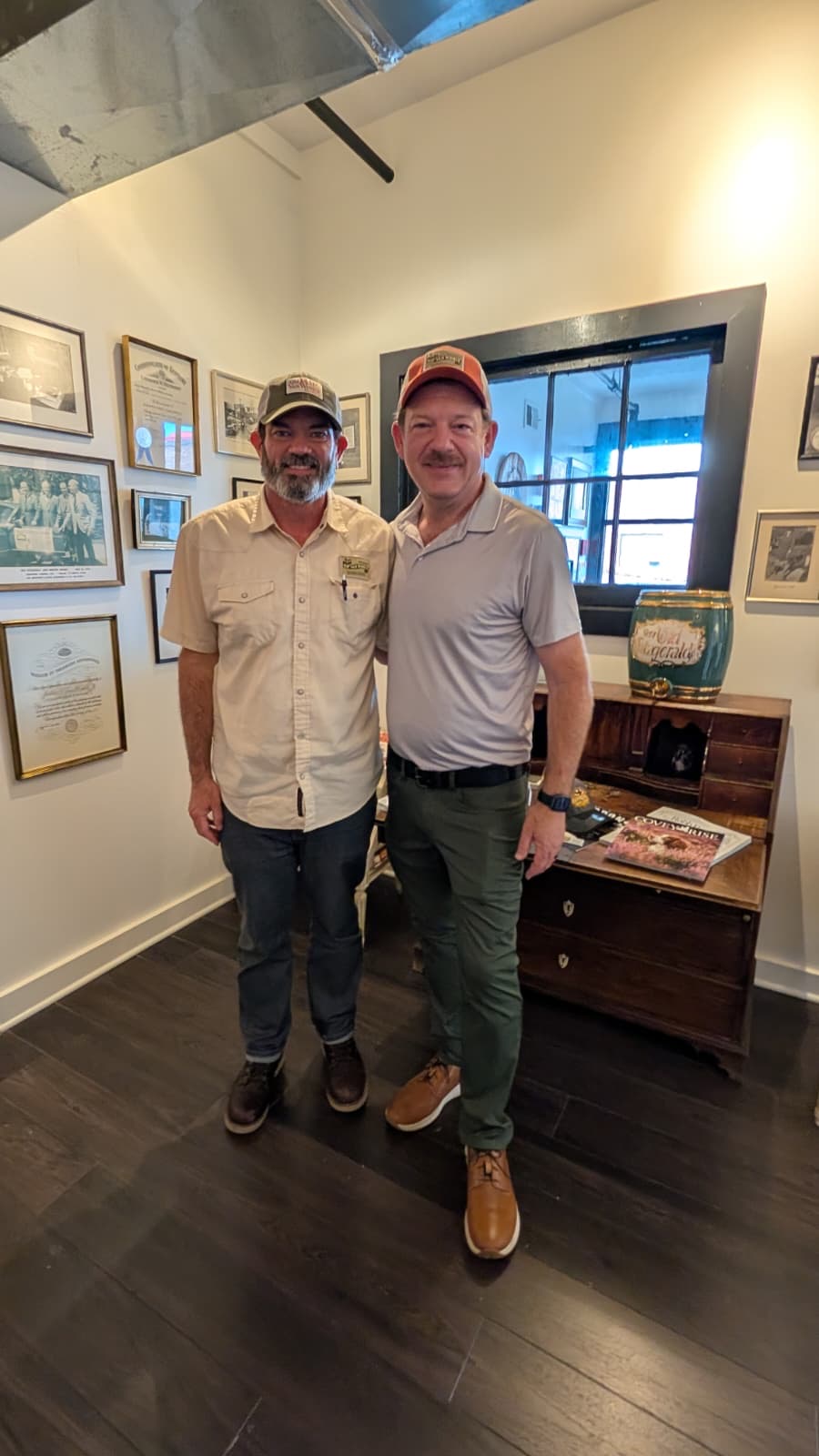
Vice President
4th Generation Van Winkle, Vice-President of Old Rip Van Winkle Distillery, and Director of Brands, J. Preston Van Winkle has been around bourbon all of his life. He is down to earth, knowledgeable, and an excellent host and guest. We were so impressed with Preston during our interviews. The Van Winkle Family Reserves are in good hands.