Penelope Omega 11 Year vs. Maker's Mark 46 Cask Strength: The Ultimate Breakdown
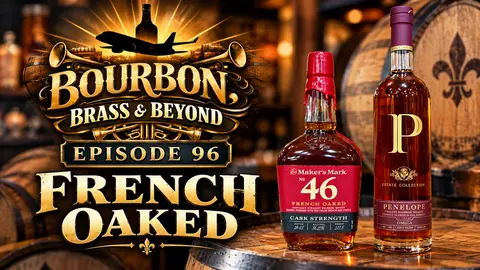
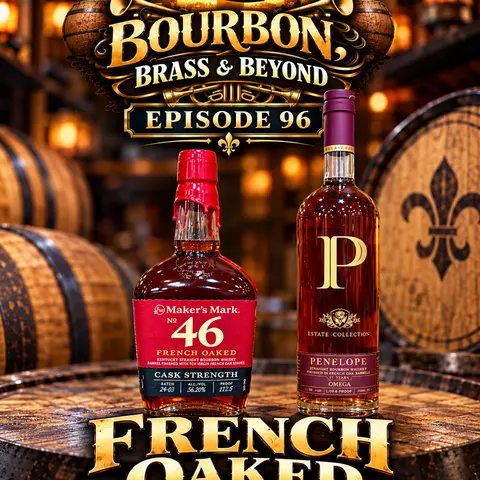
Welcome back, whiskey lovers, to another deep dive into the world of fine bourbon. If you are as obsessed with wood finishes as we are, you know that French oak has taken the bourbon world by storm. The interaction between traditional American corn spirits and the spice, tannin, and elegance of French oak creates a flavor profile that is completely unique. Recently on the podcast, we put two heavyweight contenders in the ring: the Penelope Omega 11 Year and the Maker's Mark 46 French Oaked Cask Strength. If you haven't had a chance to listen yet, you can check out the audio version over at our French Oak Bourbon Face-Off: Penelope Omega vs Maker's Mark 46 French Oaked Cask Strength; Ep. 96. For those who prefer to read the tasting notes, analyze the mash bills, and see how these two exceptional pours stacked up head-to-head, let us break it all down right here on the blog.
Introduction to the French Oak Face-Off
The conversation around cask finishes in American whiskey has evolved dramatically over the last decade. Gone are the days when a finish meant simply dropping a bourbon into a port or sherry pipe for a few weeks as a gimmick. Today, master distillers and blenders are treating secondary maturation with scientific precision. French oak, in particular, is renowned for its tight grain structure, lower tannin levels compared to some other European oaks, and an incredible capacity to impart baking spices, dried fruit, and a distinct creamy mouthfeel.
In our latest blind-style tasting experiment, we wanted to see how a high-aged, high-rye sourced bourbon with a lengthy French oak secondary finish would compare against a heritage-driven, wheated masterpiece finished with toasted French oak staves at cask strength. The clash of profiles was apparent from the very first pour. Both bottles sit comfortably in the upper tier of modern bourbon enjoyment, but they achieve greatness through entirely different paths. Let us examine what makes each of these bottles special before we pit them against one another.
Penelope Omega 11 Year: Specs, Mash Bill, and First Impressions
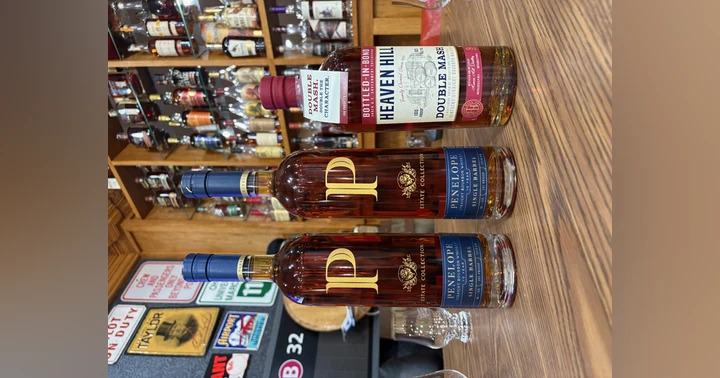
Penelope Bourbon has built a stellar reputation for meticulous blending and sourcing, and the Omega release is a shining example of their craft. When looking at the specs, the Penelope Omega is an impressive 11-year-old bourbon that spent an astonishing three to four years of that maturation period finished in French oak barrels. It is bottled at a sturdy 109.8 proof, which gives it plenty of structural integrity without letting the alcohol burn out the delicate nuances.
When you break down the underlying mash bill, Penelope utilizes a high-corn recipe consisting of 79 percent corn, 10 percent rye, and 1 percent malted barley. Even with the rye component, the initial presentation on the nose leans heavily into a sweet, corn-forward, toasted profile. There is an immediate welcoming aroma that hits the senses—warm baking spices, rich toasted oak, and a pleasant sweetness that hints at the extensive time spent interacting with those French oak staves.
Tasting Penelope Omega: Mouthfeel, Dark Fruit, and Flavor Evolution
Pouring a glass of the Penelope Omega sets the stage for a luxurious tasting experience. Because of its advanced age and the finishing process, the mouthfeel is remarkably robust and oily, coating the palate instantly. It punches well above its weight class in terms of texture.
On the palate, the flavor evolution is fascinating. You are greeted instantly by waves of rich caramel and vanilla, but as the sip develops, the French oak influence shines through with prominent notes of dark fruit and raisin. Compared to some of Penelope's earlier estate single-barrel releases—which could occasionally lean a bit softer or more muted depending on the barrel—this Omega release is punchy, vibrant, and incredibly dynamic. The mid-palate introduces a layer of sweet oak spice that lingers into a satisfying, medium-length finish that leaves you wanting another sip immediately.
Maker's Mark 46 French Oaked Cask Strength: History and Heritage
Shifting gears across Kentucky tradition, we turn to Maker's Mark. To truly understand Maker's Mark 46 French Oaked Cask Strength, you have to appreciate the history and heritage of the brand. Founded by the Samuels family, Maker's Mark changed the landscape of bourbon by leaning into a wheated mash bill—replacing the traditional spicy rye grain with red winter wheat, which yields a softer, sweeter, more approachable spirit.
The story of Bill Samuels Jr. stepping away from a background in engineering and aerospace to revolutionize his family's distillery is the stuff of bourbon legend. Maker's Mark 46 was actually the first new recipe introduced by the distillery since its founding. Instead of traditional finishing barrels, Maker's pioneered the process of inserting seared French oak staves into standard mature barrels, allowing the whiskey to extract maximum flavor and spice without picking up unwanted wood tannins. Bottled at a fiery 112 proof for this cask strength expression, it represents the pinnacle of the Maker's Maker profile.
Tasting Maker's Mark 46: Stave Finishing and the Power of the Nose
When you bring the Maker's Mark 46 Cask Strength to your glass, the first thing that strikes you is the sheer potency and beauty of the aroma. If there is one area where this bottle commands absolute authority, it is the nose. It is remarkably sweet, aromatic, and layered with deep notes of brown sugar, classic vanilla bean, rich caramel, and subtle hints of baking spices imparted by the toasted French oak staves.
On the palate, that signature wheated profile delivers a smooth, familiar mouth-feel right at the top of the tongue, expanding into a rich, decadent flavor profile. Because it is bottled at cask strength, the flavors are amplified, giving you all the classic Maker's sweetness married to an intense wood spice that only seared French oak can provide. It is a masterclass in stave-finishing consistency.
Side-by-Side Comparison: Flavor vs. Nose
When you taste these two exceptional French-oak-finished bourbons side by side, the contrast becomes a study in whiskey-making philosophies. On one side, you have an 11-year-old sourced high-rye bourbon finished for years in French oak barrels. On the other, you have a heritage wheated bourbon finished with seared internal staves at a robust cask strength.
The Penelope Omega leans heavily into complexity on the palate. Its age and barrel finishing create a dark fruit, raisin-heavy, deeply textured experience that commands your attention from the first drop to the finish line. Meanwhile, the Maker's Mark 46 Cask Strength puts on an absolute clinic when it comes to the nose. The aromatic compounds rushing out of that glass are breathtakingly sweet and inviting, showcasing the brilliant engineering behind their stave-finishing technique.
Final Verdict and Crown Jewel
So, which bottle takes the crown in this French oak heavyweight battle? As is often the case in the world of fine spirits, it ultimately depends on what you value most in your glass.
If you are judging strictly by the nose—the initial aromatic invitation that draws you into the pour—the Maker's Mark 46 French Oaked Cask Strength takes the victory. Its sweetness and aromatic depth are hard to match. However, when the rubber meets the road and we look at overall flavor evolution, mouthfeel, and the lingering finish, the Penelope Omega 11 Year edges ahead to take our overall flavor crown.
Both of these bottles deserve a permanent spot on any serious bourbon enthusiast's shelf. To hear us debate the finer points, share stories about distillery tours, and dive even deeper into our tasting notes, make sure you listen to the full episode on the Bourbon Brass and Beyond podcast website. Cheers, and until next time, keep exploring great pours!

Pilot / Dad / Trumpeter / Contract Negotiator / Martial Artist
In his 26th year as an airline pilot, Dan resides in Youngstown, Ohio with his high school sweetheart Stephanie. Combined they have 5 kids (teenagers...). They enjoy travel as a family, and as a couple. Dan has had a bourbon affinity since smelling his Grandfather's JW Dant and Grapefruit soda as a kid. Dan started collecting bourbon in 2015. He has been actively involved in Martial Arts since he was a kid and has Black Belts in two different styles. Dan still plays trumpet. Originally he went to college for music at Ohio University, but after his sophomore year decided he would much rather spend 3 hours in an airplane instead of a practice room. He still helps teach high school band camps, and has assisted with 5th and 6th grade Trumpet, Low Brass, and Percussion. Dan has been a Pilot Union Representative, Contract Negotiator, Merger Specialist, and Contract Compliance Administrator for over 20 years. Dan received the President's Lifetime Achievement Volunteer Service Award in 2024.
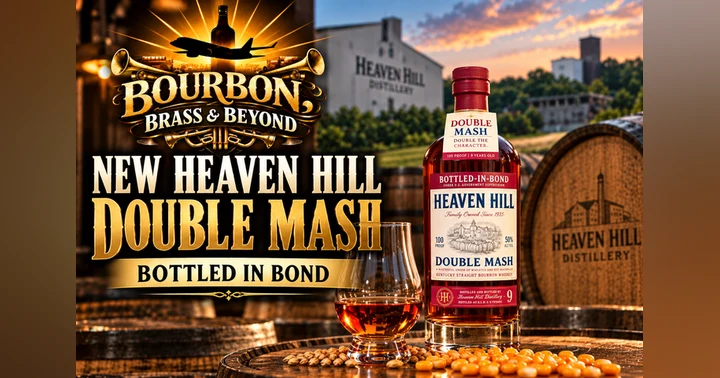
Heaven Hill Double Mash: A Look Inside This 9-Year Bottled-in-Bond Release