Unlocking the Magic: Why Eagle Rare Store Picks Are Worth the Hunt
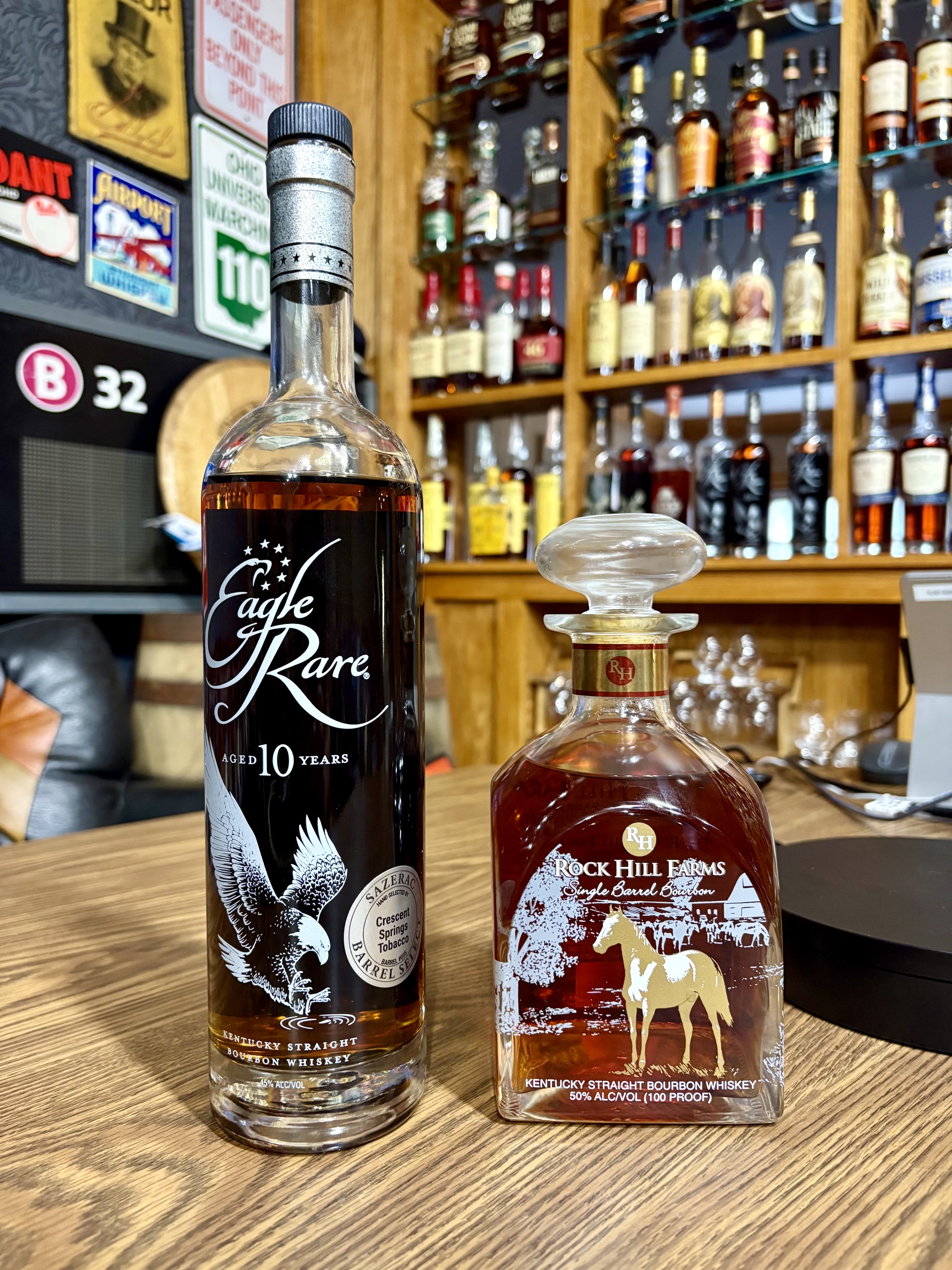
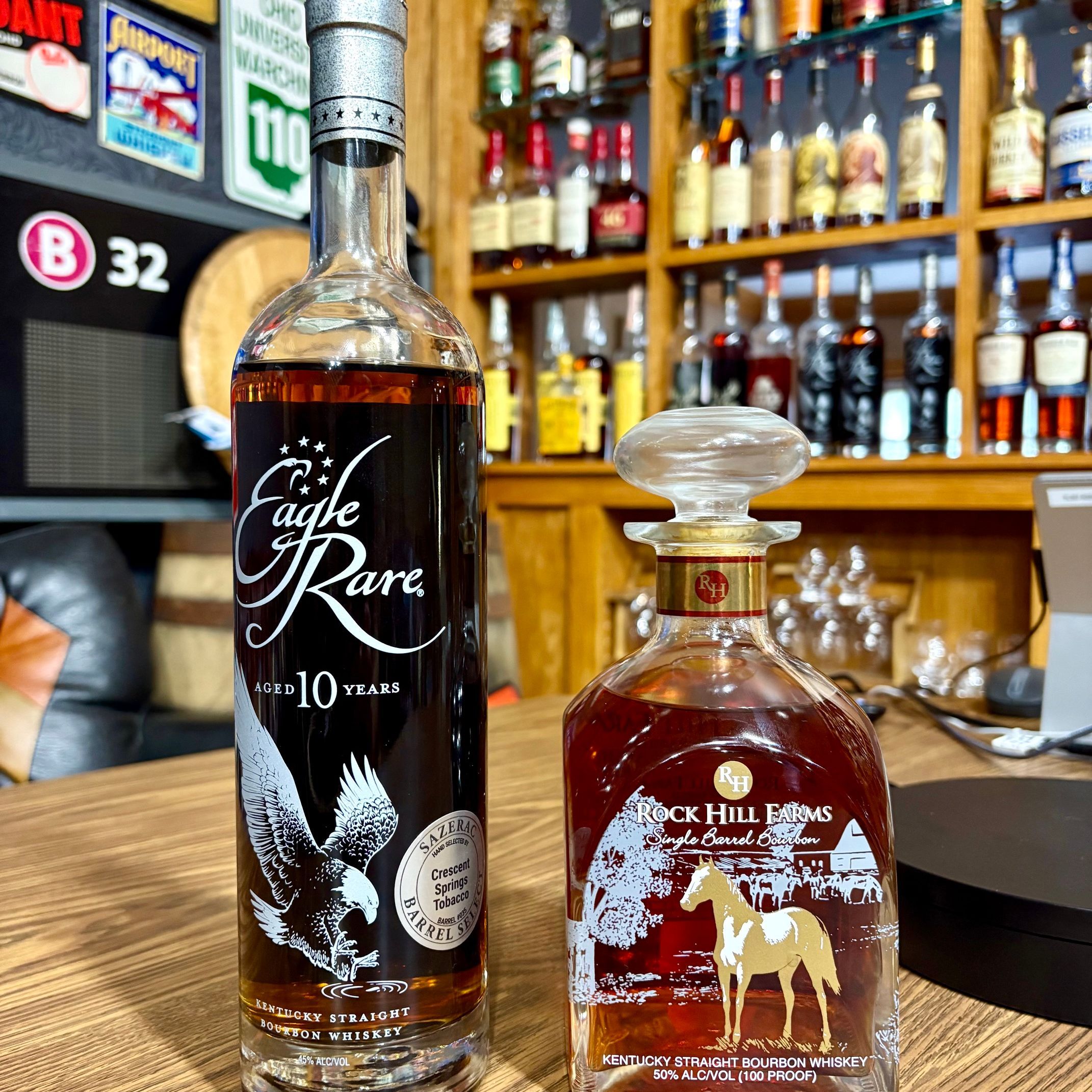
Welcome back to the blog, bourbon enthusiasts! If you are anything like me, the mere mention of Buffalo Trace Mashbill #1 gets your heart racing. There is a very specific kind of rush that comes with scanning the shelves of a local liquor store, hoping against hope that you might spot a unicorn, or at the very least, a bottle of something allocated that will not cost your entire paycheck. Among all the heavy hitters in the American whiskey landscape, few bottles command as much quiet respect, fierce loyalty, and frantic hunting as Eagle Rare 10 Year Old. But while standard shelf bottles are already fantastic pours, there is a whole separate universe hiding in plain sight: the Eagle Rare store pick. If you have ever wondered what makes these single-barrel selections so radically different from your standard Wednesday-night sipper, you are in the right place. To help me break this down on a recent episode of the podcast, I was joined by good friend Alex Derthick for Eagle Rare Store Pick and Rock Hill Farms with Alex Derthick; Ep. 85. Today, we are going to expand on that conversation, diving deep into barrel selection, tasting notes, allocated gems, and why you should ultimately pop the cork and drink your whiskey.
Standard Shelf Release Versus the Magic of Single-Barrel Selections
To truly appreciate an Eagle Rare store pick, you first have to understand how standard bourbon is made. Mass-market releases, even those as celebrated as the standard 10-year-old Eagle Rare, are masterclasses in consistency. Master blenders pull from hundreds, sometimes thousands of barrels across sprawling Kentucky rickhouses, marrying them together to create a flavor profile that tastes precisely the same whether you buy it in New York, California, or London. It is a brilliant feat of blending science, ensuring that every batch hits those familiar notes time and time again.
Enter the single-barrel store pick. When a liquor store, restaurant group, or whiskey club gets the nod to select an independent barrel of Eagle Rare, the rules change entirely. Instead of a homogenized blend designed for mass appeal, you are getting a pure, unadulterated snapshot of one specific barrel from a specific floor, zone, and rickhouse. That single wooden vessel spent a decade breathing in the Kentucky humidity and winter freeze, interacting with the oak in a completely unique way. One barrel might rest on a lower, cooler floor, developing subtle fruit and oak notes, while another parked higher up in the rickhouse might bake in the summer heat, pulling out heavy dark chocolate, intense leather, and deep caramel. When you hunt for a store pick, you are not just buying bourbon; you are buying a localized expression of art that will never, ever be replicated. Once that barrel is empty, it is gone forever.
Tasting Notes Breakdown: Vanilla, Caramel, Orange, and Cherry Cola
When Alex and I cracked open our chosen store pick on the podcast, we immediately noticed how distinct the single-barrel variance could be compared to a standard bottle. Standard Eagle Rare is universally praised for its approachable 90-proof profile, making it dangerously easy to drink. But when you find a stellar store pick, that approachable profile is dialed up to eleven, exploding with complexity.
On the nose, a great store pick hits you right away with a wave of rich, buttery caramel and sweet Madagascar vanilla. It feels like walking into a classic confectionary. But as the whiskey opens up in the glass—especially if you let it rest for ten or fifteen minutes—secondary and tertiary notes begin to dance around the edges. You start picking up a bright, zesty burst of fresh orange peel that cuts through the heavy sweetness, followed quickly by a wave of nostalgic cherry cola. This is a hallmark of Buffalo Trace Mashbill #1 when it gets a little extra love and attention from the barrel.
On the palate, the mouthfeel of a good single-barrel pick often feels remarkably viscous for a 90-proofer. It coats the tongue with those luscious caramel and vanilla layers before introducing a gentle, warming rye spice on the back end. This spice prevents the pour from becoming cloying or overly sweet, keeping the entire experience balanced, elegant, and impossibly smooth. It is a masterclass in how age, wood, and distillate interact.
Comparing Eagle Rare 10 Year and Older Expressions
Naturally, whiskey nerds love to chase age statements. There is an ongoing fascination in the bourbon community with older, rarer expressions. During our episode, Alex and I spent some time discussing how Eagle Rare 10 Year stacks up against its older, mythical siblings, like the occasional 12-year releases or the ultra-rare 20-year and 25-year bottlings that pop up in state lotteries.
It is easy to fall into the trap of assuming older is automatically better. After all, if ten years in oak is fantastic, shouldn't fifteen or twenty years be mind-blowing? Not necessarily. Bourbon is a delicate balancing act. Oak is a harsh mistress, and if you leave whiskey in a barrel for too long, the wood begins to over-extract, turning the liquid bitter, dry, and tasting unpleasantly like damp sawdust or heavy tannin.
Eagle Rare at the 10-year mark hits what many consider the sweet spot for American whiskey. It allows the barrel to impart deep, rich caramel, vanilla, and dark fruit notes without letting the wood completely overpower the sweet corn and rye grain underneath. While tracking down a 12-year expression or winning the chance to buy a 20-year bottle is an incredible thrill, a hand-selected 10-year single barrel often delivers a vibrant, lively freshness that ultra-aged bourbons sometimes lose in their old age. It is a reminder that maturity is about balance, not just a high number on the label.
The Hunt for Allocated Gems: Rock Hill Farms and Blanton's
Of course, talking about Buffalo Trace products and single barrels inevitably leads down the rabbit hole of allocated whiskey hunting. If you love Eagle Rare, chances are you are also keeping a sharp eye out for other Mashbill #1 and Mashbill #2 heavyweights like Blanton's, Blanton's Gold, Straight From the Barrel, and the crown jewel of single-barrel releases, Rock Hill Farms.
During our chat, Alex shared why Rock Hill Farms remains one of his absolute favorite bottles in existence. Part of the allure comes from its slightly higher proof point compared to standard Blanton's, sitting at 100 proof, which gives the rich corn, honey, and dark berry notes an incredible platform to shine. But another part of the appeal is the sheer difficulty of finding it. In today's secondary market landscape, walking into a store and finding Rock Hill Farms sitting on a shelf at a fair, manufacturer-suggested retail price feels akin to spotting a UFO.
This scarcity drives the modern bourbon hunt. We discussed the obsession with dusty bottles, historic pricing, and the roller coaster of entering state-run bottle lotteries. There is a strange camaraderie in the hunt. Standing in line before a store opening, trading tips with fellow enthusiasts, and celebrating when a friend scores a bottle you have all been chasing creates bonds that go far beyond the liquid in the glass. It is about the community, the shared stories, and the thrill of the chase.
Value, Collecting, and Why You Should Drink Your Bourbon
This brings us to the ultimate philosophy of the modern whiskey hobby. With secondary prices skyrocketing and bottles frequently treated as financial assets or retirement portfolios rather than beverages, it is easy to lose sight of why we fell in love with bourbon in the first place.
Is Eagle Rare still a great value? Absolutely. At its retail price point, it punches way above its weight class, offering a complex, premium experience that rivals bottles costing three times as much. But that value only matters if you actually open the bottle. During the podcast, Alex and I kept coming back to a simple, grounding truth: buy the bottle, enjoy the bottle, and share it with the people you care about.
We talked extensively about the importance of building a collection with the explicit intention of drinking what you own. There is no point in staring at a pristine row of sealed glass on a shelf if you never get to experience the vanilla, the caramel, the cherry cola, and the spicy finish with your best friends. Bourbon is meant to be shared around a fire pit, after a long work week, or during celebrations like the Kentucky Derby. Corks are meant to be pulled. Glasses are meant to be clinked.
If you want to dive deeper into our tasting notes, hear more about Alex's favorite bottles, and get the full breakdown on store picks versus standard shelves, make sure you listen to Eagle Rare Store Pick and Rock Hill Farms with Alex Derthick; Ep. 85. Until next time, keep your glass clean, your palate curious, and remember to always pour a dram for a good friend. Cheers!

Pilot / Dad / Trumpeter / Contract Negotiator / Martial Artist
In his 26th year as an airline pilot, Dan resides in Youngstown, Ohio with his high school sweetheart Stephanie. Combined they have 5 kids (teenagers...). They enjoy travel as a family, and as a couple. Dan has had a bourbon affinity since smelling his Grandfather's JW Dant and Grapefruit soda as a kid. Dan started collecting bourbon in 2015. He has been actively involved in Martial Arts since he was a kid and has Black Belts in two different styles. Dan still plays trumpet. Originally he went to college for music at Ohio University, but after his sophomore year decided he would much rather spend 3 hours in an airplane instead of a practice room. He still helps teach high school band camps, and has assisted with 5th and 6th grade Trumpet, Low Brass, and Percussion. Dan has been a Pilot Union Representative, Contract Negotiator, Merger Specialist, and Contract Compliance Administrator for over 20 years. Dan received the President's Lifetime Achievement Volunteer Service Award in 2024.
Behind the Mic: The Technical Trials and Studio Evolution of Bourbon, Brass & Beyond