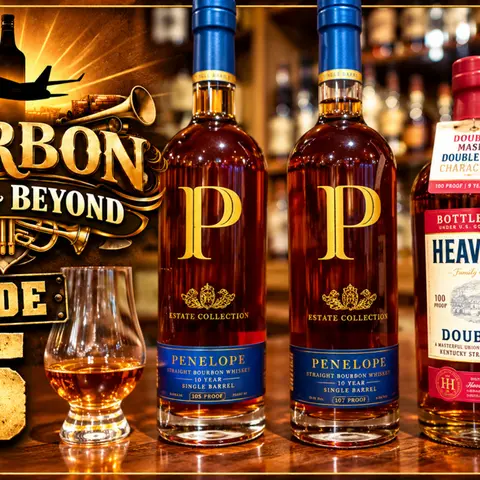
Deep Dive: Tasting the Penelope Estate Collection 10-Year Single Barrels
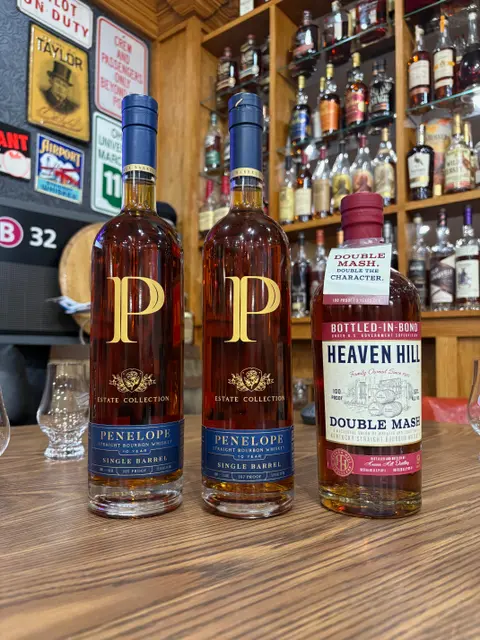
Welcome back, bourbon lovers! If you have been keeping an eye on the shelves over the last few years, you know that Penelope Bourbon has taken the whiskey world by storm. Known initially for their brilliant four-grain blends, the brand has steadily expanded into older, more complex territory, capturing the attention of collectors and everyday drinkers alike. Recently on the podcast, the crew gathered for a massive tasting session to explore how different years of Penelope's older releases stack up against one another. If you missed the conversation, you can catch all the details, laughs, and live reactions by listening to Penelope Estate Collection, NEW Heaven Hill Double Mash, and Monk's Road Barrel Pick; Ep. 95. In this companion blog post, we are going to expand on that episode, breaking down the sourcing, comparing the vintages side-by-side, looking at Penelope's broader portfolio, and helping you figure out which bottle deserves a spot on your home bar.
Introduction to the Penelope Estate Collection 10-Year Single Barrels
The pursuit of aged single barrel bourbon is practically a national pastime for whiskey enthusiasts. There is something inherently thrilling about cracking open a bottle that represents a single moment in time, influenced by a specific barrel, warehouse location, and aging duration. The Penelope Estate Collection 10-Year Single Barrel offerings represent the pinnacle of what the brand has to offer in the aged single-barrel category.
When Penelope steps into the double-digit age statement territory, the profile naturally undergoes a massive transformation. Younger bourbons are often driven by bright grain notes, punchy ethanol, and youthful vibrancy. At ten years old, however, the oak begins to take the driver's seat, imparting deep structural tannins, rich leather, dark chocolate, and concentrated dark fruit flavors. Tasting multiple releases of these ten-year single barrels side-by-side reveals just how much variance can exist from one barrel to the next, even when they share a common origin and age statement. It is a masterclass in single-barrel variation, and it highlights why tasting whiskey comparatively is one of the most educational things you can do for your palate.
Understanding the Sourcing and MGP Influence
To truly understand the Penelope Estate Collection, we have to talk about the liquid's DNA. Penelope Bourbon has always been transparent about its sourcing partnerships, famously relying on stocks from MGP (Midwest Grain Products) in Lawrenceburg, Indiana. MGP is legendary in the American whiskey community for producing some of the highest quality high-rye bourbon mash bills in the industry.
The typical high-rye bourbon mash bill coming out of this pipeline features a hefty 21 percent rye, alongside corn and malted barley. This specific recipe provides a spicy backbone that stands up brilliantly to extended aging. When whiskey sits in a charred American white oak barrel for a decade, the interaction between the distillate and the wood is profound. The Indiana climate—characterized by hot, humid summers and freezing winters—causes the wood to expand and contract rapidly, forcing the whiskey deep into the staves. This aggressive wood extraction builds layers of complexity that cannot be rushed.
However, relying on sourced whiskey also means dealing with the realities of the modern market. As inventory shifts, older stocks become more scarce and more fiercely guarded by distillers. The conversation around MGP sourcing, changing market dynamics, and fluctuating whiskey inventories is a massive topic of discussion in the bourbon world right now. Producers are constantly adjusting their stocks, and expressions like the Penelope Estate Collection represent a finite window into these exceptional aged honey barrels. Understanding this context makes every single pour feel just a little bit more special.
Side-by-Side Comparison: Proof, Aroma, and Flavor Profiles Across Vintage Releases
During our tasting session, we poured several different 10-year single barrel releases from Penelope to see how proof, aroma, and flavor profiles varied across the years. Single barrels are inherently unique, meaning no two bottles will ever taste identical, but looking at macro trends across these releases tells a fascinating story.
First, let us look at the proof variations. Because these are single barrels bottled at cask strength (or close to it, depending on the specific release parameters), the proof points fluctuate naturally based on where the barrel sat in the rickhouse and how much evaporation occurred. Some barrels lean into the lower one-hundreds, presenting a softer, more approachable mouthfeel, while others push higher up the proof ladder, delivering a bold, chest-warming spice kick.
On the nose, the differences are striking. One release might greet you with an immediate rush of bright cherry cola, sweet vanilla bean, and toasted oak. Another might lean heavily into baking spices, cinnamon, and a distinct herbal or grassy note that adds incredible complexity. As the whiskey opens up in the glass with a few drops of water or a few minutes of air time, secondary notes of leather, pipe tobacco, and dark brown sugar begin to emerge.
On the palate, the interplay between the high-rye mash bill and the ten-year oak maturation creates a rollercoaster of flavors. You get the initial sweetness of caramel and vanilla upfront, which quickly transitions into a wave of robust rye spice, cracked black pepper, and toasted nuts. The finish on these ten-year barrels is typically long and warming, leaving behind lingering impressions of charred oak, dark chocolate, and faint hints of dried apricot or orchard fruit. Comparing them side-by-side demonstrates that while the Penelope DNA remains consistent, the individual barrel's personality truly shines through.
Exploring Penelope's Broader Lineup: From Finished Whiskeys to French Oak
While the 10-Year Single Barrels command a lot of attention, you cannot talk about Penelope without acknowledging the incredible innovation happening across their broader portfolio. The brand has built a stellar reputation not just for straight bourbons, but for masterful blending and wood-finishing techniques.
Penelope has experimented extensively with finished whiskeys, utilizing various cask types to impart unique flavor profiles onto their foundational distillate. One of the standout areas of exploration has been their work with French oak. Stave finishing and secondary aging in French oak casks introduce entirely different chemical compounds to the whiskey compared to traditional American standard charred oak. French oak typically imparts tighter, more subtle wood tannins, alongside notes of baking spice, floral undertones, marzipan, and delicate toasted pastry.
By taking their signature blends and introducing them to custom French oak finishes, Penelope manages to create profiles that bridge the gap between traditional bourbon and sophisticated dessert-like spirits. Whether it is their Architect series or other limited release finished expressions, these bottles prove that the team behind Penelope is not afraid to push boundaries. They understand how to complement the underlying grain and barrel notes without letting the wood completely overpower the spirit.
Bonus Pour: Wally Dant's Monk's Road Bourbon Standout Barrel Pick
No great bourbon tasting is complete without a curveball or a bonus pour, and our session was no exception. Alongside the Penelope lineup, the group had the absolute pleasure of diving into a standout Monk's Road bourbon barrel pick sourced by Wally Dant at Log Still Distillery.
Log Still Distillery, located in Gethsemane, Kentucky, has been making major waves by reviving historical distilling traditions in the heart of Nelson County. Wally Dant and his team are producing phenomenal craft spirits, and their barrel pick programs have quickly become must-buys for serious enthusiasts. This particular Monk's Road pick completely captivated the room.
Offering a distinct profile that contrasted nicely with the Indiana-sourced high-rye whiskey from Penelope, this barrel showcased rich, decadent notes of deep caramel, heavy cinnamon, and a surprising, delightful touch of smoke. On the palate, ripe orchard fruits shined through, balanced by a sophisticated earthy quality and a long, rewarding finish. Tasting a phenomenal craft distillery pick like this alongside sourced heavyweights like Penelope highlights the incredible diversity currently available in the American whiskey landscape. It also speaks volumes about the personal appeal of barrel picks—especially when you hold a bottle featuring handwritten details that connect you directly to the selection process.
Final Verdict: Which Penelope Estate Collection Pour Deserves a Spot on Your Shelf?
So, after all the glasses are empty and the tasting notes are compared, where do we land? Which Penelope Estate Collection pour ultimately deserves a coveted spot on your home bar shelf?
If you are someone who loves big, robust flavor profiles where oak and spice take center stage, hunting down a high-proof Penelope 10-Year Single Barrel is an absolute must. These bottles offer incredible depth, complexity, and a window into mature MGP stock that is becoming increasingly precious. They are conversation starters, perfect for sharing with close friends who truly appreciate the nuances of aged whiskey.
However, if you prefer something a bit more approachable or enjoy the sweeter, dessert-like complexity of wood-finished expressions, exploring Penelope's French oak or core blended lineup might be a better fit for your daily sipper. Ultimately, the beauty of bourbon lies in personal preference. Every palate is different, and the best bottle is always the one that you enjoy drinking.
If you want to hear more about our tasting notes, our thoughts on whiskey inventory trends, and a whole lot more, make sure to check out the full podcast episode. Head over to Penelope Estate Collection, NEW Heaven Hill Double Mash, and Monk's Road Barrel Pick; Ep. 95 and listen in. Until next time, pour yourself a good glass, slow down, and enjoy the pour!

Pilot / Dad / Trumpeter / Contract Negotiator / Martial Artist
In his 26th year as an airline pilot, Dan resides in Youngstown, Ohio with his high school sweetheart Stephanie. Combined they have 5 kids (teenagers...). They enjoy travel as a family, and as a couple. Dan has had a bourbon affinity since smelling his Grandfather's JW Dant and Grapefruit soda as a kid. Dan started collecting bourbon in 2015. He has been actively involved in Martial Arts since he was a kid and has Black Belts in two different styles. Dan still plays trumpet. Originally he went to college for music at Ohio University, but after his sophomore year decided he would much rather spend 3 hours in an airplane instead of a practice room. He still helps teach high school band camps, and has assisted with 5th and 6th grade Trumpet, Low Brass, and Percussion. Dan has been a Pilot Union Representative, Contract Negotiator, Merger Specialist, and Contract Compliance Administrator for over 20 years. Dan received the President's Lifetime Achievement Volunteer Service Award in 2024.

Is Bourbon & Beyond VIP Worth the Price? An Honest Tier Breakdown