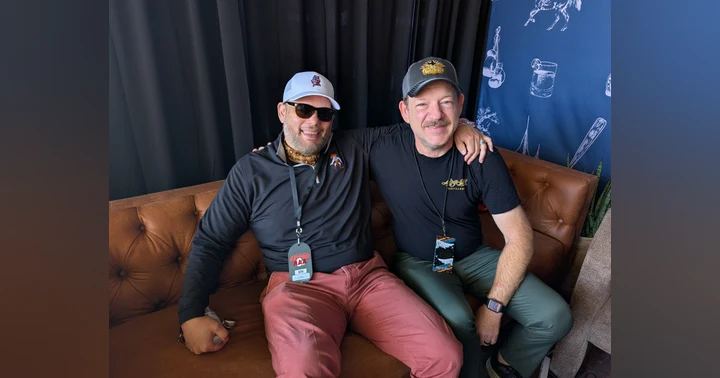
Fred Minnick at Bourbon & Beyond 2026; Ep. 93
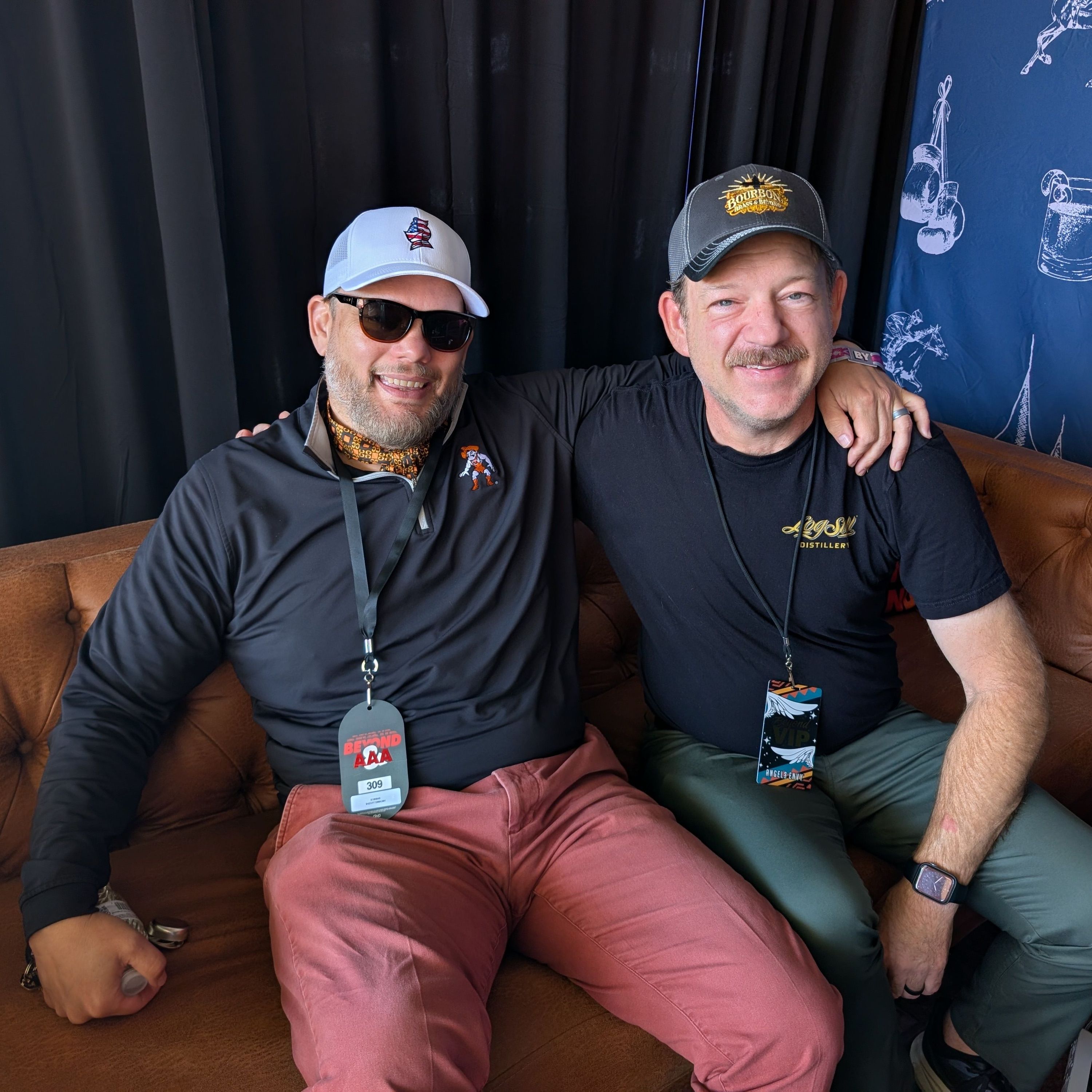


Fred Minnick joins Dan to talk bourbon, mental health, family history, and the changing rules around whiskey labeling. The conversation also gets personal, touching on pilot mental health, jujitsu, aging, and why preserving stories matters. If you want a grounded look at where bourbon is today and what its future might look like, this one covers a lot of ground.
#bourbon #fredminnick #whiskey #vodkasucks #podcast #bourbonbrassandbeyond #bourbonandbeyond #monksroad #derektrucks #asspocketwhiskey #oldripvanwinkle #jamesbeam #oakandage #bottomshelf #bestsellingauthor
Key topics- Fred Minnick talks about his book Bottom Shelf, including the paperback edition coming in February with added research on Old Crow and the people James Crow taught to distill.
- He and the hosts discuss mental health in aviation, including the stigma pilots face when seeking help and why recognizing the need for help has to come first.
- Fred shares his view that self-awareness matters more than blame, and warns against getting stuck in victim thinking or using social media outrage to validate anger.
- The conversation explores pilot medical certification, PTSD, and whether airlines are giving pilots enough support.
- Fred talks about his personal life, including building a house, selling his office, and trying to keep up during wrestling season.
- He discusses jujitsu and aging, including how he trains more selectively now and why he values safer, more sustainable rolling.
- The hosts and Fred revisit Bourbon & Beyond, which Fred helped build from its early days into one of the country’s biggest festivals.
- A major section focuses on bourbon labeling, with Fred arguing that the word “bourbon” needs stronger protection and that “whiskey” should often be the lead term for blends, finishes, or nontraditional expressions.
- Fred explains how trade agreements and legal definitions protect bourbon internationally—and why inconsistent labeling in the U.S. could create problems if other countries push for their own definitions.
- He closes on the current whiskey market, discussing American single malt, blends of straights, barrel finishes, and the quality whiskey entering wholesale as companies try to weather the next few years.
00:00 — Fred Minnick returns, Bottom Shelf, and the Cleveland versus Columbus mix-up
01:28 — Pilot mental health and why reaching out matters
02:58 — Recognizing when you need help
03:27 — How social media fuels blame and victim thinking
05:13 — PTSD risk and the stigma around pilots seeking care
06:11 — Paperback update, Old Crow research, and family history
07:11 — Jujitsu, wrestling, and training smarter with age
09:09 — Building Bourbon and Beyond into a major festival
10:07 — Why family stories and bourbon history need to be preserved
11:05 — The fight over protecting the word “bourbon”
13:02 — Why international bourbon labels could become a bigger issue
14:00 — Blends, finishes, and transparency on the shelf
15:28 — Scotch’s protected naming model versus bourbon
16:52 — What’s keeping bourbon moving forward
17:49 — Dusties, traditional flavor, and old-school high-rye profiles
18:48 — Wholesale barrels, NDPs, and concerns about flavor drift
19:15 — Finding a 143-proof Beam barrel worth buying
20:15 — How whiskey companies are surviving the next three years
“You gotta recognize it yourself.”
“If you have a lot of money, you can do whatever the hell you want.”
Bourbon, Brass & Beyond - https://www.bourbonbrassandbeyond.com
Fred Minnick - https://www.fredminnick.com
Dan and Fred: Well, welcome back to Bourbon Brass and Beyond. We're very lucky today. an idol of I think all of ours and somebody that we look up to. Fred Minnick, best selling author. Came out with a new book, bottom shelf. Now, this isn't our first time copying. No, you yeah, you actually were at my one of my very first book events. Yep. That was a great night, wasn't it? wonderful. What great food. The the the bourbon was great. We had a great time. In Columbus. Columbus or Cleveland? Cleveland. Cleveland. And I get those two mixed up. Yeah, a lot of a lot of people do. It's alright. It's Ohio. Well my thing is like, you know, if someone's driving me around everywhere, like when I'm doing these events and stuff, and like Columbus and Cleveland, you know, they hate each other. Like they are like, so the fact that I got Columbus and Cleveland mixed up, I just pissed off two of my biggest fan bases. And they were like, Fuck you, Fred Well so we're up from Youngstown, so we're closer to to Cleveland. You're neutral. But you're still neutral. Yes, we're I'm you're you're you'll die you identify as Cleveland. I do. And as as hard as that is as a Cleveland fan, you know. I don't know, y'all won one the other day. Yeah, Guardians. Brown's won one. Yeah. Brown's one won. I don't know how that happened, but we'll we'll take it. Yeah. So I the first thing I wanted to ask about in the book and I I I read the book, I love the book, was I I I've my other life, I'm a airline pilot. Yeah. And we did a I started a crisis intervention response program. Mm-hmm because I don't know if you've seen the news this week. the Senate passed a bill about pilots' mental health. Mm-hmm. And I I think it's Very similar to to some of the things you dealt like. Yeah, a lot of there's a lot of stress on pilots. from just getting to the gate, keeping all the systems in check, constantly getting prodded and like yeah, pissed off passengers all the time. All the time. You know? And they don't they don't realize that we're just as pissed off when things go wrong and delays happen, but but it's that that whole reaching out. Yeah. And I I think Your story it touches the soul 'cause it it it is really about reaching out and finding peace that yeah how how you go forward with that. What what do you think the the best thing is for somebody that now needs that mental health? How to reach out? Like how to how to like how is can someone find the fact that they need mental health or or like what are they what are the first steps in order to I think the I think the biggest thing is like You you gotta recognize it yourself. I mean, there's that old saying like you can lead a horse to water but you can't make it drink. Right. And that's that's mental health in a nutshell. I I gotta be honest with you, like I I knew I needed help. I I just didn't want it. and I and I think that's the that's the thing is you gotta want it. And you have to want to improve yourself. And it's also it also can like be real easy to like fall into this This like I feel sorry for myself, you know, I can't get out of this, it's everyone else's fault. There's there's a real easy trap there, especially in today's society, where we can get on social media and complain about somebody and then we get validation for it's that other person's fault. Whereas like you know, let's just say it's a traffic traffic situation, someone cuts you off and you're like Blowing that person up, you know, on social media, blah blah blah blah blah. But you know, you could have just ended the moment right there with after you got cut off, you've just been like, you know what, they're in a hurry, I gotta get somewhere else, move on. That person no longer has any place in your brain. No no more places in your heart. Now I I'm not gonna say I'm the best driver in the world and I don't get pissed off at people, but but I can recognize the fact that There are moments where if if you do not put a stop to the anger or whatever feeling that you have, it can it can get elevated and take another level. And in today's world we validate that. And and that is and and so by validating people and putting ourselves in like kind of like a victim mentality sometimes, we we can hurt our mental health even further because we're not choosing not to work on something that can be degrading down the line and make us depressed or whatever it may be. Well makes a lot of sense. And I you know there's a huge stigma for pilots. They say, hey I have a I have a problem and then all of a sudden like as of now you know pilots lose their medical. They can no longer do their job, they can no longer fly if they if they have Yeah, if they get tied to psychiatr psychiatry that especially PTSD, pilots are at a massive risk. I do know that. I have a lot of friends who are pilots and I I hear about that. So yeah. Yeah, and it's yeah, the thing about it is man, like I don't know surgeons and pilots, man. At every turn you guys have people's lives in your hands. So I don't know. I I feel like the airline carriers don't really give you all of the support you need. It's it's kind of on them in my opinion in a lot ways. Well and I'm hopeful. I'm really hopeful with this new law that I hope it passes the house. I I hope to see this removing thing. it's a bipartisan bill, right? Yeah. It's like yeah, I think it'll I think it'll make it through. Yeah. So we back to the book. We love the book. Do you have anything else coming out after this? You ever working on anything? the paperback edition's coming out in February. I I found a few more things out on on old Crow in that 1960s period. that's making it in the book. And then I found out some more things about the former slaves that James Crow taught how to distill. so there's some new information in the book in the paperback version. But man mostly we're a lot of things just on the personal front. We're building a house and you know, I'm I'm selling my office and I'm trying to get everything ready to move and like rent we're in the middle of wrestling season, so it's like all kinds of all kinds of things happening on the personal front like I can't keep up with. I have a number of questions. Well, if we're going into the wrestling, you still doing the BJJ? yeah, absolutely. Yeah, still doing jujitsu. So I know what it's opening up. I two different styles of martial arts. I've done it for many years. Yeah. I remember you telling me that you're wearing that red velvet jacket. Yes. Yeah. I'd wore it today, but a little hot. Yeah. Well actually it's not that bad now. Chilly last time. But we're similar age. Like I'm I'm gonna hit fifty. You're probably I'm forty eight. Forty eight? Yep. gets harder and harder every year. you know I think the way I train is like I'm a very so in jujitsu we we spar a lot in like I'm very I'm very selective with how I roll with certain people. Like the most dangerous person to train with is someone who's new brand new and doesn't really know what to do and you're trying and like you you could You could submit them in seconds. But you're trying to help them come along and everything. And so like, you know, I just kinda like get in positions to where I can help them and it's safe for me. But at the same time, like you know, if I see an opening to choke I will. But it the truth is is like jujitsu, if you can if you can figure the Raphael Lovato has a phrase like timeless jujitsu. If you can learn how to roll as you get older and what is safe, it's it's really incredible. And a lot of that is a lot of people do what we call pulling guard versus trying to do a takedown. And as a wrestler, I still have problems pulling guard. I actually I want to take you down and smash you. So Bourbon and Beyond that was your baby. Yeah. Yeah. Yeah. I I helped kind of put this all together and brought the bourbons to the table many moons ago and it's been it's been incredible to see grow and like see what it's become. And it really it really is something. Yeah. It's one of the biggest festivals in the country now. Well and I I I tend to think that like coming here, this is this is what I was excited about. I'm like, the bourbons could be great. But I have I have a complaint. We're in the media tank. Yeah. And I walked up to go get us bourbon to have something to try. Yeah, they have They have Tito's. Huh. Wonder what they paid to have that there. I don't know, but and you know what we think about vodka. Yeah, vodka sucks. Yeah, I'm actually pretty shocked by that. There usually is like a a significant bourbon presence, but I don't know. Well, it it's been a good week. I I Got to do interview with Derek Trucks, did the Ass Pocket whiskey stuff. His whiskey's good. Yeah. He has a good job. Did a bottle share Friday. We did went over to Wally's place at Monks Road Boiler House, and that was that was really good. But doing a lot of talk about the family heritage. And one of the things that I like about it and why I got into this was my grandpa used to tell me stories and You know, when you're a kid growing up, I didn't have anything to write it down, I didn't have anything to record it. And he used to talk about going out to the still for his uncle when he was a kid. But I wanted to record this for my kids. So they can they can they could they could learn from it. but part of that is not only preserving the family heritage and and and the the families that have been in this for a long time, like Wally or Preston or something like that, but preserving one of the best quotes I've heard is words have meaning. Yeah. And bourbon is a legal definition that we have to protect. Yeah. you were talking about that at the fork and flask stage yesterday. Yeah so we had this panel and you know we had all these people on the panel that are making bourbon and doing blends and finishes and you know really you know they they A lot of them see the future as pushing the envelope to like do things that are different that's not the same as it was in the past. And I'm like, I'm all for that, but how are you labeling it? And if you have bourbon on the label, you know, you in my opinion, you put the you put the geographical designation at risk. Yeah. Because we have not federally codified different styles of bourbon that to be protected. And And bourbon as it is protected is plain as day in the trade agreements that we have with people. In that is it must be from a fermented mash of at least 51% corn, come off the still no higher than 160 proof, go into a new charred container, which is a barrel, at no higher than 125 approved. The people who have trade agreements with us must sign a contract that is within the trade agreement. So it's internationally law binding. And if somebody from another country who doesn't have a free trade agreement makes bourbon, the United States government will go after them. And they have. They've done it in South Africa, they've done it in in South America, they've done it, you know, in Canada. You know, Crown Royal had bourbon all up on had bourbon all up on a label about ten years ago, it's called Bourbon Mash and that shit got shut down. You know, and so what people don't realize is that one day there's gonna be another country You know, let's say it's Paraguay or I don't know, I'm just pulling pulling the country out of the half. Well India's doing a lot of distilling now too. India is like it could be for heck, it it could be Iceland. It could be anybody. You know, they could say like, you know, they have a distiller there that has money, they have the distilling chops and but they want and they love bourbon, you know, and they wanna make bourbon the way they wanna make it in their country and they put it on the label. And they're gonna say, like, hey, you know, when if they have the money to defend themselves and they have the government support for that, they could say, like, look, this is Iceland bourbon, this is Paraguay Bourbon, this is Argentinian bourbon, whatever, whatever country it is. They can they can they can put this argument before some type of world court or somebody who makes decisions on whether or not something can happen. And that one of the arguments they can make is like, you guys can't even come to terms on what bourbon is in your own country. You're allowing you're allowing things at higher proofs, distilled at higher proofs to be labeled bourbon. You have fifteen barrel finishes over here and bourbon is the main word on here. It says finish. And you know, it's like and then you have all these blends and you're calling it bourbon. You know, you're not calling it blends of straights is the main designation on the label, you're calling it bourbon. And so like I I really think and I've always thought That we have to be far more protective of how things are labeled. Now, if these companies wanna say have whiskey be the big the big word and then on the bag says it's bourbon finish and this, this and this, that's great. And then you're s you're maintaining the transparency. But all of these all of these brands, they have they have the desire to sell whiskey. They have desire to sell bottles. And you cannot sell bottles in a liquor store. If the liquor store guy doesn't know where to put it, and if it doesn't say bourbon, big fat on the label, they're not gonna put it in the bourbon section next to Woodford Reserve or Maker's Mark. And so those things won't sell there. It'll get pushed off over into the weird like things like Kessler's. And so that's why they do it. And the truth is, it's dangerous. It's dangerous. And the Scotch Whiskey Society, so Scotch Whiskey Association had blocked Many, many things in Scotland. And they have like they protect Scotch, the word scotch, so well. They do a great job with it. Whereas in like Kentucky, like, well, we can make money off of it, so let's do it. And we've just lost we've just lost complete vision of like protecting the word bourbon. I'm not saying the finishes shouldn't exist. I'm not saying the I'm not saying the blend shouldn't exist. I'm saying we gotta protect the word bourbon and then they're counter people's counters like, well we want to be transparent. Absolutely be transparent. Right. So put make whiskey the main word on the label and not bourbon. Yeah, because that's transparency. That's yeah that that's how you would best describe it. Yeah. But the it the fact is I have lost this argument, you know, over fifteen years. I've had it many, many, many times and I've lost it because what matters what matters in this industry is money. And if you have a lot of fucking money, you can do whatever the hell you want. And I had a really good friend tell me, you know, recently, he's got he's got a bourbon brand and he's just yeah he's done. And I was like looking at some of these other brands, I was like, How the hell did this brand make it? And yours, which is your whiskey's far superior, it's like and yours did. He's like, It's simple man, money. They have more money than we do. So Yeah. So get me depressed thinking about it. Well on the on the flip side of that, what things are you seeing going forward that is going t to keep bourbon going? It it's like Well there is a lot of there is a lot of new blood in that's excited about doing things that are different. and they are appealing to audiences but they are getting away what is The traditional Kentucky bourbon, the flavor profile is is still very much coveted, but there's new flavor profiles being created left and right in in different genres. Like you got American single malt that's blowing up, you got you got blends of straights that are showing us all kinds of potential. And you do have the barrel finishes. But again, it's it's not, you know, are it do we classify that as bourbon? That and that comes back to that kind of question. So American whiskey The American whiskey category is blossoming in terms of how things are made and it's pretty exciting. But you know, I don't know where we would categorize a lot of that stuff. So I'm and I'm more of a traditionalist. Yeah. You know, I I I like the old Dusties. I I we opened a nineteen seventy six old granddad hunterproof Friday and Yeah, that sounds real nice. And seventy seven JW Dant, which Yeah. That to me is what high rye bourbon was supposed to be like. Yeah. You know? Do you see any return to that? Yeah, I mean that the whiskey's laid down. You know, the the the concern I have is that you know, the publicly traded companies and the larger companies, they are you know, they're seeing they're seeing the dips in the sales. and so they're They're pushing barrels out quicker. or they are selling off of or or they're selling stocks to they're putting market bar barrels out into the wholesale brokerage side to sell to NDPs versus bottling it themselves. And a lot a lot of those NDPs don't adhere to like that kind of traditional flavor profiles. That'd be my only concern there with some of it, but It it is exciting time. There's a lot of good whiskey coming out for inexpensive. That's a good thing. We visited Oak & Age for a barrel pick to and we went to like nine different barrels. I ended up I I said I'd listen, I know we're not picking the barrel, but I need to come home with a bottle of this. And it wasn't and and I'm not necessarily a Beam fan. Yeah. But this was an eleven year Beam that it ended up in and I'm not proof whore. I want flavor. But this was a hundred and forty-three proof hazmat that just blew my mind. And and I and everybody I've shared it with, everybody's like, holy cow, I can't believe that. I mean there is some fantastic stuff that's going to wholesale. I I don't know why they don't put it out themselves. That's that blows my mind. Yeah, I mean it is it it's all about the the whole world of whiskey. is about surviving for the next three years. And like everyone's got their own strategy in how they're gonna survive. And a lot of the barrels that are getting put into wholesale are part of that strategy. And and then you've got you've got companies like Dark Arts that are doing a great job with blending stuff and finishing things. And it's like if if Jim Beam can't bottle their own stuff and do it well Give it to them. Yeah. Who can. Yeah. I see that. I see it. Well, Fred, I I can't thank you enough for giving us. Great hanging, man. Yeah. Let's hope that let's hope that bill gets passed. I hope. I hope. And hey still out on the shelves? It's brand new. Yeah, on the bottom shelf. Exactly. I'll be here all day. Thanks, Fred. Thanks, brother. Thank you. Cheers. Cheers.