Protecting the Pour: Why the Word 'Bourbon' Needs Stronger Legal Defense
Welcome back to the blog extension of our podcast! If you listened to our recent conversation, you know we covered a massive amount of ground, from mental health and the physical realities of aging to the deep roots of whiskey history. But one of the most critical and urgent discussions we had centered on the legal integrity of our favorite native spirit. When we talk about American whiskey, the word 'bourbon' carries immense weight, cultural heritage, and economic value. Yet, as the industry evolves and innovation accelerates, that very word faces new pressures that could dilute its meaning both at home and abroad. To unpack this critical topic further, we are taking a deep dive into why bourbon needs stronger legal defense, how current regulations stack up, and what it means for every enthusiast standing in the liquor store aisle.
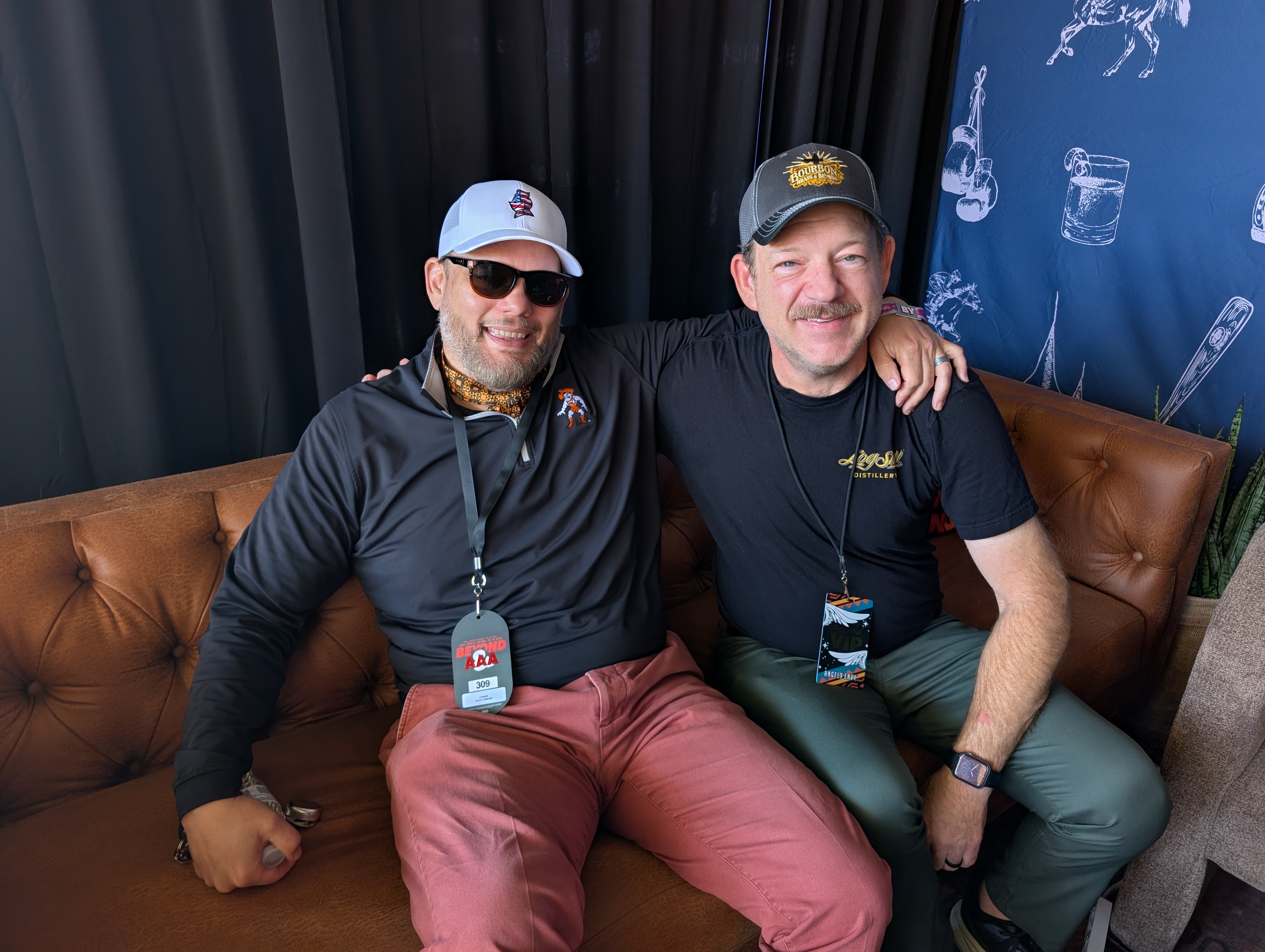
If you haven't had a chance to listen to the full conversation that inspired this piece, you can check out Fred Minnick at Bourbon & Beyond 2026; Ep. 93, where Fred joined us to break down labeling laws, international trade agreements, and the shifting landscape of the whiskey market.
What's in a Name? Understanding Current Whiskey Labeling Laws
To understand why the protection of the word 'bourbon' is so vital, we first need to look at what bourbon legally is under United States federal law. According to the Alcohol and Tobacco Tax and Trade Bureau, or TTB, true straight bourbon must be produced in the United States, made from a grain mixture that is at least 51 percent corn, aged in new charred oak containers, distilled to no more than 160 proof, and entered into the barrel at no more than 125 proof, with no added artificial color or flavoring.
These rules are specific, and for decades, they have served as the foundation of the American whiskey boom. However, the legal definition becomes a bit more malleable when brands start pushing the envelope with blending, finishes, and experimental expressions. While the TTB regulations outline the baseline requirements for a spirit to be labeled as bourbon, they do not always account for the rapid commercial expansion of modern whiskey. As more producers enter the market with innovative techniques, the boundaries of what constitutes a traditional bourbon are constantly being tested. This flexibility, while great for creativity, creates loopholes that can confuse consumers and devalue the traditional craft.
The International Stakes: Why Global Trade Agreements Depend on Strict Definitions
The conversation around whiskey labeling is not just a domestic issue confined to American liquor stores; it has massive international implications. Bourbon is officially recognized as a distinctive product of the United States through various international trade agreements. This means that if a spirit is produced outside of the United States, it legally cannot be called bourbon in many parts of the world.
However, international recognition relies heavily on the consistency and rigor of our own domestic laws. If the United States begins to relax its standards, or if we allow loose interpretations of the word 'bourbon' on our own shelves, we risk undermining our negotiating power on the global stage. Foreign governments and international trade bodies could use inconsistent U.S. labeling enforcement as a precedent to weaken protections for American whiskey abroad. Protecting the integrity of the word at home is our strongest defense in international courts and trade negotiations, ensuring that authentic bourbon maintains its prestige and legal exclusivity worldwide.
Learning from Scotch: The Gold Standard of Geographic Protection
When looking at how to better protect bourbon, we only need to look across the Atlantic to see the gold standard of geographic and product protection: Scotch whisky. The Scotch Whisky Association has spent decades enforcing some of the strictest production and labeling laws in the entire beverage alcohol industry. Every single bottle labeled as Scotch must adhere to a rigid set of rules regarding distillation, geographic origin in Scotland, and aging in oak casks for a minimum of three years.
Scotch has built an unshakeable global reputation precisely because consumers know that the word on the label guarantees a very specific, highly regulated process. Bourbon can and should strive for that same level of absolute consumer trust. When a buyer picks up a bottle of Scotch, there is zero ambiguity about what is inside. Bourbon producers and regulators should take a page from this playbook, tightening the legal defenses around the word 'bourbon' so that it commands the same unquestioned authority and respect in international markets.
Blends, Finishes, and Nontraditional Expressions: When 'Whiskey' Should Lead
One of the most passionate arguments surrounding modern whiskey labeling involves the explosion of barrel finishes, honey infusions, unique grain combinations, and complex blends of straight whiskies. Innovation is the lifeblood of the modern craft whiskey movement, and distillers are experimenting with everything from rum casks to rare finishing woods. But where does bourbon end and flavored or modified whiskey begin?
A strong argument can be made that when a spirit departs significantly from traditional methods—such as through heavy finishing regimens or non-traditional flavoring agents—the word 'whiskey' should take the primary leadership role on the front label, rather than 'bourbon.' While these experimental liquids are often delicious and highly sought after by collectors, slapping the word 'bourbon' in bold letters across a bottle that has been radically altered can muddy the waters for consumers. Keeping 'whiskey' at the forefront for these innovative expressions preserves the purity of the traditional bourbon category while still giving blenders and innovators the creative freedom they need to thrive.
Shelf Transparency: Why Consumers Deserve to Know What They Are Pouring
Beyond the legal definitions and international trade agreements, there is a fundamental consumer rights issue at play: shelf transparency. When whiskey enthusiasts walk down the spirits aisle, they are often confronted with elaborate marketing stories, vintage-style labels, and opaque sourcing details that make it nearly impossible to know who actually distilled the liquid in the bottle.
Stronger labeling laws and stricter definitions go hand in hand with complete transparency. Consumers deserve to know the exact age of the whiskey in their glass, whether the product is a blend of multiple states or distilleries, and what kind of cask finishing was applied. When the word 'bourbon' is used loosely as a marketing catchall, it obscures the hard work of traditional distillers who adhere to strict production standards. Clear, honest labeling empowers buyers to make informed choices, rewarding authentic craftsmanship and punishing misleading marketing practices.
Looking Ahead: Protecting Authentic Bourbon in a Changing Market
The American whiskey market is currently navigating a fascinating and tumultuous transition period. With a massive influx of wholesale barrels, non-distiller producers, and shifting consumer drinking habits, companies are looking for any edge they can find to survive and stand out over the coming years. In this competitive environment, the temptation to bend the rules or stretch the definition of bourbon will only increase.
Protecting the pour is not about gatekeeping or stifling creativity; it is about preserving the heritage, quality, and legal standing of a uniquely American spirit. By tightening our labeling laws, demanding absolute transparency on the shelf, and learning from international models like Scotch, we can ensure that bourbon remains a symbol of craftsmanship and integrity for generations to come. To hear more of our deep dive into these issues, make sure you listen to the complete episode over at Fred Minnick at Bourbon & Beyond 2026; Ep. 93, and join us next time as we continue exploring the stories, the people, and the rules shaping the world of whiskey.

Pilot / Dad / Trumpeter / Contract Negotiator / Martial Artist
In his 26th year as an airline pilot, Dan resides in Youngstown, Ohio with his high school sweetheart Stephanie. Combined they have 5 kids (teenagers...). They enjoy travel as a family, and as a couple. Dan has had a bourbon affinity since smelling his Grandfather's JW Dant and Grapefruit soda as a kid. Dan started collecting bourbon in 2015. He has been actively involved in Martial Arts since he was a kid and has Black Belts in two different styles. Dan still plays trumpet. Originally he went to college for music at Ohio University, but after his sophomore year decided he would much rather spend 3 hours in an airplane instead of a practice room. He still helps teach high school band camps, and has assisted with 5th and 6th grade Trumpet, Low Brass, and Percussion. Dan has been a Pilot Union Representative, Contract Negotiator, Merger Specialist, and Contract Compliance Administrator for over 20 years. Dan received the President's Lifetime Achievement Volunteer Service Award in 2024.
The Art of the Barrel Pick: Why Flavor Trumps Proof Every Time