Why Big Bourbon Distillers Should Embrace Multi-Brand Blends
When major whiskey producers mix stocks from across their portfolios, it challenges traditional marketing rules. This deep dive explores why multi-brand blending by legacy distilleries—such as combining Old Forester, Woodford Reserve, and Jack Daniel's—creates unique flavor profiles, how it differs from non-distiller producer blends, and why it deserves a permanent place in the modern bourbon market.
Key Takeaways
- Major distilleries traditionally keep their major brand portfolios strictly separated to maintain distinct identities and consumer loyalties.
- Cross-brand blending allows master blenders to leverage exceptional and unique stocks, such as high-end heat-cycled barrels, into innovative releases.
- Accessible pricing around the $100 mark makes limited multi-brand releases attractive to collectors who are fatigued by exorbitant secondary market prices.
- Consumer reception strongly indicates that initial curiosity driven by a gimmick will only secure long-term success if the whiskey's flavor delivers.
The Tradition of Brand Segregation in Bourbon
For decades, the business model of legacy American whiskey producers has relied heavily on brand compartmentalization. If you buy a bottle labeled as Old Forester, you expect the distinct profile of heat-cycled warehouses in Louisville. If you purchase Woodford Reserve, you look for the soft, grain-forward character tied to its historic Woodford County home. Blending across these distinct labels has historically been viewed as crossing an invisible industry line.
Distilleries invest millions of dollars building brand loyalty around specific flavor notes, mash bills, and warehouse environments. When a corporate parent steps in to merge these identities, corporate strategy often dictates caution. There is a persistent fear that combining flagship inventories might dilute the individual prestige of each brand. However, special releases that honor legendary figures within these companies are beginning to break down these rigid corporate boundaries.
Breaking the Rules for Master Distillers
When honoring a monumental career, standard operating procedures tend to bend. Tribute releases and anniversary bottlings provide the perfect excuse for master blenders to reach across brand lines and pull from experimental or ultra-aged stocks that would otherwise remain isolated. By utilizing barrels originally earmarked for hyper-exclusive programs like President's Choice alongside standard flagship reserves, blenders can achieve an entirely unprecedented sensory experience.
Gimmick Versus Flavor: The Economics of Special Releases
In today's crowded spirits marketplace, differentiation is everything. Consumers are constantly bombarded with limited editions, special finishes, and anniversary tributes. Many enthusiasts categorize multi-brand blending as a marketing gimmick—a clever way to bundle surplus inventory into an eye-catching package with an inflated price tag. Yet, industry reactions prove that while a clever concept might get a bottle off the shelf initially, it takes genuine liquid quality to give it staying power.
There is a stark contrast between small non-distiller producers who blend sourced whiskey to create a brand from scratch and historic distillers who merge their own time-tested distillate. When historic heavyweights combine forces internally, they aren't masking subpar juice; they are orchestrating a symphony of mature profiles. The resulting liquid often bridges the gap between competing flavor worlds—such as marrying the rich, spicy char of a 1910-style profile with the delicate balance of a double-oaked expression.
Pricing Strategies for the Modern Collector
One of the most pressing issues facing bourbon enthusiasts is runaway secondary pricing. When major producers release a hyper-allocated bottle, secondary markets frequently drive the price up to astronomical heights, putting the whiskey completely out of reach for the average consumer. Releases that hit the market at an accessible ninety-nine-dollar price point bridge a crucial gap. They feel special enough to chase while remaining grounded enough to actually open and share with friends.
The Future of Cross-Brand Innovation
As consumer palates evolve and the demand for transparency increases, whiskey drinkers are eager to see behind the corporate curtain. While secrecy has its place in building mystique, modern bourbon fans increasingly appreciate the Barrel Town approach—full disclosure of mash bills, barrel types, and component ages. If major houses choose to pursue cross-brand blending on a regular, recurring schedule, embracing ingredient transparency will be vital to sustaining consumer trust.
Ultimately, the success of these unexpected mashups proves that the bourbon community is ready for legacy distillers to color outside the lines. If doing so means producing balanced, complex pours that honor industry legends while delivering exceptional flavor, the major players should make multi-brand blending a regular feature of their release calendars rather than a once-in-a-generation anomaly.
Conclusion and Final Thoughts
Cross-brand blending by legacy distillers represents an exciting frontier for American whiskey, proving that honoring industry pioneers can lead to extraordinary flavor innovation. To hear a complete breakdown of this remarkable release and explore more tasting notes, Listen to the full episode. Join Bob, Dan, and the rest of the crew as they pour a glass, discuss market trends, and search for their unicorn bottles.
Frequently Asked Questions
What is cross-brand bourbon blending?
Cross-brand blending occurs when a parent company combines mature whiskey stocks and barrels from distinct, established brand portfolios—such as Old Forester, Woodford Reserve, and Jack Daniel's—to create an entirely new, unified expression.
Why don't major distilleries blend across brands more often?
Large producers traditionally keep their brands separate to protect individual brand identities, maintain distinct flavor profiles, and avoid confusing consumers who are loyal to specific labels.
How does multi-brand blending differ from NDP blending?
While non-distiller producers typically source and blend whiskey from outside distilleries to build a new brand from scratch, legacy producers use their own vast inventories of aged, internally distilled stocks across their established families.
Are multi-brand bourbon releases considered gimmicks?
They can sometimes be perceived as marketing gimmicks used to drive initial hype, but true whiskey longevity depends entirely on whether the blended flavor profile delivers exceptional quality in the glass.

Pilot / Dad / Trumpeter / Contract Negotiator / Martial Artist
In his 26th year as an airline pilot, Dan resides in Youngstown, Ohio with his high school sweetheart Stephanie. Combined they have 5 kids (teenagers...). They enjoy travel as a family, and as a couple. Dan has had a bourbon affinity since smelling his Grandfather's JW Dant and Grapefruit soda as a kid. Dan started collecting bourbon in 2015. He has been actively involved in Martial Arts since he was a kid and has Black Belts in two different styles. Dan still plays trumpet. Originally he went to college for music at Ohio University, but after his sophomore year decided he would much rather spend 3 hours in an airplane instead of a practice room. He still helps teach high school band camps, and has assisted with 5th and 6th grade Trumpet, Low Brass, and Percussion. Dan has been a Pilot Union Representative, Contract Negotiator, Merger Specialist, and Contract Compliance Administrator for over 20 years. Dan received the President's Lifetime Achievement Volunteer Service Award in 2024.
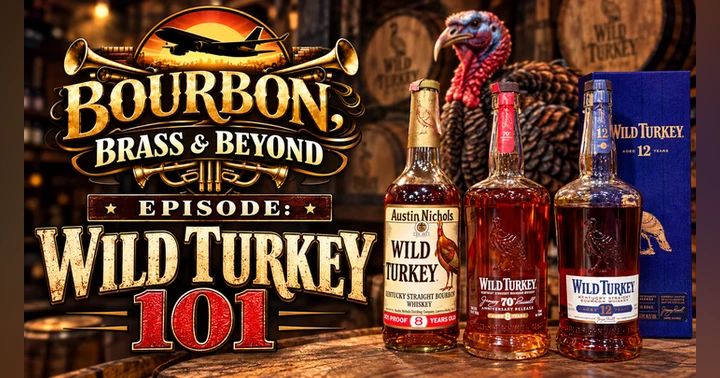
A Rare Treat: Reviewing the Japan-Only Wild Turkey 12 Year 101 Proof