The Science of Secondary Aging: How Buzzard's Roost Masters Custom Toast Profiles
Welcome back to the blog! If you are a regular listener of the podcast, you know we love diving deep into the technical weeds of bourbon production. We talk endlessly about mash bills, yeast strains, rickhouse placement, and rickhouse climates. But today, we are turning our attention to one of the most fascinating and rapidly evolving frontiers in the American whiskey landscape: secondary maturation. Specifically, we are looking at the meticulous science and creative artistry happening at Buzzard's Roost Whiskey in Louisville, Kentucky. To explore these concepts fully, make sure you listen to our in-depth conversation in Buzzard's Roost Whiskey with founder Jason Brauner; Ep. 80.
Introduction: The Science of Secondary Aging at Buzzard's Roost
Secondary aging, sometimes referred to as double oaking or finishing, is no longer just a gimmick or a quick marketing fix for young whiskey. In the hands of skilled blenders and cooperage experts, it has become a sophisticated science. Brands are utilizing custom barrel specifications to radically transform already aged distillates into complex, layered masterpieces. At the vanguard of this movement is Jason Brauner and the team at Buzzard's Roost. By taking well-crafted sourced whiskey and re-barreling it into custom-engineered wood, they are rewriting the rules of what a finished bourbon can achieve. This isn't about masking flaws with heavy wood influence; it is an exercise in culinary-level flavor engineering. Let's pull back the curtain and examine the exact chemical and physical processes that make Buzzard's Roost a standout in modern whiskey making.
Sourced Whiskey Re-Imagined: The Art of the Secondary Barrel
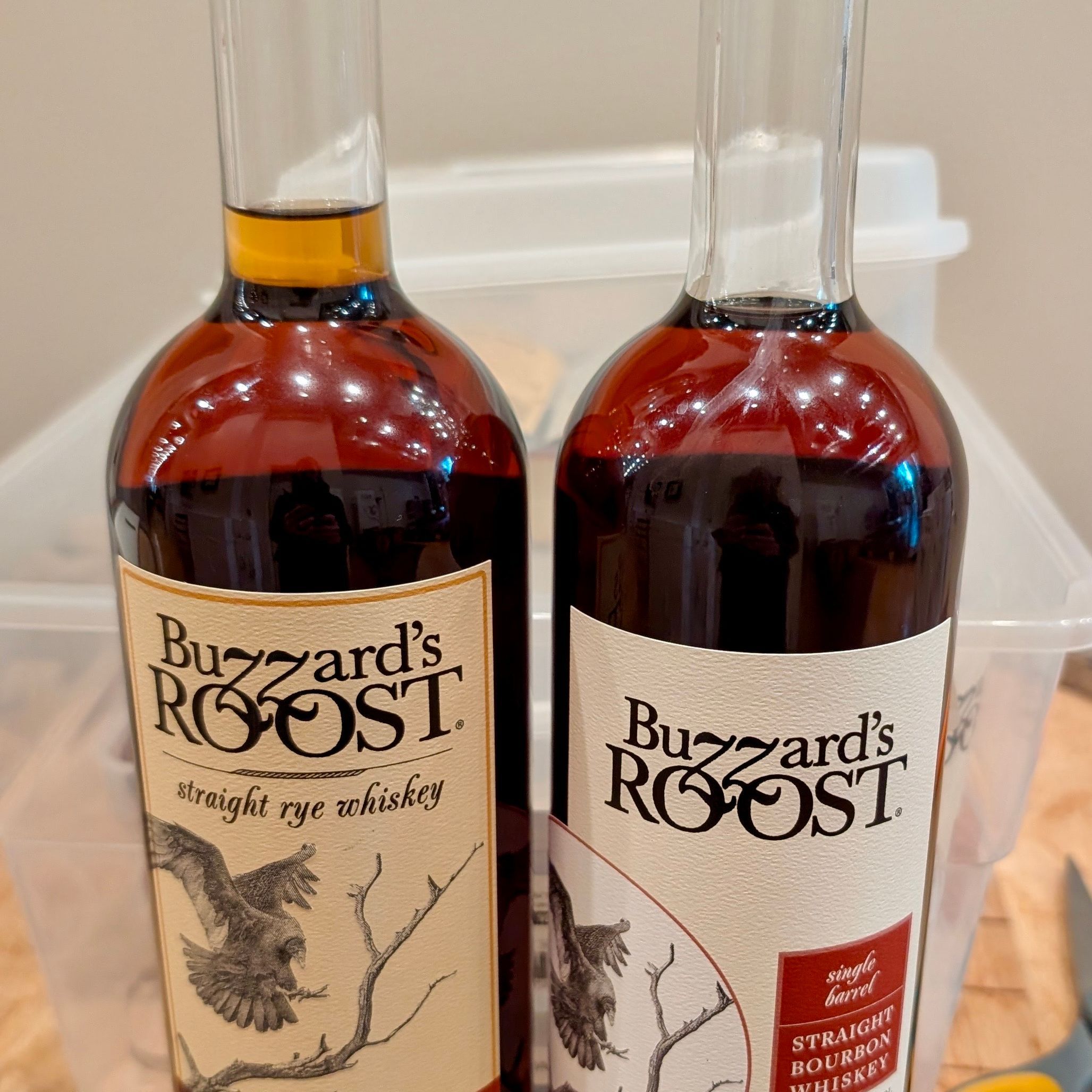
There is often an unnecessary stigma attached to the term "sourced whiskey" in the spirits community. However, some of the most innovative products on the market today rely on sourced distillate precisely because it provides a blank canvas of exceptional quality. Buzzard's Roost typically sources whiskey sitting comfortably in the five-to-seven-year range, with many of their single barrel releases landing between six and eight years old. At this age, the whiskey has already absorbed a healthy foundation of wood sugars, tannins, and barrel characteristics from its initial maturation.
Rather than bottling this liquid as-is, the team at Buzzard's Roost takes a page out of the finishing playbook and elevates it entirely. They empty these barrels and transfer the whiskey into brand-new, heavily customized secondary oak barrels. This secondary aging process allows the spirit to interact with fresh wood, initiating a brand-new wave of chemical reactions. The goal is not to let the wood completely overpower the grain, but rather to introduce a secondary layer of complexity that harmonizes with the original distillate's profile. It is a delicate balancing act that requires a deep understanding of wood science, temperature fluctuations, and time.
The Magic of 17 Proprietary Toast Profiles and Char 1 Finishes
If you want to understand what makes Buzzard's Roost truly unique, you have to look at their approach to cooperage. While most distilleries rely on standard industry char levels—usually a Char 3 or Char 4 (often called an alligator char)—Buzzard's Roost takes a radically different route. They utilize a staggering 17 proprietary barrel toast profiles paired with a light Char 1 finish.
Why does this matter? To understand the science, we need to look at how wood responds to heat. Toasting a barrel uses radiant heat to slowly break down the complex wood polymers, specifically hemicellulose and lignin, converting them into simpler, sweet-tasting chemical compounds like vanillin, maltol, and various oak lactones. A heavy char burns away a significant portion of these precious toasted sugars, replacing them with heavy carbon and smoky, acrid compounds.
By opting for a light Char 1 finish on top of a carefully engineered toast profile, Buzzard's Roost preserves the maximum amount of toasted sugars brought to the wood's surface. This methodology acts like a spice rack for the blending team. Different toast levels yield entirely different sensory outcomes, ranging from rich butterscotch and sweet vanilla to earthy, leathery, and baking-spice-driven profiles. This precision allows them to tailor every batch and single barrel to exact specifications, creating incredible nuance that standard char barrels simply cannot replicate.
How Double Oaking Tames 116 Proof for a Surprisingly Smooth Pour
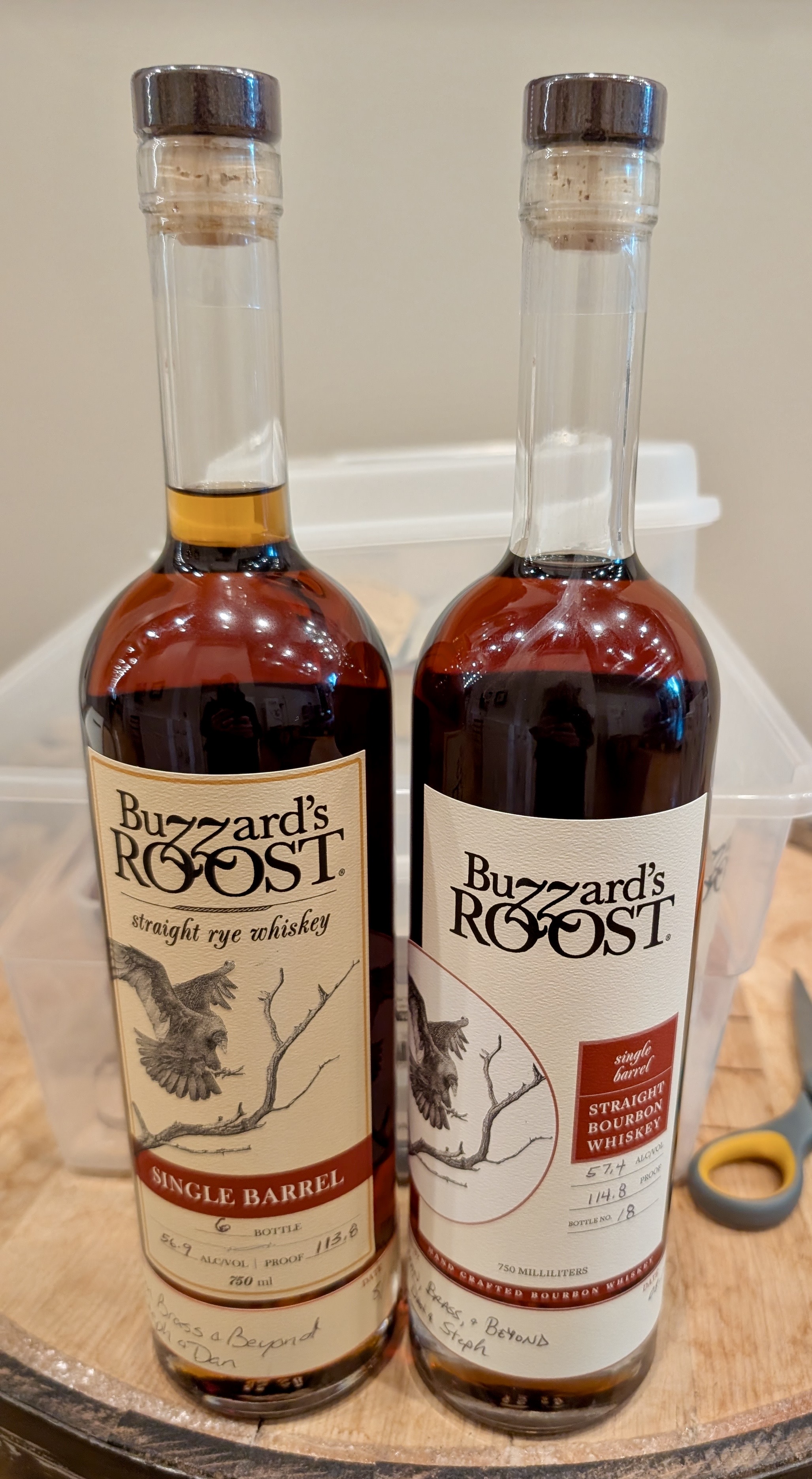
High-proof whiskey lovers often seek out barrel-proof expressions for their intensity and robust flavor delivery. However, high-proof spirits can sometimes be intimidating, bringing a harsh ethanol burn that masks the underlying tasting notes. Buzzard's Roost barrel-strength bourbon hits the glass at a robust 116 proof, yet it famously drinks well below that proof point. How is this possible?
The secret lies in the interaction between the high-proof spirit and the active secondary barrel. When a high-proof whiskey enters a heavily toasted, fresh secondary barrel, the wood extractives—such as oak lactones, polysaccharides, and sweet congeners—dissolve rapidly into the alcohol. These compounds coat the palate, interacting with taste receptors in a way that creates a perceived mouthfeel of incredible richness and softness. Furthermore, the harmonious integration of the new oak oils helps to soften the sharp edges of the ethanol. The result is a bold, high-octane whiskey that delivers all the punch and depth of a barrel-proof offering, but with an unexpected, velvet-smooth finish that invites you back for another sip.
Deconstructing the Flavor Profile: From Crème Brûlée to White Pepper
All of this technical wizardry ultimately serves one purpose: flavor. When you pour a glass of Buzzard's Roost bourbon, the sensory experience is a masterclass in contrasting and complementary notes. On the nose and palate, you are immediately greeted by a vibrant kick of white pepper that adds an element of lively spice and prevents the whiskey from becoming cloying.
As the spirit opens up in the glass—especially when allowed to breathe with a drop of water or simply exposed to ambient air—the secondary toast profile reveals its true magic. Waves of rich caramel, dark burnt sugar, and sweet Madagascar vanilla emerge, closely followed by bright notes of citrus peel. Perhaps the most defining signature of the Buzzard's Roost profile is a distinct crème brûlée-like quality: a rich, custard-like sweetness topped with a hard, caramelized sugar crunch.
This interplay between savory spices, sweet sugars, and vibrant fruit notes demonstrates why custom toasting is so effective. It creates a multi-dimensional tasting experience where the palate shifts and evolves with every single sip, keeping whiskey enthusiasts endlessly engaged.
Beyond the Barrel: The Future with House Distillate and Special Releases
While secondary finishing has defined the brand's early success, the future of Buzzard's Roost is expanding in exciting new directions. During our conversation with Jason Brauner, we explored the anticipation surrounding their own house distillate. With a working still operating right there on-site in Louisville, the team is already aging their own white dog in barrels, paving the way for future releases born entirely from grain to glass under their direct supervision.
At the same time, Buzzard's Roost continues to push boundaries with limited and experimental releases. Their annual French oak projects utilize wood with tighter grain structures, complex sugars, and higher tannin levels, offering a completely different flavor dimension compared to traditional American white oak. Add in anticipated returns of bottled-in-bond expressions, wheated single barrels, and creative smoked batch experiments, and it is clear that innovation remains at the core of their business model.
Ultimately, the story of Buzzard's Roost is one of relentless curiosity, deep industry respect, and a commitment to science-backed flavor creation. Whether you are exploring their core lineup, tasting through their unique single barrels, or pairing their whiskey with artisan chocolates from Art Eatables, you are experiencing the culmination of years of hospitality expertise and cooperage experimentation.
To hear all of the details straight from the founder himself, including deep dives into historic single barrel selections and the collaborative culture of the bourbon industry, make sure to check out Buzzard's Roost Whiskey with founder Jason Brauner; Ep. 80. Until next time, keep exploring your glass, stay curious, and cheers!
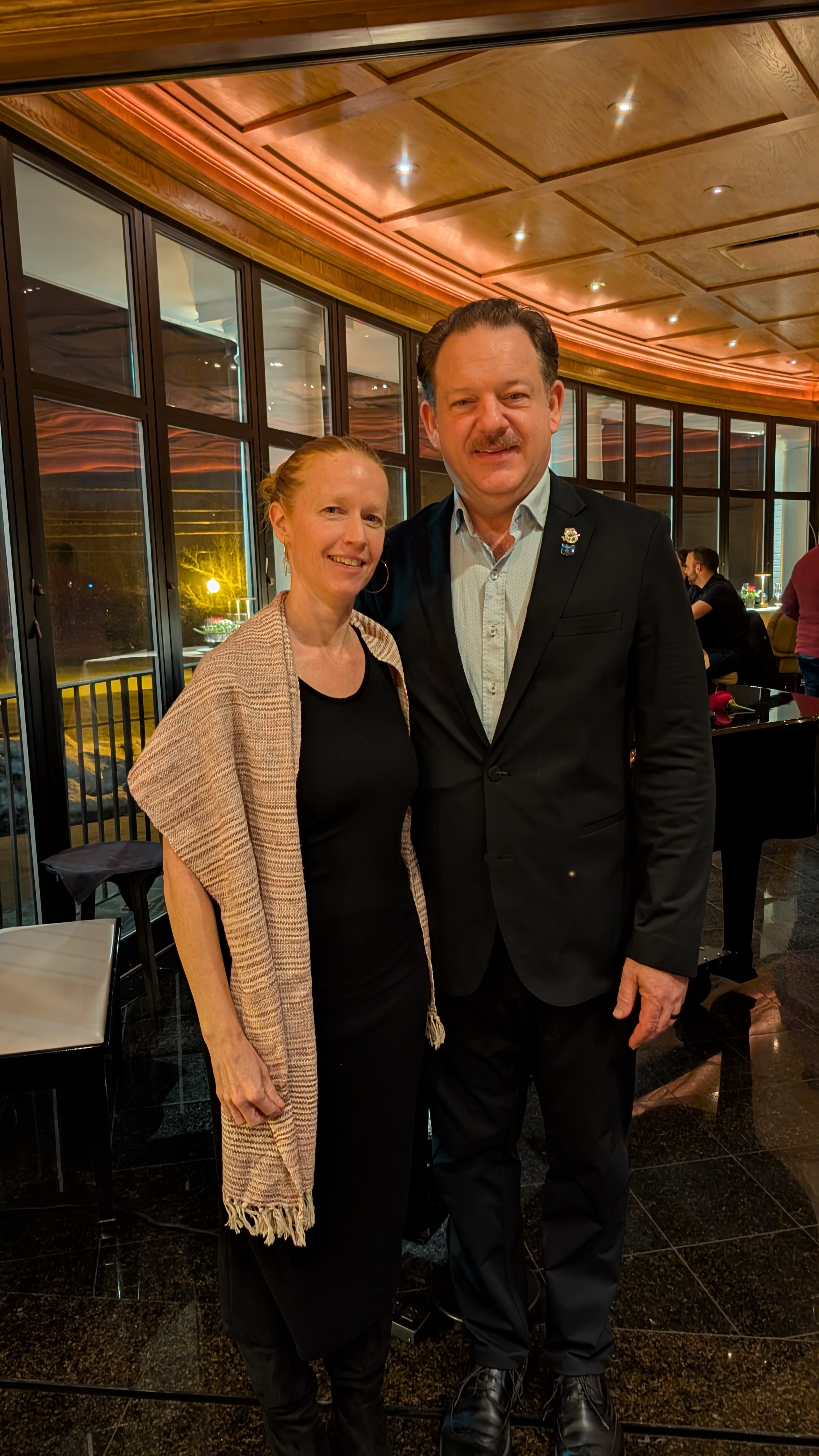
Pilot / Dad / Trumpeter / Contract Negotiator / Martial Artist
In his 26th year as an airline pilot, Dan resides in Youngstown, Ohio with his high school sweetheart Stephanie. Combined they have 5 kids (teenagers...). They enjoy travel as a family, and as a couple. Dan has had a bourbon affinity since smelling his Grandfather's JW Dant and Grapefruit soda as a kid. Dan started collecting bourbon in 2015. He has been actively involved in Martial Arts since he was a kid and has Black Belts in two different styles. Dan still plays trumpet. Originally he went to college for music at Ohio University, but after his sophomore year decided he would much rather spend 3 hours in an airplane instead of a practice room. He still helps teach high school band camps, and has assisted with 5th and 6th grade Trumpet, Low Brass, and Percussion. Dan has been a Pilot Union Representative, Contract Negotiator, Merger Specialist, and Contract Compliance Administrator for over 20 years. Dan received the President's Lifetime Achievement Volunteer Service Award in 2024.
Penelope Omega 11 Year vs. Maker's Mark 46 Cask Strength: The Ultimate Breakdown