Eagle Rare: Is it Truly the Best Deal in Bourbon?
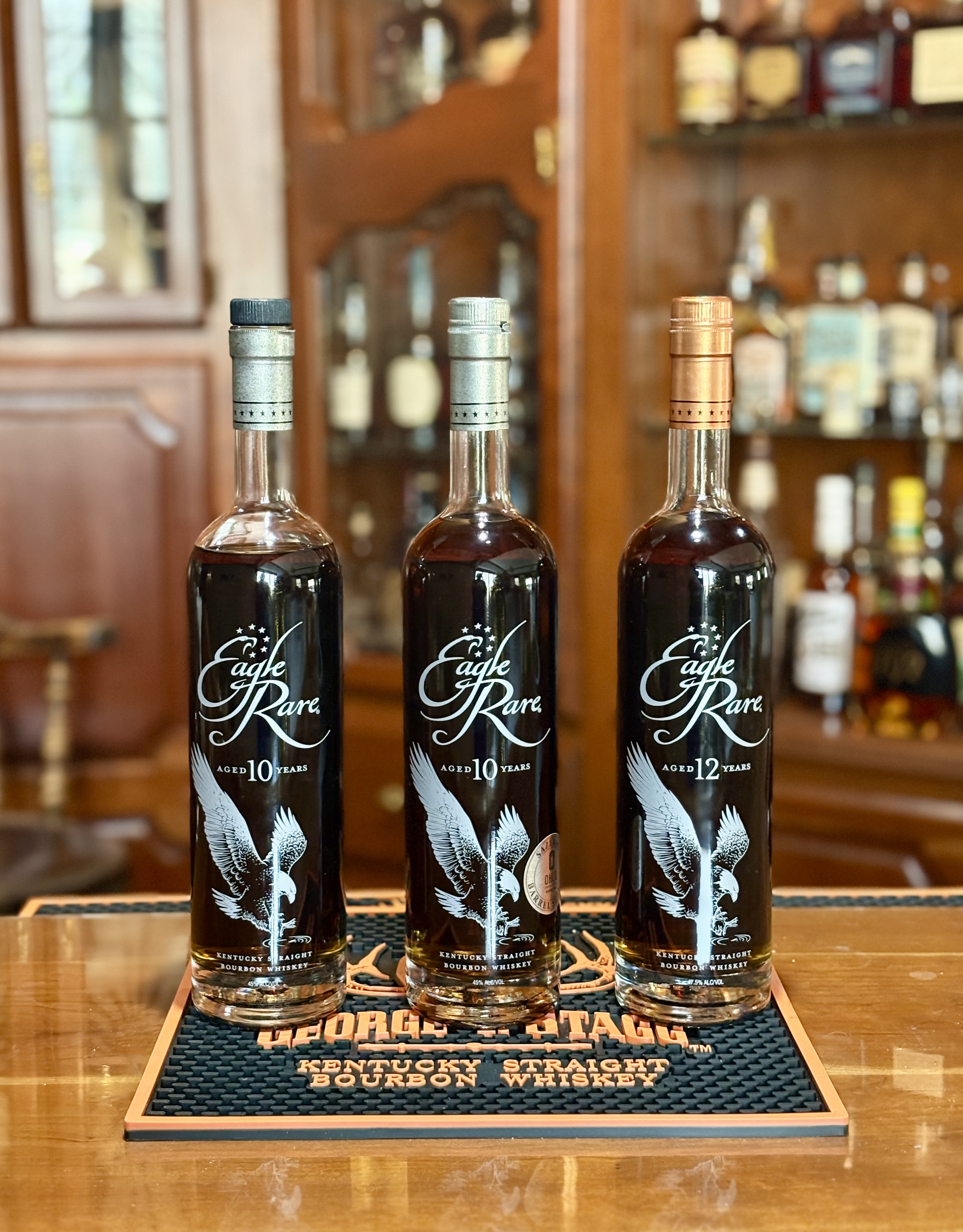
Welcome back to the blog for Bourbon, Brass & Beyond! This week on the podcast, we dove headfirst into the sometimes fiery, often debated world of bourbon value. One of the phrases that popped up, and one that’s echoed in many a whiskey bar and online forum, is that Eagle Rare is quite simply "the best deal in bourbon." It’s a bold claim, and one that deserves a closer look. In this post, we're going to unpack that statement, explore what makes Eagle Rare so highly regarded, examine its price point in relation to its quality, and see how it truly stacks up against its peers. So, settle in, grab a glass, and let's explore this fan-favorite bourbon.
What Makes Eagle Rare So Special?
Eagle Rare, a 10-year-old single barrel bourbon from Buffalo Trace Distillery, has cultivated a loyal following for a reason. Its reputation precedes it, often described as a gateway bourbon into the world of more refined, age-stated spirits. But what exactly contributes to this special status?
Firstly, the age statement is a significant factor. In an era where age-stated bourbons are becoming increasingly rare and expensive, finding a consistent, well-aged product like Eagle Rare at its price point is a breath of fresh air for many enthusiasts. The 10 years of aging allow the spirit to interact extensively with the oak barrel, developing complex layers of flavor that younger bourbons often lack. This maturation process imparts rich notes of vanilla, caramel, and oak, along with a smooth, velvety texture.
Secondly, the single barrel nature of Eagle Rare is crucial. Each bottle comes from a single barrel, meaning that while there are overarching flavor profiles, there can be subtle variations from barrel to barrel. This "terroir" of the warehouse and the specific journey of that particular barrel contribute to a sense of uniqueness with every pour. It’s this individual character, untainted by blending, that many aficionados seek out. It offers a snapshot of a specific time and place in the aging process, making each bottle a potential discovery.
The mash bill also plays a role, though Buffalo Trace keeps its exact mash bills for its core products close to the chest. However, it's widely believed that Eagle Rare uses Buffalo Trace's lower rye mash bill, typically around 10-12% rye. This low-rye mash bill tends to produce a sweeter, fruitier bourbon, with less of the spicy bite that higher-rye bourbons often exhibit. This profile is generally more approachable and widely appealing, contributing to its popularity among a broad spectrum of bourbon drinkers.
Finally, the perceived quality of Eagle Rare often punches above its weight. It consistently receives high marks in reviews and tasting notes for its balanced flavor, pleasing aroma, and smooth finish. It’s a bourbon that offers a complexity that can be appreciated by both novice and experienced drinkers, providing a depth that can be savored and discussed. The consistent quality, year after year, builds trust and brand loyalty, solidifying its place as a go-to option.
Eagle Rare's Price Point: A Look at Value
This is where the "best deal" claim truly comes into play. Eagle Rare typically retails for somewhere in the range of $30-$40, though this can fluctuate significantly based on location and retailer. When you consider the age statement, the single barrel designation, and the generally accepted quality of the spirit, this price point is remarkably competitive.
In the current bourbon market, finding a 10-year-old, single barrel bourbon for under $50 is increasingly difficult. Many bourbons with similar specifications, or even less, command prices well into the $60, $70, or even $100+ range. This is due to a confluence of factors, including increased demand, limited supply of aged spirits, and the general rise in premiumization of spirits.
The value proposition of Eagle Rare lies in its ability to deliver a premium drinking experience without the premium price tag that has become associated with many other well-regarded bourbons. It offers a complexity and maturity that often surpasses bourbons costing twice as much. This makes it an accessible entry point for those looking to explore age-stated, single barrel bourbons without breaking the bank.
However, it's important to acknowledge that "value" is subjective and heavily influenced by availability. While the MSRP might be $30-$40, if you can't find it at that price, the perceived value diminishes. This is a point we will touch on more later. But purely on a per-ounce, quality-for-price basis, Eagle Rare holds a strong position.
Eagle Rare vs. Competitors: A Comparative Analysis
To truly assess the "best deal" claim, we need to compare Eagle Rare to its contemporaries. This is where things get interesting, as the bourbon landscape is vast and ever-evolving.
Let's consider other 10-year-old or similarly aged bourbons. For instance, something like a Russell's Reserve 10 Year Old. Russell's Reserve 10 is also a fantastic bourbon, often lauded for its robust flavor profile and balanced oak. It's typically priced in a similar range, perhaps slightly higher. When comparing the two, it often comes down to personal preference. Some might find Russell's Reserve 10 a bit more intense or spicy, while others might prefer Eagle Rare's smoother, sweeter profile.
Then there are other single barrel offerings. While not always 10 years old, single barrel bourbons from other distilleries can also fall into a similar price bracket or be significantly more expensive. The key differentiator for Eagle Rare is its consistency and its 10-year age statement. Many other single barrel releases are younger, or their age is not explicitly stated, making direct comparisons tricky. However, if you were to find a 10-year-old single barrel from a different, less established distillery, it would likely be priced higher due to the perceived risk or the need to establish brand value.
What about bourbons in a similar flavor profile but without the age statement or single barrel designation? Here, Eagle Rare shines. If you look at bourbons in the $30-$40 range that are not age-stated, you might find some excellent small-batch options. However, they often lack the depth and complexity that comes from a decade of barrel aging. Eagle Rare provides that extra layer of maturity that elevates it beyond many of its less-aged counterparts.
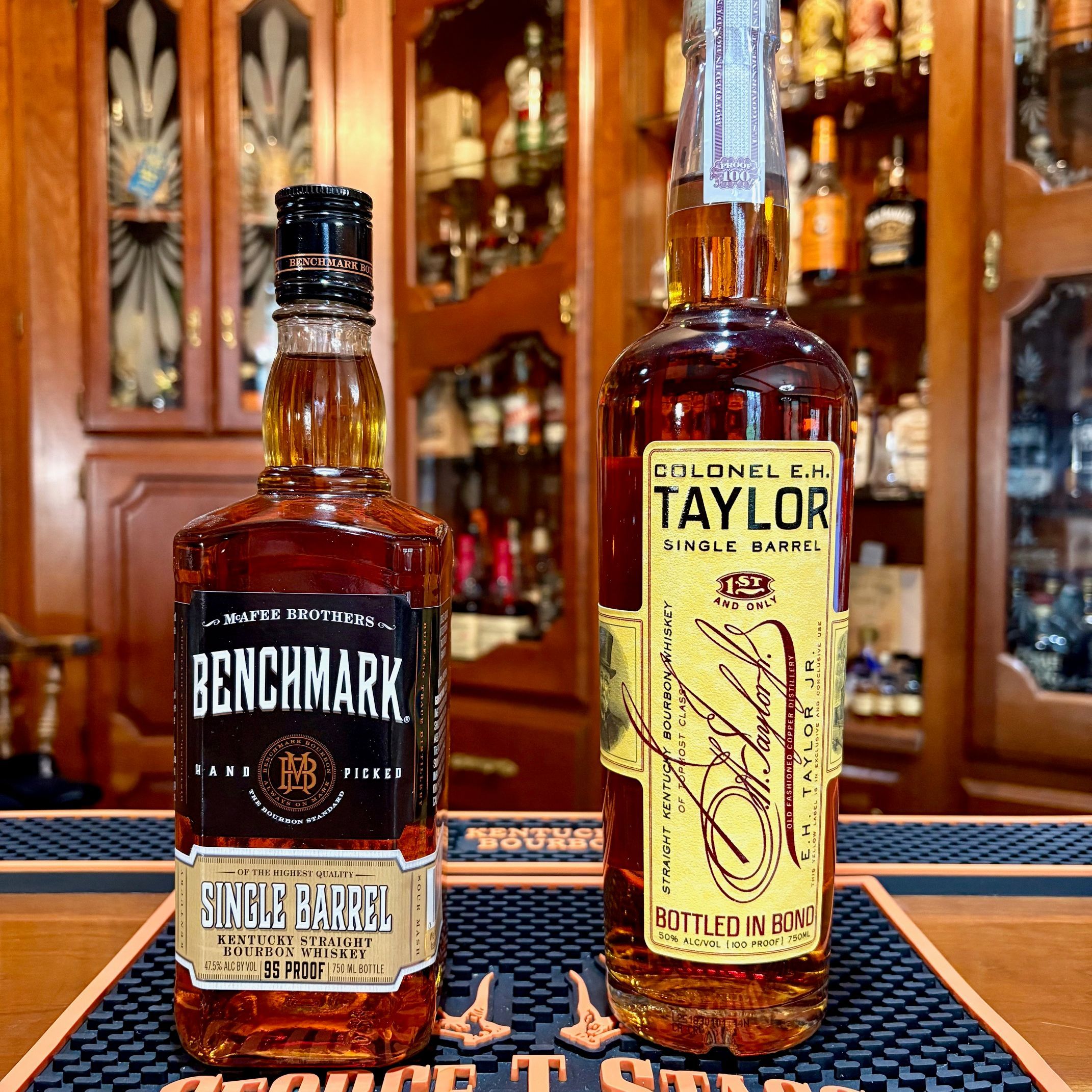
It’s also important to remember the context of our latest podcast episode, where we discussed E.H. Taylor Single Barrel versus Benchmark Single Barrel. While Benchmark is an incredibly affordable and accessible option, its quality is generally considered to be on a different tier than Eagle Rare. E.H. Taylor Single Barrel, on the other hand, is a more direct competitor in terms of quality and often price, and even then, Eagle Rare often provides a more accessible entry point for similar quality and age.
The comparison highlights that Eagle Rare occupies a sweet spot. It’s not the cheapest bourbon on the market, nor is it the most expensive. It’s a bourbon that offers a tangible step up in quality and age from entry-level options, at a price point that still feels reasonable in today's market. This balanced approach is what makes its "best deal" claim so persistent.
The Buffalo Trace Connection: Mash Bills and Quality
The fact that Eagle Rare hails from Buffalo Trace Distillery is no small detail. Buffalo Trace is a titan in the bourbon world, responsible for a stable of highly sought-after brands, including the namesake Buffalo Trace, Blanton's, E.H. Taylor, and the legendary Pappy Van Winkle line. This affiliation lends Eagle Rare a certain pedigree and ensures a certain level of quality control and expertise in its production.
As mentioned earlier, Eagle Rare is believed to use Buffalo Trace's lower rye mash bill. This mash bill, characterized by a higher corn content and lower rye content, typically results in a sweeter, more mellow bourbon. The corn provides sweetness and body, while the malted barley contributes enzymes for fermentation and some malty notes. The low rye content means there's less of the peppery spice that can sometimes dominate higher-rye bourbons.
This mash bill, combined with the 10 years of aging in new, charred American oak barrels, creates a symphony of flavors. You'll often find notes of:
- Sweet vanilla and caramel from the oak's vanillins.
- Fruity notes like cherry, apple, or even citrus, often indicative of the low-rye mash bill interacting with the oak.
- Oak and leather, providing a sophisticated, mature backbone.
- A hint of spice, though usually subtle, adding complexity.
- A smooth, lingering finish that is both warming and pleasant.
The consistency of these flavor profiles across batches is a testament to Buffalo Trace's masterful distillation and aging processes. They have a deep understanding of how their spirits mature, and Eagle Rare is a prime example of their ability to produce a refined product.
The distillery’s commitment to quality extends to their barrel selection and warehousing. The conditions within their aging warehouses are carefully managed to optimize the interaction between the spirit and the wood. This meticulous attention to detail, from mash bill to maturation, is what allows Eagle Rare to consistently deliver a high-quality experience.
Availability and The Real 'Deal' Factor
Now, let’s address the elephant in the room: availability. The "best deal" claim is intrinsically linked to whether or not you can actually purchase the product at its suggested retail price. And for Eagle Rare, this is where the "deal" becomes a bit more complicated.
Eagle Rare, despite being a staple offering, is notoriously difficult to find at its MSRP in many markets. It has a tendency to disappear from shelves quickly, often being allocated rather than freely available. This scarcity has led to inflated prices on the secondary market and at less scrupulous retailers, where you might see it going for $60, $80, or even more. If you are consistently paying these inflated prices, then the "best deal" argument begins to falter considerably.
The irony is that the very popularity that makes Eagle Rare so desirable also contributes to its limited availability. Its reputation as a quality, age-stated bourbon at a reasonable price has made it a target for collectors and resellers alike. This creates a frustrating experience for consumers who simply want to enjoy a good bourbon without a treasure hunt.
So, what does this mean for the "best deal" claim? If you are fortunate enough to live in an area where Eagle Rare is readily available at or near its MSRP, then yes, it is undoubtedly one of the best values in bourbon. You are getting a 10-year-old, single barrel, high-quality bourbon for a price that is hard to beat. However, if you are in a market where it is consistently overpriced, then its status as the "best deal" is diminished, and you might need to look for other equally good, but perhaps more available, options.
This scarcity also highlights a broader trend in the bourbon market. Many highly regarded bourbons, even those with established MSRPs, are subject to allocation and secondary market markups. It’s a challenge for bourbon enthusiasts trying to navigate the market and find their favorite spirits without overspending. The "deal" is not just about the price on the bottle, but also the effort and luck required to obtain it.
Conclusion: Is Eagle Rare the Best Deal?
So, after dissecting its quality, price, and market realities, is Eagle Rare truly the best deal in bourbon? The answer, as is often the case in the world of spirits, is a nuanced one.
From a purely objective standpoint, considering its 10-year age statement, single barrel designation, consistent quality, and the pedigree of Buffalo Trace Distillery, Eagle Rare offers exceptional value when found at its suggested retail price. It delivers a sophisticated bourbon experience that punches well above its typical price point. It’s a testament to what a distillery can achieve when they focus on a well-aged, well-crafted product without succumbing to the market's inflationary pressures, at least at the distillery level.
However, the harsh reality of bourbon availability cannot be ignored. If the "deal" is contingent on a difficult and often expensive acquisition process, then its status as the "best deal" becomes questionable for many consumers. The frustration of searching for bottles and paying inflated prices can sour even the best of bourbons.
Ultimately, Eagle Rare remains a benchmark for value in the age-stated bourbon category. It’s a bourbon that consistently delivers on flavor, complexity, and a smooth drinking experience. It’s a must-try for any bourbon enthusiast looking for a quality spirit without a prohibitively high cost, provided you can find it at a reasonable price. Its place in the bourbon pantheon is well-earned, and the "best deal" claim, while subject to market forces, is rooted in a genuine appreciation for the exceptional quality it offers at a price that, for many, still represents outstanding value.
We explored a lot of these themes on our latest episode, EH Taylor Single Barrel vs. Benchmark Single Barrel; Ep. 44. In that episode, we delved into the nuances of Buffalo Trace bourbons, the impact of mash bills, and the often stark differences in availability and pricing between various expressions. The conversation around Eagle Rare echoes many of the points we discussed regarding E.H. Taylor and Benchmark, highlighting the constant balancing act between quality, cost, and accessibility in the bourbon market. Be sure to give it a listen for more insights into how to navigate these very discussions.

Pilot / Dad / Trumpeter / Contract Negotiator / Martial Artist
In his 26th year as an airline pilot, Dan resides in Youngstown, Ohio with his high school sweetheart Stephanie. Combined they have 5 kids (teenagers...). They enjoy travel as a family, and as a couple. Dan has had a bourbon affinity since smelling his Grandfather's JW Dant and Grapefruit soda as a kid. Dan started collecting bourbon in 2015. He has been actively involved in Martial Arts since he was a kid and has Black Belts in two different styles. Dan still plays trumpet. Originally he went to college for music at Ohio University, but after his sophomore year decided he would much rather spend 3 hours in an airplane instead of a practice room. He still helps teach high school band camps, and has assisted with 5th and 6th grade Trumpet, Low Brass, and Percussion. Dan has been a Pilot Union Representative, Contract Negotiator, Merger Specialist, and Contract Compliance Administrator for over 20 years. Dan received the President's Lifetime Achievement Volunteer Service Award in 2024.
Penelope Omega 11 Year vs. Maker's Mark 46 Cask Strength: The Ultimate Breakdown