Benchmark Bourbon: An Underrated Gem or Just Accessible?
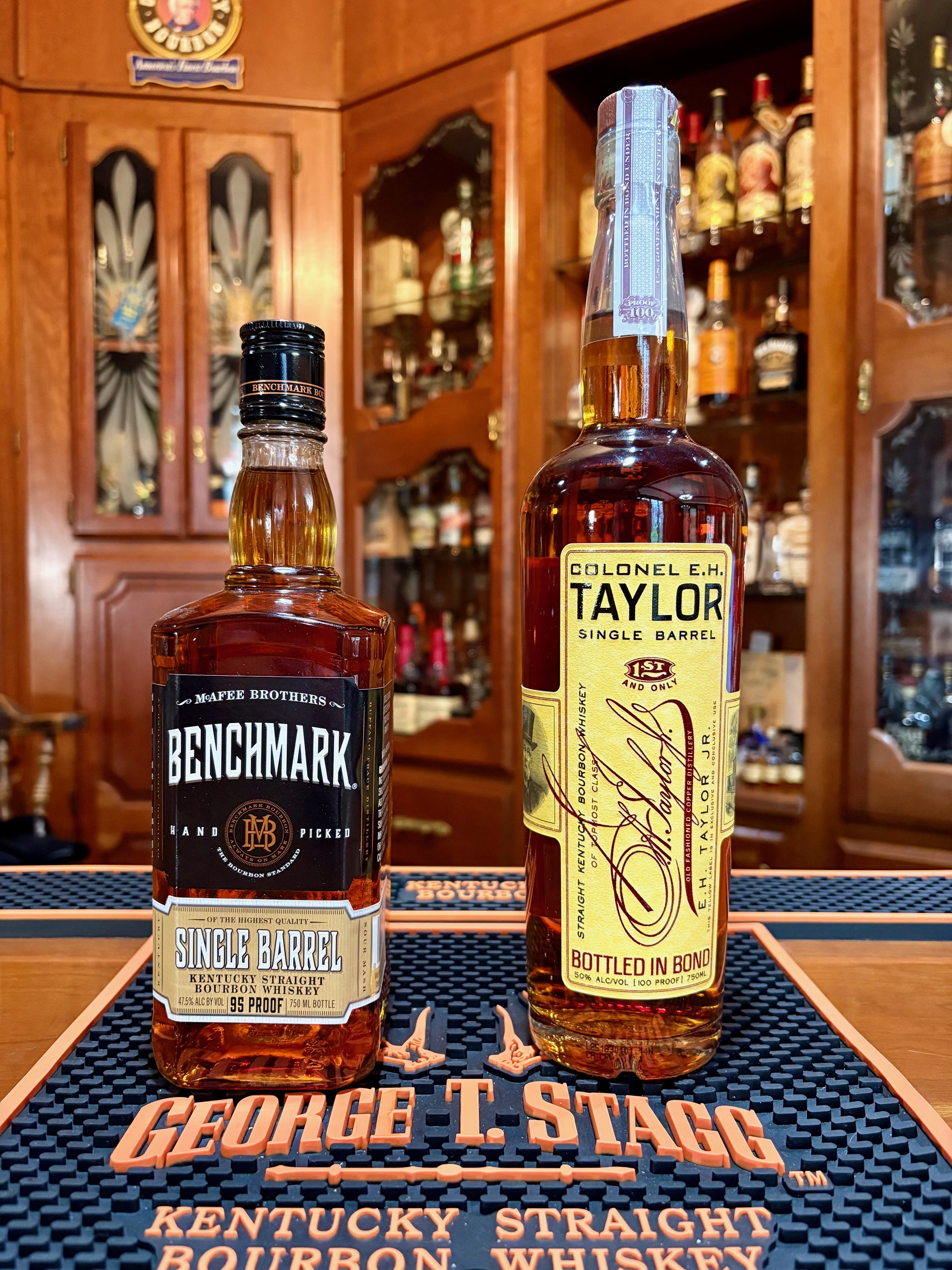
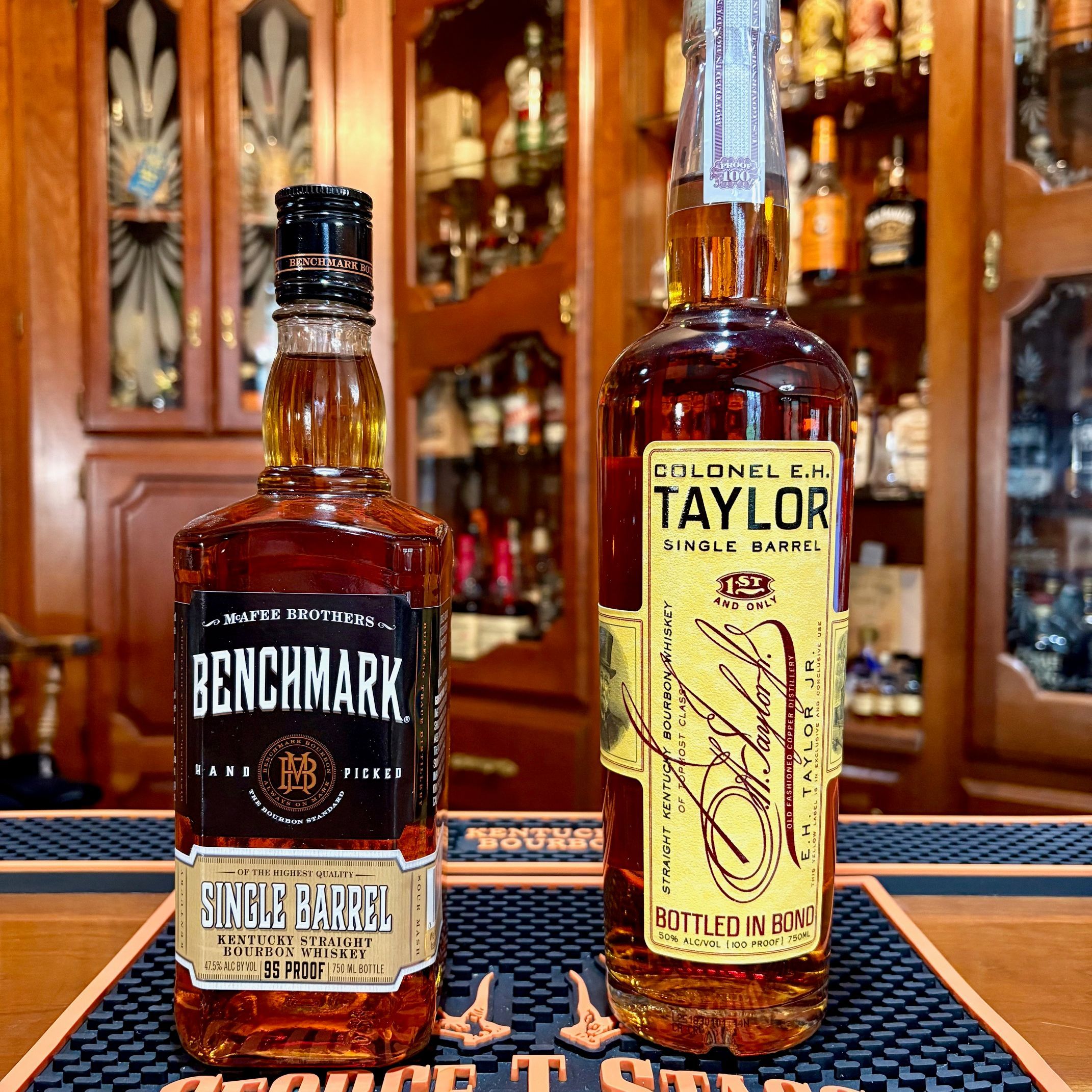
Welcome back to the blog, fellow bourbon enthusiasts! In our latest episode, Ep. 44: EH Taylor Single Barrel vs. Benchmark Single Barrel, we delved deep into the intriguing world of Benchmark bourbon, specifically its Single Barrel expression. This week, we're expanding on that discussion, taking a closer look at Benchmark's place in the crowded bourbon market. Is its wide availability matched by its quality, and how does it truly stand up against more premium offerings? Join us as we unpack the story, the taste, and the dilemmas surrounding this widely accessible spirit.
The Benchmark Story: Accessibility and the Bourbon Market
Before we get to the tasting notes and comparisons, it's crucial to understand Benchmark's position. Buffalo Trace Distillery, the esteemed producer behind Benchmark, is a titan in the bourbon world. They are responsible for some of the most sought-after bottles on the market, from the elusive Pappy Van Winkle to the consistently excellent Weller line, not to mention the highly desirable E.H. Taylor and Buffalo Trace expressions themselves. Within this portfolio, Benchmark occupies a unique space. It's often found on the shelf, readily available, and typically at a price point that makes it an easy grab for casual drinkers and seasoned collectors alike. This accessibility is not an accident. Benchmark is designed to be a gateway into the Buffalo Trace family of whiskeys, offering a glimpse into their distillation style without the premium price tag or the hunt that often accompanies their more allocated bourbons. This strategy has undoubtedly contributed to its widespread recognition and availability, but it also begs the question: does this accessibility come at a cost to its perceived quality? In the current bourbon landscape, where demand often outstrips supply, and even basic bourbons can become scarce, a bottle that’s consistently on the shelf is a welcome sight. However, in our quest for great bourbon, we must always ask if price and availability are the sole arbiters of value, or if there's more to the story.
Tasting Notes: Unpacking the Benchmark Single Barrel Experience
Now, let's get down to the nitty-gritty: what does Benchmark Single Barrel actually taste like? This is where the subjectivity of whiskey tasting truly comes into play, but there are common threads that emerge. On the nose, you'll often find a pleasant aroma of vanilla and caramel, classic bourbon notes that are generally appealing. There might be hints of oak, perhaps a touch of baking spice like cinnamon or nutmeg, and sometimes a subtle fruity undertone, like baked apple. It’s not overly complex, but it's certainly inviting. When you move to the palate, those initial notes generally carry through. You’ll likely experience a sweet entry, with more vanilla and caramel taking center stage. The oak presence can be more pronounced here, contributing a slight dryness. The low rye mash bill, which we’ll discuss later, often means less of the spicy rye character and more of a sweeter, softer profile. You might pick up on some toasted bread or a mild sweetness akin to honey. The finish is typically medium in length. It can be a bit warming, with those oak and spice notes lingering, but it doesn't usually present a profound complexity or a long, drawn-out evolution of flavors. It’s a straightforward bourbon experience, offering a solid foundation of traditional bourbon notes. It’s important to note that as a single barrel offering, there can be variations from bottle to bottle, which is part of the charm of single barrel selections. Some bottles might lean sweeter, others might have a bit more oak, and some might even surprise you with a more prominent fruit or spice note. This inherent variability is something we explore in the episode when comparing single barrel expressions.
Benchmark vs. The Premium: How Does It Stack Up? (Featuring E.H. Taylor)
This is where our latest episode truly shines, as we directly compare Benchmark Single Barrel with a premium offering from the same distillery: E.H. Taylor Small Batch (though in the episode, we do a deep dive into Taylor Single Barrel as well, providing ample comparison points). E.H. Taylor, named after the founding father of the modern distillery, is crafted with a particular emphasis on quality and tradition. Typically, E.H. Taylor Small Batch presents a more refined and complex nose. The vanilla and caramel notes are often richer, more integrated, and accompanied by deeper fruit notes like cherry or even dark fruit. There’s a distinct elegance to the aroma that suggests a more carefully curated selection of barrels. On the palate, E.H. Taylor usually offers a more layered and sophisticated experience. The sweetness is balanced by a more pronounced spice, often from the rye, and a richer oak influence that imparts notes of leather, tobacco, or dark chocolate. The finish tends to be longer, more nuanced, and evolves beautifully on the palate, leaving a lasting impression. When you contrast this with Benchmark Single Barrel, the differences, while not always vast in terms of fundamental flavors, are often in the intensity, complexity, and refinement. Benchmark offers those foundational bourbon notes, but they are generally less pronounced and less integrated. The finish is shorter, and the overall mouthfeel might be less viscous or luxurious. It’s like comparing a well-made, everyday tune to a meticulously composed symphony. Both have their merits, but one is clearly designed for a more discerning ear. In our episode, we specifically highlight how the nose on E.H. Taylor can be "crazy good," a testament to its superior aromatics compared to the more straightforward Benchmark. This isn't to say Benchmark is bad, but rather to illustrate the leap in quality and complexity that often accompanies a higher price point and more selective barrel choices. The very nature of E.H. Taylor, as a bourbon that commands more attention and is often harder to find, signifies a different level of investment in its production and aging.
Mash Bill Matters: Understanding Benchmark's Flavor Profile
The flavor profile of any bourbon is heavily influenced by its mash bill – the recipe of grains used in its creation. While Buffalo Trace is famously tight-lipped about the exact mash bills for all its expressions, it is widely understood that Benchmark bourbons, including the Single Barrel, are produced from a low-rye mash bill. This is a significant detail. A low-rye mash bill typically means that corn is the dominant grain, followed by a smaller percentage of rye, and then malted barley. Bourbons with a higher rye content tend to exhibit more spice, pepper, and sometimes even floral notes. They can have a drier finish and a more assertive character. Conversely, a low-rye mash bill, like that found in Benchmark, tends to produce a sweeter, softer, and more mellow bourbon. The sweetness from the corn takes center stage, leading to those prominent vanilla and caramel notes we often associate with it. The lower rye content means less of that spicy kick, making the bourbon more approachable for those who prefer a less aggressive whiskey. This is a deliberate choice in its production, aiming for a universally pleasing flavor profile. It’s a contributing factor to its wide appeal and accessibility. If Benchmark had a high-rye mash bill, it might be more polarizing, appealing to those who love spice but perhaps alienating those who prefer a sweeter drink. By sticking to a low-rye recipe, Buffalo Trace ensures that Benchmark can be enjoyed by a broader audience, serving as a pleasant and familiar entry point into the world of bourbon. This understanding of the mash bill helps us appreciate why Benchmark tastes the way it does and why it often appeals to a wider spectrum of palates than more complex, spice-driven bourbons.
Single Barrel vs. Small Batch: A Deeper Dive
The distinction between "Single Barrel" and "Small Batch" is a crucial one in the bourbon world, and it's a topic we explore extensively in our episode. A Single Barrel bourbon, as the name implies, comes from a single, individual oak barrel. This means that the flavor profile can vary significantly from barrel to barrel, even within the same distillery and with the same mash bill. Each barrel has its own unique journey of aging, interacting with the wood and air in its specific location in the rickhouse. This variability is part of the allure – it offers a chance to experience a unique snapshot of the distillery's aging process. Benchmark Single Barrel, therefore, is meant to showcase the characteristics of an individual barrel. In contrast, a Small Batch bourbon is a blend of a relatively small number of select barrels. The goal here is to create a more consistent and often more refined flavor profile by carefully selecting barrels that complement each other. Master distillers or blenders will taste various barrels and then combine a limited number to achieve a desired taste. E.H. Taylor Small Batch is a prime example of this. The blending process aims to smooth out any rough edges and create a harmonious, well-rounded whiskey that represents the distillery's ideal of that particular product. While Single Barrel can offer exciting and unique experiences, Small Batch often provides a more predictable and balanced enjoyment. In our episode, we discuss how the "single barrel" designation on Benchmark suggests an attempt to highlight individual barrel character, but the overall accessible nature of the brand means that "character" often translates to a familiar and pleasant profile rather than something wildly experimental or exceptionally rare. The comparison with E.H. Taylor, a masterful small batch blend, really underscores the difference in intention and execution between these two categories, even when produced by the same distillery.
Availability vs. Quality: The Benchmark Dilemma
This is the core of the Benchmark debate. Its incredible availability is a double-edged sword. On one hand, it’s a testament to Buffalo Trace’s robust production capabilities and their strategy to have a consistently present offering. For the everyday bourbon drinker, this means a reliable, affordable option. You can walk into most liquor stores and find it. This sheer accessibility makes it a go-to for many. However, this same availability can lead some enthusiasts to question its quality. In a market where premium bourbons are often scarce and command high prices, a readily available bottle can sometimes be perceived as less desirable, as if its abundance somehow diminishes its value. The "hunt" for rare bourbon has become a significant aspect of the hobby for many, and a bottle that requires no "hunt" might be overlooked in favor of something perceived as more exclusive. The dilemma is whether we, as consumers, should prioritize accessibility and affordability, or chase the perceived prestige and complexity of harder-to-find bottles. Benchmark forces us to confront this. Is it simply a good, affordable bourbon that happens to be widely available, or is its quality simply adequate enough to justify its mass production? As the show notes for our episode mention, "Benchmark is more available than Taylor," which is an undeniable fact. But as we've discussed, this availability doesn't automatically equate to a lesser drinking experience, but rather a different one, designed for a different consumer need and a different price point. The key is to understand its place and not to expect it to perform like a top-tier, age-stated, or limited-release bourbon.
Bourbon Enthusiast Takeaways: Making Smart Bourbon Choices
So, what can we, as bourbon enthusiasts, take away from this exploration of Benchmark? Firstly, understand what you're buying. Benchmark Single Barrel is designed to be an accessible, honest bourbon with traditional flavors. Don't expect it to be E.H. Taylor or Pappy Van Winkle. Its strength lies in its straightforwardness and affordability. Secondly, appreciate the role of mash bill and production choices. The low-rye mash bill contributes to its sweet and mellow profile, making it a fantastic entry point for new bourbon drinkers or a reliable sipper for those who prefer a less complex taste. Thirdly, embrace the variability of single barrels. While Benchmark might not be the most exciting single barrel you'll ever try, each bottle offers a slightly different experience, and that's part of the fun. Fourthly, don't let availability dictate your perception of quality. While scarcity can add to a bourbon's allure, it doesn't inherently make it taste better. Benchmark proves that a good, enjoyable bourbon can be readily found. Finally, always compare. As we did in Ep. 44, tasting Benchmark alongside a premium offering like E.H. Taylor highlights the differences and helps you define your own preferences and understand what you value most in a bourbon – be it complexity, smoothness, spice, or simply a good value for money. As the episode highlights, "Eagle Rare is the best deal in bourbon" - a sentiment that speaks to finding those sweet spots in the market where quality and price intersect. Benchmark, in its own category, occupies a similar space, offering a solid drinking experience at a highly accessible price. Learning to identify these value propositions across different price tiers is a mark of a discerning bourbon drinker.
Conclusion: Is Benchmark an Underrated Gem?
To definitively answer whether Benchmark Single Barrel is an "underrated gem" or "just accessible" is a complex proposition, and one that we've tried to unpack throughout this blog post and in our related episode, Ep. 44: EH Taylor Single Barrel vs. Benchmark Single Barrel. Benchmark Single Barrel is undoubtedly a well-executed bourbon that offers a pleasant and approachable drinking experience. Its low-rye mash bill provides a sweet, mellow profile that is appealing to a wide range of palates. Its exceptional availability makes it a fantastic choice for those looking for an everyday sipper that won't break the bank, and it serves as an excellent introduction to the Buffalo Trace distillery's house style. However, when compared to more premium, carefully curated, and often harder-to-find bourbons from the same distillery, like E.H. Taylor, the differences in complexity, refinement, and finish become apparent. It doesn't possess the same depth or nuance. So, is it underrated? Perhaps. If you go into it expecting an everyday, enjoyable bourbon at a great price, you might be pleasantly surprised by its quality. If you're expecting it to rival a $70 bottle of E.H. Taylor, you'll likely be disappointed. The "gem" status often depends on what you're looking for. For the value-conscious drinker seeking a reliable and tasty bourbon, Benchmark Single Barrel is certainly a valuable find. For the enthusiast chasing complexity and the thrill of the hunt, it might just be the accessible benchmark it's named to be. Ultimately, the best way to decide is to try it yourself, perhaps alongside a more premium offering, and see where it lands on your own palate. Until next time, keep exploring and keep enjoying the journey of bourbon!

Pilot / Dad / Trumpeter / Contract Negotiator / Martial Artist
In his 26th year as an airline pilot, Dan resides in Youngstown, Ohio with his high school sweetheart Stephanie. Combined they have 5 kids (teenagers...). They enjoy travel as a family, and as a couple. Dan has had a bourbon affinity since smelling his Grandfather's JW Dant and Grapefruit soda as a kid. Dan started collecting bourbon in 2015. He has been actively involved in Martial Arts since he was a kid and has Black Belts in two different styles. Dan still plays trumpet. Originally he went to college for music at Ohio University, but after his sophomore year decided he would much rather spend 3 hours in an airplane instead of a practice room. He still helps teach high school band camps, and has assisted with 5th and 6th grade Trumpet, Low Brass, and Percussion. Dan has been a Pilot Union Representative, Contract Negotiator, Merger Specialist, and Contract Compliance Administrator for over 20 years. Dan received the President's Lifetime Achievement Volunteer Service Award in 2024.
Penelope Omega 11 Year vs. Maker's Mark 46 Cask Strength: The Ultimate Breakdown