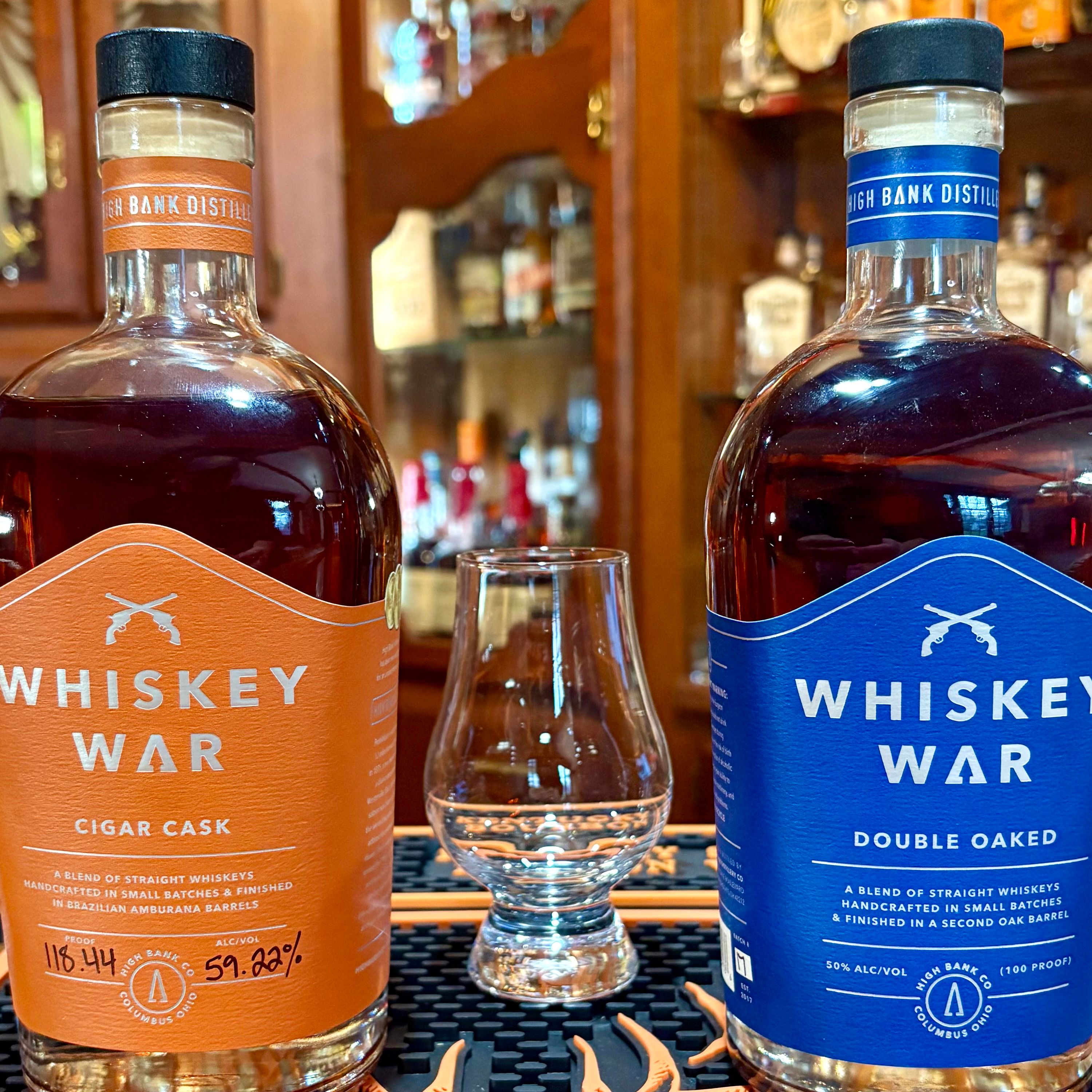
Beyond the Bottle: Unpacking the Whiskey War Double Oaked and Cigar Blend
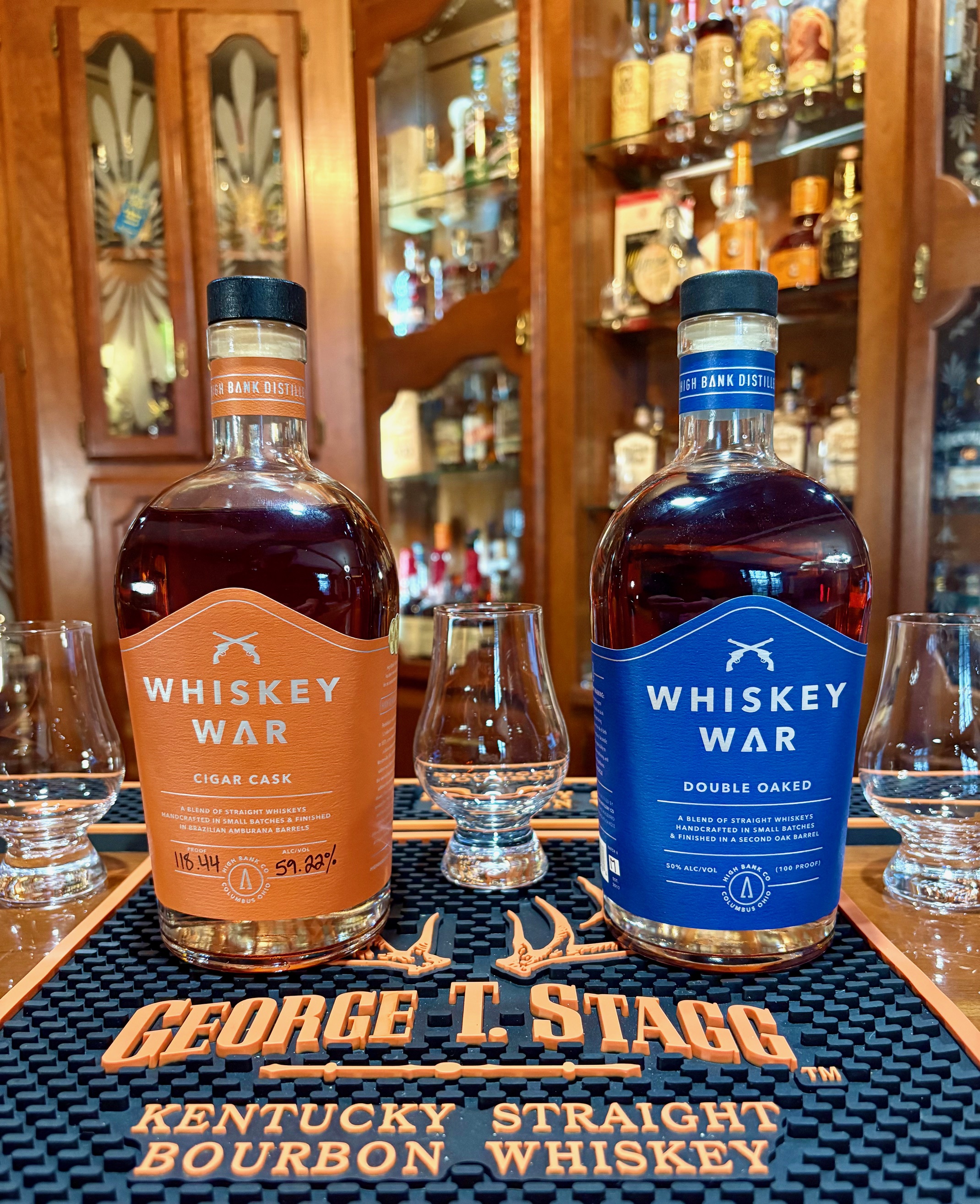
Welcome back to the blog, whiskey enthusiasts! In our latest episode, Ep. 43, titled "Whiskey War Double Oaked and Cigar Blend, with Maker's Mark 2026 Steward's Release," we delved into some truly fascinating spirits. The conversation, featuring Dan, Noah, and Bob, touched upon everything from vacation adventures and home projects to the nuanced world of whiskey tasting and cigar pairings. Today, we're going to take a deeper dive, beyond the spoken word, into the specifics of the Whiskey War Double Oaked and Cigar Blend. If you haven't had a chance to listen yet, I highly encourage you to check out Ep. 43. We’ll be dissecting the flavor profiles, the impact of oak, and what truly sets these particular expressions apart.
Unpacking the Double Oaked: Tasting Notes and Influences
The Whiskey War Double Oaked is a testament to the art of secondary aging. When we discuss "double oaked," it implies a process where the whiskey, after its initial maturation in new charred oak barrels, is then transferred to a second set of specially prepared oak barrels for an extended period. This second barreling is where the magic really happens, allowing the spirit to interact with the wood in a more profound and complex way. For the Whiskey War Double Oaked, this isn't just a gimmick; it's a deliberate choice that shapes its character.
On the nose, expect an immediate wave of warmth and inviting aromas. We often noted notes of rich caramel and toffee, the kind that make you think of decadent desserts. Beneath that, there’s a subtle sweetness, perhaps a hint of brown sugar or maple syrup, that is beautifully integrated. But it doesn't stop there. The secondary aging process tends to coax out more intricate notes. You'll likely find hints of toasted nuts, perhaps almonds or walnuts, offering a pleasant earthiness. Some might even detect a delicate fruitiness, like baked apples or dried cherries, which adds another layer of complexity.
The palate is where the double oaking truly shines. The initial sip delivers a full-bodied experience, coating the tongue with that rich sweetness from the nose. The oak influence is evident, but in a sophisticated manner. Instead of harsh tannins, you're likely to experience a velvety texture. Flavors of dark chocolate, often with a hint of cocoa bitterness, emerge, playing harmoniously with the caramel and toffee. The toasted nuttiness from the nose translates beautifully onto the palate, providing a grounding element. What's particularly impressive is the balance. Despite the intensity of the flavors, there's a remarkable smoothness, a testament to the careful selection of the secondary barrels and the controlled aging process.
The finish is long and lingering, leaving a pleasant warmth that doesn't burn. You'll find echoes of the oak, but also a continued sweetness that gradually fades, leaving you with a satisfying, complex aftertaste. It’s this layered complexity that makes the Whiskey War Double Oaked such a compelling pour. It’s a whiskey that invites contemplation, revealing new nuances with each sip.
The Cigar Blend: A Perfect Harmony of Whiskey and Smoke
Now, let's turn our attention to the Whiskey War Cigar Blend. The name itself immediately suggests a deliberate intention: to create a whiskey that is not only enjoyable on its own but also complements the experience of smoking a fine cigar. This isn't always an easy feat, as the robust flavors of many cigars can easily overpower a delicate whiskey, or vice-versa.
For the Cigar Blend, High Bank Distillery has crafted a whiskey with a specific flavor profile in mind. On the nose, you might encounter notes that are slightly more robust than the Double Oaked, but still exceptionally well-balanced. Think of aromas of dried fruit, perhaps figs or dates, intertwined with a subtle spice, like cinnamon or a hint of clove. There's a richness here, a depth that hints at the spirit's ability to stand up to the complexity of a cigar's smoke. You might also detect a touch of leather or tobacco leaf, almost as if the whiskey itself has been aged in proximity to these aromas.
The palate of the Cigar Blend is where its true genius lies. It’s designed to cut through the richness of cigar smoke without being overwhelmed. You'll likely find notes of dark chocolate, perhaps even a bit more pronounced than in the Double Oaked, alongside a pleasant sweetness that isn't cloying. The spice notes continue here, offering a warmth that can enhance the sensory experience of smoking. What makes this blend particularly successful is its ability to complement rather than compete. The flavors are present enough to be appreciated alongside the smoke, but they don't clash or create an unpleasant bitterness. Instead, they create a synergistic effect, where the whiskey and cigar elevate each other. You might even find a pleasant interplay of flavors – the whiskey bringing out certain notes in the cigar, and the cigar enhancing the whiskey’s complexity.
The finish is again long and satisfying. The spice and dark fruit notes linger, leaving a pleasant warmth that continues the conversation between the whiskey and the cigar. It’s this thoughtful construction, this intention to create a companion for a specific enjoyment, that makes the Cigar Blend so noteworthy.
The French Oak Factor: How Oak Affects Flavor
One of the key elements that can influence the character of a whiskey, beyond the grain bill and the distillation process, is the type of oak used for aging. In the case of both the Whiskey War Double Oaked and the Maker's Mark French Oak mentioned in the episode, French oak plays a significant role. While American oak is the traditional choice for many bourbons, French oak offers a distinct set of characteristics that can impart unique flavors and aromas to the spirit.
French oak, generally speaking, has a tighter grain structure compared to American oak. This tighter grain means that the wood imparts its compounds to the whiskey more slowly and deliberately. This often results in a more nuanced and less aggressive flavor profile. While American oak can contribute bold notes of vanilla, caramel, and coconut, French oak tends to offer more subtle complexities.
For the Whiskey War Double Oaked, the secondary maturation in barrels that may have utilized French oak (or a blend thereof) contributes to that velvety texture and the more integrated spice notes. The French oak can impart delicate woody notes, often described as having hints of floral or herbal characteristics. It can also contribute to a drier, more tannic structure, but when managed correctly through secondary aging, this can translate into a sophisticated mouthfeel rather than astringency. The slower interaction with French oak allows for a more gradual extraction of flavor compounds, leading to a well-rounded and less overpowering oak influence.
In the context of the Maker's Mark French Oak, which we touched upon in the episode, the choice of French oak is a deliberate departure from their traditional profile. This typically results in a whiskey that exhibits more pronounced notes of spice, often a peppery or clove-like quality, along with fruitier notes like dark berries and sometimes even a hint of anise. The French oak’s tighter grain can also lead to a smoother, more refined finish compared to some American oak-aged spirits.
The key takeaway here is that the choice of oak is not arbitrary. It's a critical decision by distillers that can fundamentally alter the trajectory of a whiskey's flavor development. The subtle differences between oak species, and even the toast level and char of the barrels, all contribute to the final product in the bottle. For Whiskey War, their use of secondary oak, and for Maker's Mark their specific use of French oak, are prime examples of how distillers leverage wood to achieve specific flavor goals.
Whiskey War vs. Other Releases: What Makes Them Stand Out
In the vast and ever-expanding world of whiskey, it's easy for bottles to blend together. So, what is it that makes the Whiskey War expressions, specifically the Double Oaked and Cigar Blend, stand out? It boils down to a combination of intentionality, execution, and a deep understanding of flavor dynamics.
Firstly, the "Whiskey War" branding itself evokes a sense of playful competition and a desire to push boundaries. This isn't just another whiskey; it's presented with a narrative of innovation. The Double Oaked, as we've discussed, benefits from a well-executed secondary aging process. Many distilleries offer double-oaked expressions, but the success lies in the balance achieved. The Whiskey War Double Oaked manages to deliver intensity without sacrificing smoothness, a difficult tightrope to walk.
The Cigar Blend, however, is where the true uniqueness of this line shines. Creating a whiskey specifically to complement cigars is a niche, but incredibly rewarding, endeavor. It requires a profound understanding of how different flavor compounds interact. Many whiskeys that are too light will be completely lost against cigar smoke. Others that are too heavy can become acrid and unpalatable. The Cigar Blend strikes that perfect balance, offering enough character to stand up to the smoke, but with notes that enhance rather than clash with the tobaccco's inherent complexities. This thoughtful design, aimed at a specific consumer experience, is what sets it apart.
Furthermore, High Bank Distillery, the producer behind Whiskey War, often demonstrates a commitment to exploring different maturation and finishing techniques. This willingness to experiment, while still grounding their products in quality and balance, is what allows them to carve out their own identity in the market. They are not afraid to deviate from the norm, and the results are often compelling, as seen with these two distinct expressions.
Compared to many standard offerings that rely on a single barrel maturation, the Whiskey War Double Oaked and Cigar Blend offer a more intricate flavor journey. They demonstrate how secondary aging and intentional blending can unlock new dimensions of taste and aroma, making them compelling choices for both seasoned whiskey drinkers and those looking for something a little out of the ordinary.
Pairing Perfection: Enjoying Whiskey War with Cigars
The Whiskey War Cigar Blend, as its name suggests, is tailor-made for pairing with cigars. However, the principles behind a successful pairing can extend to the Double Oaked as well, though with slightly different considerations. The goal of any good whiskey and cigar pairing is to create a synergistic experience, where the flavors of both components enhance each other, leading to a more enjoyable overall sensory journey.
With the Whiskey War Cigar Blend, the obvious starting point is to consider the cigar's profile. Generally, a medium-bodied to full-bodied cigar will work best. Think of cigars with notes of earth, leather, dark chocolate, or spice. These are the flavors that the Cigar Blend is designed to complement. For instance, pairing the Cigar Blend with a cigar that has notes of cocoa can amplify the chocolate notes in the whiskey, creating a decadent, dessert-like experience. If the cigar has a subtle spice, the whiskey's inherent spice can create a warm, lingering finish that is incredibly satisfying. Avoid overly sweet or mild cigars, as they might not have the complexity to stand up to the whiskey, and conversely, overly aggressive or bitter cigars might overwhelm the delicate balance of the blend.
For the Whiskey War Double Oaked, the pairing possibilities are also quite broad. Its rich caramel, toffee, and subtle fruit notes make it an excellent companion for a wider range of cigars. A cigar with notes of nuts or dark fruit would harmonize beautifully with the whiskey's own character. You might also find that the Double Oaked can stand up to cigars that have a touch more sweetness or even a hint of coffee. The key here is to look for complementary flavors rather than directly matching them. For example, if the whiskey has notes of baked apple, a cigar with a hint of fruitiness or a mild nutty profile can create a pleasing interplay.
When embarking on a pairing, always consider the progression of flavors. Start with a sip of the whiskey, noting its aromas and initial tastes. Then, take a puff of the cigar, allowing its smoke to linger on your palate. Finally, take another sip of the whiskey. Notice how the flavors have changed. Has the whiskey become sweeter? More complex? Have new notes emerged? The same goes for the cigar; how has the whiskey influenced its taste? This active engagement with the pairing is what elevates it from simply consuming two enjoyable things to a truly curated experience.
Remember, personal preference plays a huge role. What one person finds to be a perfect match, another might find less so. The best approach is to experiment, to be open to trying different combinations, and to trust your palate. The Whiskey War Double Oaked and Cigar Blend offer fantastic starting points for exploring the delightful world of whiskey and cigar pairings.
Beyond the Bottle: Conclusion and Where to Find More
We've journeyed through the intricate flavor profiles of the Whiskey War Double Oaked and Cigar Blend, explored the significant impact of oak in whiskey maturation, and discussed what makes these particular expressions stand out in a crowded market. As we heard in Ep. 43, "Whiskey War Double Oaked and Cigar Blend, with Maker's Mark 2026 Steward's Release," the world of whiskey is rich with nuance and driven by the passion of both distillers and enthusiasts.
The Whiskey War line, with its thoughtful approach to secondary aging and its dedicated Cigar Blend, showcases a distillery that is not afraid to innovate and to cater to specific enjoyment experiences. Whether you're drawn to the rich, complex layers of the Double Oaked or the sophisticated harmony of the Cigar Blend, these bottles offer a compelling experience for any whiskey aficionado. The conversations we have on Bourbon Brass and Beyond, and the deep dives we take here on the blog, are all about celebrating and understanding these incredible spirits.
If you're eager to explore these whiskeys for yourself, you can often find Whiskey War products through various liquor retailers. Resources like the OHLQ (Ohio Liquor Control) App are invaluable for checking availability in specific regions. For those interested in pairing, exploring the offerings at reputable cigar shops can lead to wonderful discoveries. You can also find more information and explore other products from High Bank Distillery through their website.
Thank you for joining us on this exploration. We hope this deeper dive into the Whiskey War expressions has enriched your understanding and perhaps inspired your next pour. Don't forget to tune into more episodes of Bourbon Brass and Beyond on YouTube, Spotify, and Apple Podcasts for more engaging discussions and insightful reviews. Until next time, keep exploring, keep tasting, and most importantly, keep enjoying the journey beyond the bottle.

Pilot / Dad / Trumpeter / Contract Negotiator / Martial Artist
In his 26th year as an airline pilot, Dan resides in Youngstown, Ohio with his high school sweetheart Stephanie. Combined they have 5 kids (teenagers...). They enjoy travel as a family, and as a couple. Dan has had a bourbon affinity since smelling his Grandfather's JW Dant and Grapefruit soda as a kid. Dan started collecting bourbon in 2015. He has been actively involved in Martial Arts since he was a kid and has Black Belts in two different styles. Dan still plays trumpet. Originally he went to college for music at Ohio University, but after his sophomore year decided he would much rather spend 3 hours in an airplane instead of a practice room. He still helps teach high school band camps, and has assisted with 5th and 6th grade Trumpet, Low Brass, and Percussion. Dan has been a Pilot Union Representative, Contract Negotiator, Merger Specialist, and Contract Compliance Administrator for over 20 years. Dan received the President's Lifetime Achievement Volunteer Service Award in 2024.
Looking Back at 99 Episodes of Bourbon, Brass & Beyond