Decoding State-Run Liquor: Is the OHLQ System Helping or Hurting Bourbon Hunters?
Welcome back to the blog, bourbon enthusiasts! If you have ever found yourself standing in the freezing cold at seven o'clock in the morning outside a suburban grocery store just to score a bottle of allocated whiskey, you already know the unique pain of the modern bourbon hunt. But if you happen to live in the Buckeye State, that hunt comes with a very specific set of rules, frustrations, and digital-tracking headaches managed by the Division of Liquor Control. State-run systems are designed to bring order to chaos, but in practice, they often create a whole new set of obstacles for everyday drinkers who just want to crack open a good pour at retail price.
In this post, we are diving deep into the mechanics of state-controlled liquor distribution, breaking down the pros and cons of the system, and looking at how Ohio stacks up against other regions. We will also take a side trip into the world of great whiskey by reviewing some heavy hitters, including a fascinating wheated release and several pours from the esteemed Old Forester 117 Series. Let us unpack the state-run liquor maze and see if it is truly serving the community.
Decoding OHLQ: Tracking, Transparency, and the Morning Scramble
For anyone navigating the whiskey landscape in Ohio, OHLQ (Ohio Liquor) is both a blessing and a curse. On one hand, the state-run platform provides a centralized website where consumers can track inventory across hundreds of agency stores. In theory, you can search for a bottle, see which location has it in stock, and plan your morning accordingly. Transparency is the ultimate goal, giving everyone an equal digital playing field to see where rare allocations land.
In reality, however, the digital tracker often turns into a digital mirage. During high-stakes release periods—especially the frantic holiday season drops featuring unicorn bottles like Wild Turkey Gold Foil editions—the system faces immense stress. Hunters stare at their screens refreshing pages obsessively, watching inventory numbers fluctuate or lag behind real-time store events. By the time a store shows stock on the map, the line outside has already formed, and the bottles are frequently gone before the doors even officially open. This dynamic creates a morning scramble that rewards those with flexible schedules, remote work setups, or outright unemployment, while alienating hardworking enthusiasts who simply cannot drop everything on a Tuesday morning to chase a delivery truck.
Control vs. Open States: How Ohio Compares to the Rest of the Country
To understand whether Ohio’s framework is uniquely flawed or just par for the course, it helps to look at how other states handle high-demand spirits. We generally divide the whiskey retail world into control states, where the government operates wholesale and retail distribution, and open states, where private enterprise dictates the market.
In control states like Pennsylvania (PLCB) or neighboring monopoly setups, pricing is strictly controlled at MSRP, which protects consumers from predatory secondary market markups. However, selection can sometimes feel bureaucratic and rigid. Meanwhile, open states like Kentucky, Tennessee, Florida, or Wisconsin feature private liquor stores that set their own prices. In an open state, you might walk into a mom-and-pop shop and find a bottle of Blanton's sitting right on the shelf, but you are going to pay three times the retail price for it. Kentucky offers a fascinating blend because it is the heartland of bourbon production; local stores get incredible allocations, but the tourism demand creates fierce competition of its own.
Ohio sits in an interesting middle ground. It operates as a control state for distribution and pricing, but utilizes private businesses (agency stores) to sell the product. While this means you will almost never pay an egregious secondary price at a state-regulated register, it also means that the sheer volume of allocated bourbon is spread thin across a massive geographic footprint, leading to localized scarcity and endless frustration.
Logistics and Timing: Why Truck Schedules Disrupt the Hunt
One of the most unpredictable elements of the state-run liquor ecosystem is the logistical dance of delivery trucks. Agency stores receive their shipments on scheduled days, but holiday weeks, weather delays, and distributor scheduling shifts can completely throw off the cadence. When a major drop is announced, everyone tries to reverse-engineer the truck routes.
Store owners are often caught in the middle of this logistical chaos. They deal with aggressive crowds camping out overnight, parking lot congestion, and phone lines ringing off the hook with people asking if the truck has arrived yet. This friction creates an adversarial relationship between consumers and retailers, shifting the focus away from the community aspect of enjoying whiskey and turning it into a high-stress operational hurdle for small business owners.
Tasting Notes: Putting the Old Forester 117 Series Under the Microscope
When the dust settles from the morning hunt, the best remedy is always pouring something exceptional from the collection. Recently, we took a deep dive into several expressions from the revered Old Forester 117 Series, an experimental lineup that consistently pushes boundaries and showcases the versatility of the brand.
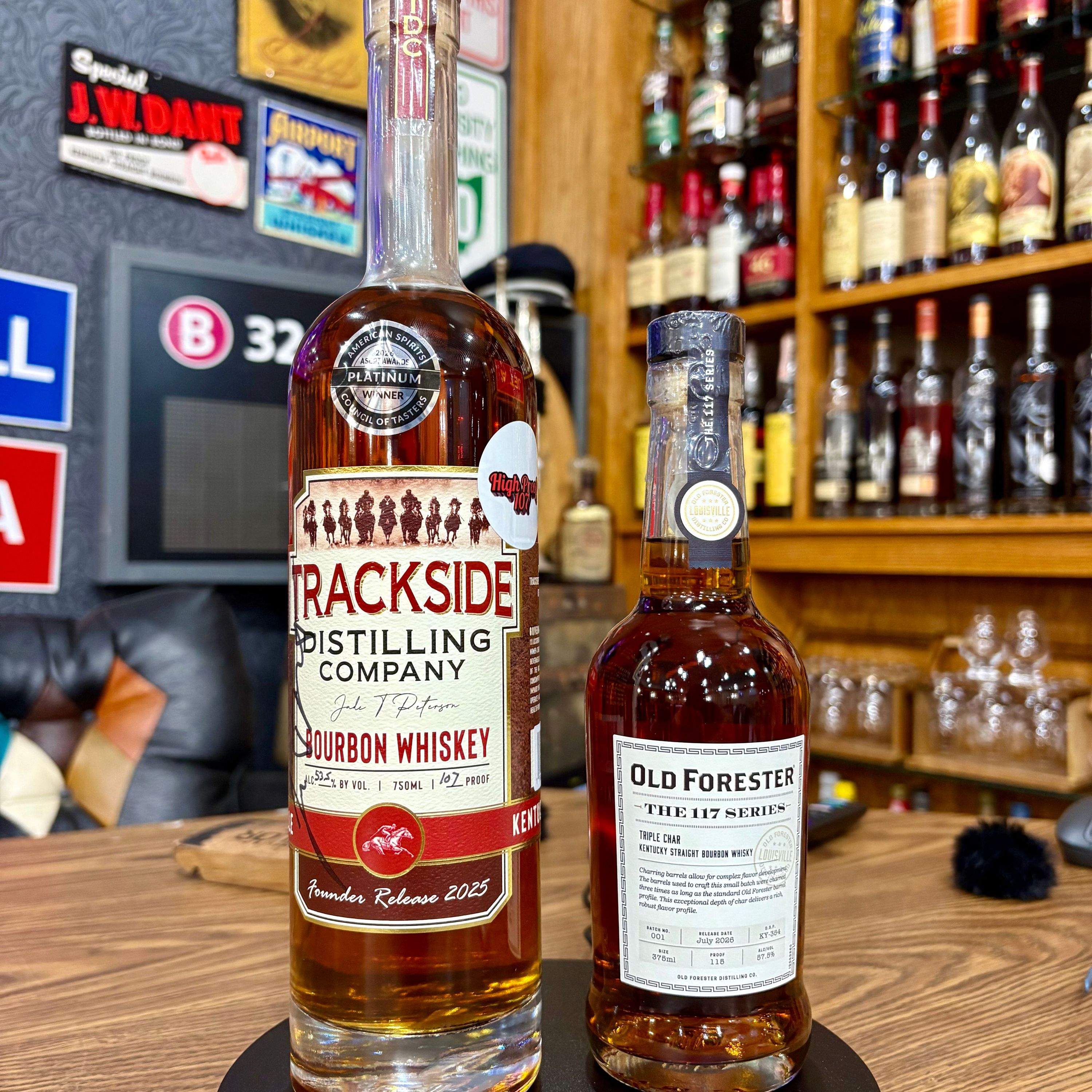
We started with the Old Forester 117 Triple Char, and it immediately stole the spotlight. The nose offers a decadent wave of banana bread and rich pastry notes, translating onto the palate with a buttery texture and profound sweetness. It bridges the gap between traditional Old Forester profiles and modern experimental finishes with incredible elegance.
Next up was a comparison between the Extra Old and the Extra Extra Old releases. While both offer sophisticated age profiles and depth, the Extra Extra Old stood out for its prominent butterscotch character and remarkably smooth, easy-drinking profile that belies its proof. We also sampled the Prohibition Era Still Proof release. Clocking in at a hefty 130 proof, it stands as the least nuanced of the bunch on paper, but it delivers a punchy, bold experience with a robust finish that demands respect. Overall, the 117 series proves to be a masterclass in blending and barrel selection, with not a single bad pour in the entire lineup.
Hidden Gems: Reviewing the Kentucky Artisan Distillery Trackside Release
Beyond the major labels, independent and contract distillers are putting out fascinating juice that deserves attention. We spent some time exploring a wheated Jefferson's release from the Kentucky Artisan Distillery, bottled at 107 proof under the "Trackside" banner.
Wheated bourbons are traditionally known for being soft, sweet, and approachable, leaning heavily on notes of caramel, vanilla, and gentle wheat grain. However, this particular bottle threw us a curveball. It drinks with a surprising amount of spice and vigor, behaving much more like a high-rye mashbill than a traditional wheated expression. Whether enjoyed as a fresh crack straight from the bottle or allowed to open up after a bit of air time, it serves as a great reminder that unexpected flavor profiles are hiding just off the beaten path if you are willing to explore outside the mainstream hype.
Final Verdict: Is the State-Run System Helping or Hurting Bourbon Hunters?
So, where do we ultimately land on the great OHLQ debate? The state-run system succeeds in its primary mandate: keeping prices honest. In an era where secondary market pricing has made rare whiskey prohibitively expensive for the average fan, knowing that a bottle of allocated bourbon will ring up at its true suggested retail price is a massive victory.
However, the execution leaves a lot to be desired. The reliance on digital tracking that struggles under high traffic, the lack of a formalized lottery system for the rarest bottles, and the chaos surrounding truck delivery days mean that the current framework rewards persistence and free time over genuine appreciation of the spirit. Until the system evolves to better distribute high-demand inventory equitably—perhaps through widespread digital lotteries or fairer allocation caps—hunters will continue to brave the early morning cold with equal parts hope and exhaustion.
If you want to hear our full, unfiltered breakdown of holiday drop madness, deep-dive tasting notes on the Old Forester 117 series, and our thoughts on navigating state distribution systems, be sure to check out the full conversation on #OHLQ Drops (the ball?), Camping Out, and Old Forester 117 Series; Ep. 86. Cheers, and happy hunting!

Pilot / Dad / Trumpeter / Contract Negotiator / Martial Artist
In his 26th year as an airline pilot, Dan resides in Youngstown, Ohio with his high school sweetheart Stephanie. Combined they have 5 kids (teenagers...). They enjoy travel as a family, and as a couple. Dan has had a bourbon affinity since smelling his Grandfather's JW Dant and Grapefruit soda as a kid. Dan started collecting bourbon in 2015. He has been actively involved in Martial Arts since he was a kid and has Black Belts in two different styles. Dan still plays trumpet. Originally he went to college for music at Ohio University, but after his sophomore year decided he would much rather spend 3 hours in an airplane instead of a practice room. He still helps teach high school band camps, and has assisted with 5th and 6th grade Trumpet, Low Brass, and Percussion. Dan has been a Pilot Union Representative, Contract Negotiator, Merger Specialist, and Contract Compliance Administrator for over 20 years. Dan received the President's Lifetime Achievement Volunteer Service Award in 2024.
Unlocking the Magic: Why Eagle Rare Store Picks Are Worth the Hunt