OADE Armagnac with Dan Hakker; Ep. 48
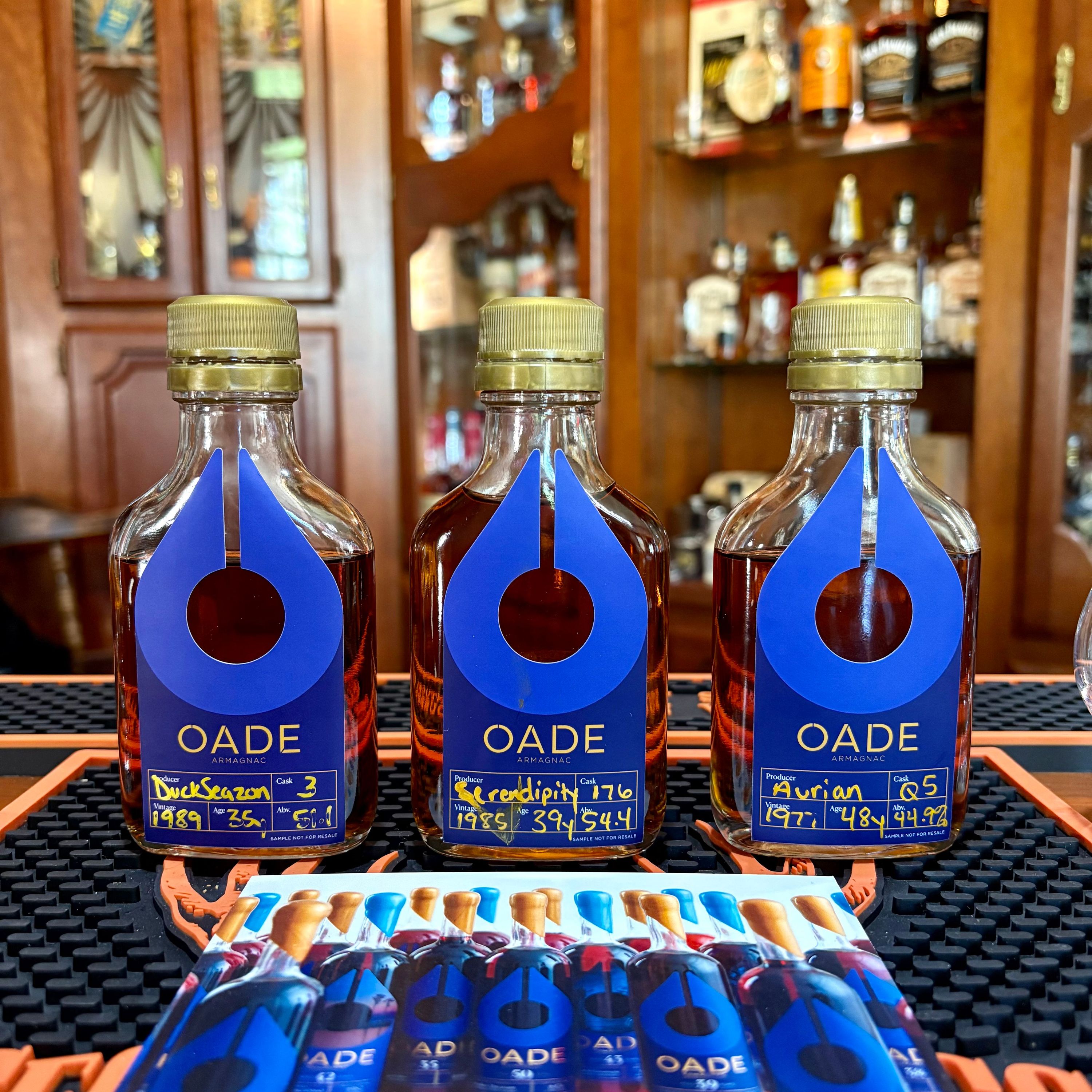


Join us as we explore the fascinating world of Armagnac with Dan Hacker, delving into its history, production, and unique characteristics. Discover how this rare spirit compares to bourbon, the intricacies of aging, and the stories behind some of the most exceptional bottles.
Please like, follow, subscribe, and share!
Leave a comment or review: www.bourbonbrassandbeyond.com
Keywords
Armagnac, spirits, bourbon, distillation, aging, French wine, brandy, tasting, whiskey, craft spirits
Key topics
Differences between bourbon and Armagnac
The small-scale production process of Armagnac
Aging and maturation in demijohns and barrels
The rarity and value of vintage Armagnac
The story of discovering unique producers in France
Guest name
Dan Hacker
Titles
The Hidden World of 50-Year-Old Armagnac: Secrets from France
How Small-Scale Producers Create Rare Spirit Masterpieces
sound bites
"Producers sell in very small quantities"
"Fruit-forward taste with a little bite"
"Made from four main grape varietals"
Chapters
00:00 Introduction to Armagnac and Bourbon
01:54 Understanding the Differences: Bourbon vs. Armagnac
04:05 The Aging Process of Armagnac
05:59 The Unique Production of Armagnac
08:15 Tasting the Duck Season Armagnac
18:58 Exploring the Serendipity Armagnac
24:05 The Journey of Discovering Unique Armagnacs
26:10 Transitioning from Bourbon to Armagnac
28:15 Exploring the World of Armagnac
31:01 The Journey to Discover Unique Producers
34:06 Tasting the Essence of Armagnac
37:33 The Challenges of Importing and Pricing
40:30 Balancing Family Life and Passion for Spirits
46:32 The Craft of Armagnac Production
49:26 NEWCHAPTER
49:31 NEWCHAPTER_2
50:07 NEWCHAPTER_3
50:12 NEWCHAPTER_4
resources
OADE Armagnac - https://oadearmagnac.com
OADE Armagnac on Instagram - https://www.instagram.com/oadearmagnac
Armagnac Region - France - https://en.france.fr/en/armagnac
Bourbon, Brass & Beyond - www.bourbonbrassandbeyond.com
Daniel AI: A very special thank you to Dan Hakker from OADE Armagnac Please go to his website www.oadearmagnac.com and you can link to his shop there. Please find us on Spotify, YouTube, Apple Podcasts or our website www.bourbonbrassandbeyond.com. Please like, follow, subscribe and definitely share. Thanks for watching. Welcome to Bourbon Brass and Beyond. Tonight we are excited to have Dan Hakker from OADE Armagnac join us on the podcast. If you like dusty bourbons, you really need to watch this one. Please sit back, relax and enjoy the flight.
Dan And Bob: Well, good evening. Welcome back. How's everybody tonight? Bourbon Brass and Beyond. But tonight we're doing something a little different. Not Bourbon Brass and Beyond tonight? No, I changed the name a little bit. Yeah, well. Yeah. So tonight we have Dan Hakker, president, founder of OADE Armagnac us and â set some just as a quick recap, we did a podcast. couple months ago with Morgan Proctor from Winthrop Liquors. he sent up like seven samples, all of them, bangers, all of them, just fantastic. When it wasn't just like random, it was not, it was random stuff he had around, but crazy good random stuff. And of which was a 38 year Armagnac. And he of talked to us about it and he was explaining what it was, but it was new to us. But just, it â was so and that crazy mouth feel and nice and sweet and the notes, the raisins and the, it really good. So I reached to Dan as â we talked it â on the and he sent some samples. So Dan Hakker, â Thanks for
Dan Hakker: Thank Excited to be here. Yeah, excited to be here. We've got a very good friend in common. before we started the pod, we were talking about the podcast you had with Morgan and how it ran almost an hour and you got a good night's sleep after you tasted through those samples. But every time I've gone to visit Morgan down in Tampa, it's been a good time and it's much longer than we expected. â
Dan And Bob: Yeah. Hope the hotels close. Yeah, I. that's one of those things that I do want to get down there. Great to visit. Yeah, â just.
Dan Hakker: It is an awesome spot. Not only the shop having great picks and Morgan having a great palette and doing cool things, but the patio outside is a really, really cool spot just to have some pours into cigar. I love it down there.
Dan And Bob: I've started dabbling in the cigars as well, just a little bit. We just actually got back from vacation. wife and I, took â five kids on a cruise and we liked the duty-free shop. Brought home some â Cubans for that. of our people â that watch podcasts are bourbon What is the difference between bourbon and armagnac? the easiest way to explain it?
Dan Hakker: So we'll start with kind of the overarching categories, right? So bourbon is a whiskey. Whiskey is any spirit distilled from grains. armagnac is a brandy. So the brandy, the overarching category is any distilled spirit that's made from fruit. So armagnac is made from a fruit. Bourbon is made from a grain, right? Armagnac is made from grapes.
Dan And Bob: Okay.
Dan Hakker: bourbon is made from corn, predominantly, right? And then if you want to go down a little bit more into what is armagnac and maybe that kind of gives you some of the nuance and difference. So armagnac is that brandy that's distilled from grapes that have to be made specifically and grown in the armagnac region. That region is in Southwest France. It's about an hour and a half, two hours equidistant between Bordeaux and Toulouse in Southwest France, really, really kind of Southern countryside. The entire region itself is maybe a little bit larger than a tenth of the size of the state of New Jersey. So it's a small area, but within that tiny area, there's about 500 independent small producers of Armagnac that are kind of the core producers that make this product. each of those producers really has maybe between 50 or 200 barrels in their cellar for the most part. And that's their entire cellars, right? So these cellars could span decades, right? 20, 30, 40, 50 plus years worth of vintages and all told, you're talking only 100, 200 barrels. So each vintage may only have a couple of barrels. Usually they're only producing somewhere between five and 10 barrels in a given year, which is just wild, right? You think about the small scale of production because it comes from grapes, right? So basically they, grow the grapes, they harvest the grapes, they make those grapes into wine, and then they distill those grapes, and they only get a few barrels a year out of those. One year's yield of barrels for most of these producers is less than what, let's say, Heaven Hill or Buffalo Trace produce in one hour. So it's just a crazy small quantity of what they have to produce, and it produces something really special when it comes to single casks and single vintages.
Dan And Bob: Yeah. So aging process then takes, mean, depending the, you don't know what you're gonna get until 40, 50 years later. That's a, â do taste it as they go? they, seeing how it â is yielding far as the. â
Dan Hakker: So, yeah, so there's a wide range and variety of the ages, right? So what we bottle for my brand OADE, the youngest things we'll ever bottle is 20 years. â age, bottling things â initial releases. Our oldest bottling was 50, but we've got one coming that's 61 years, right? So we're bottling older, Armagnac spirits, but in the region, â the producers themselves, because they are the ones that are working through the seasons, harvesting every year, dealing with the conditions, putting it in barrel and distillation, right? And they're very close to the Armagnacs of this last decade. They actually enjoy the younger Armagnacs quite a bit. So they bottle them younger ages as VS, VSOP or XOs, right? Anywhere from two to 10 years old. Oftentimes either a single barrel or a blend under those labelings. And they're, they're pretty frequently in the region locally, as far as the younger spirits. â But obviously then you've got your older, past 10 years, vintage spirits that have the year they were distilled and the age statements on them. â those go upwards of, â I said, 50, 60, 70 years old, depending on how long they're in barrel or in a damage zone. And yeah, mean, a lot of the producers, they'll taste their casks maybe once a year to kind of, â get a gauge for what, what each barrel and each vintage is like and make some decisions on if they're going to keep them in their existing barrel, if they're going to move them to a different barrel, if they were going to move them out of the barrels into glass, which are called demijohns. So once Armagnac kind of reaches its peak of aging or so the producer believes, right. And they say, Hey, this thing's been in wood for 35 years and we don't feel like it could take any more wood. â can transition them to these. glass bulbs demijohns and some of them have things called paradise rooms that are these rooms full of these beautiful glass bulbs that the spirit where I can continue to age in the kind of a different way through oxidation over decades â without getting barrel at that point.
Dan And Bob: I just want to let you know. So it's 70 years old. Did they just lose that barrel? Did it get left behind something else? I can't imagine entire two of just that thing sitting in a cave somewhere, basically. â That's part I can't wrap my head around, that it's just around. I can't a bottle on the shelf for six months without wanting to crack it open.
Dan Hakker: So think it's a very different mentality and maybe I can kind of shed a little bit of light on it is these producers aren't motivated or focused on selling the product. They don't have all these commercialized different versions or brands they're bottling. â lot of these guys are selling a couple hundred bottles a year and the majority of the bottles they're selling of this Armagnac it's couple that got married in 1995 and every year they come back to producer X and they buy one bottle. It's their â vintage and they drink it throughout the year to celebrate their wedding until the next year. â you know, an older person that gets their birth year bottle every year or they have festivals and they say, you know what? A hundred people are going to be here. We'll bring 20 bottles. Maybe we'll sell these bottles. â so â The way they commercialize and sell is in very small quantities and a lot of it is local for most of the producers. And so the idea of a barrel being left behind for 50, 60 years, it's not left behind. It's more the fact that these, each one of these things is a keepsake for them. Right. And so even the idea of when I'm coming in and I'm meeting these producers for the first time and I'm motivated to taste through the sellers. And we like the product, the idea of buying full barrels, it's foreign to them. Right. And it's not as easy as, I want to buy this barrel. here's money, it's a transaction. A lot of times we need to kind of convince them to feel comfortable that we're gonna honor the spirit and that we're taking this thing that they may only have one barrel of this vintage from 50 years ago and we're gonna do something special with it, we're gonna bring it to the States, we're gonna make sure we represent the producer and the category of Armagnac the right way.
Dan And Bob: It's almost like it's made for personal consumption, not to your point for wholesale retail, anything else. It's just, hey, we're going to have this stuff around because we like picking grapes and the process. It's crazy. think my mouth's getting dry though. Yeah, time. â think it's time. I â I will clean. â I get a little bit out of each. Steph and tried it and I think we tried one â just because been sitting here and then. We really enjoyed it. which one did you want to start with? Like I know in Birb... Okay. I know with Birb, and a lot of times we'll start with a lower proof and then work up, but these are also similar. didn't know if there was a method. So, So duck season is from 1989, 35 year, 51.1%.
Dan Hakker: Let's start with duck season. Yep, go ahead. Yeah, let's go in age order. baby in the lot.
Dan And Bob: â Yeah. figure. Yeah.
Dan Hakker: While you're pouring it, you if you'd like, I can give you a little background on the poor and the producer. Yeah, so duck season. So for every bottling that we do, so everything that we do right now or cast strength single barrels from a single vintage single producer and we give each one of the names that kind of represent that cask or that producer. And so this one we named duck season because the producer that we acquired this cast from.
Dan And Bob: I would love it.
Dan Hakker: not only produces armagnac, but they also have a farm for ducks where they make foie gras. so, Southwest France and Gascony is one of the largest producers of foie gras in the world.
Dan And Bob: Three, two. Can you get more friends than this place? Like it?
Dan Hakker: only this place, but this man is the portrait, the portrait of Southern France. He's amazing. So producer, â as mentioned, Duck Farm, right, functioning Duck Farm, they actually shut it down a couple of years ago. But when we started visiting about four years ago, he was still producing foie gras. We bought probably 30 jars of the foie gras. We still have some left at the house. In addition to that, they're producing Armagnac.
Dan And Bob: â really? That's funny.
Dan Hakker: The property, the farm is over a century old. the individual now that the property, Christian Bergerell, he wasn't original and his family weren't the originals, but â he had the property back in the 80s. And for some of time, he was working the property, managing the vines, helping â the initial owner and producer kind of managed the facilities. And over time, they offered him an opportunity to purchase a small portion of the vineyard and he was going to be able to produce his bit of armagnac while the original owner was going to produce his armagnac from the same property. And over time, I think there was a plan for a transition for Christian to take over the property. So Christian took over the property in the early 90s. But this 1989 vintage was one of the unique vintages. is a handful of them from 1987 up to 1990, where both he and the original producer were both making barrels. And so this was barrel number three, I believe, because his first three barrels that were Christians himself that were his vineyards, production his barrel. was one from 1987, one from 1988, and one from 1989. So this is the third barrel and third vintage that Christian had ever produced, the only barrel from that vintage that he produced. And one other really unique thing about Fermet de Bacouge, which is his property, is that every one of the armagnacs are aged exclusively in new toasted oak barrels. And so with armagnac, something that's unique is so they're aged in toasted oak barrels, but they don't have to be new. And so a lot of variation in what producers do. The most common sentiment is they usually put it in new barrels for about two to five years and then transition it to used barrels so it can age gracefully over a long period of time. What Christian does is he puts the armagnac in a new toasted French oak barrel and leaves it in there for its entire life. So this armagnac has aged in one barrel in one cellar for 35 years until we tasted it, purchased the barrel, and then we dumped it and bottled it.
Dan And Bob: So just recently had a conversation about French oak and that we love what it does to bourbons. You know, how it changes the flavors and the different that come out because of it. It always ends up sweeter for me. Like, I don't know what the difference is, but somehow bourbon shifted into those French oaks always, it's in my Like, it's the, yeah. It's probably why I like this stuff so much. â So I...
Dan Hakker: Why not tell you for this one in particular? â sorry. Go ahead, Dan. I was just gonna say for this one in particular, of the things that made me fall in love with Armandac when I tasted it for the first time in 2018 was it really reminded me of kind of glut era, low proof, high flavor bourbons from like the 80s and 90s. In kind of old KBDs, old wild turkeys, old heaven hills. And this
Dan And Bob: Go right ahead.
Dan Hakker: Beryl in particular is one of those ones that really makes me just feel like it reminds me of just an old KBD bottle that's maybe has a 15 year age statement on it, but tastes like it's in the 20 plus year range. It's low alcohol, right? It's what 51 % but it has such a richness and concentration of flavor that a modern whiskey at 60 or 70 % can't even touch.
Dan And Bob: Right. Yeah. And that, think, my at least, â personally, my favorite age range of bourbons. Like I a couple 1983 wild turkeys. â I have mid-70s old grand Those â to me have much flavor compared to the cask strength that comes out today. So it's definitely got an oaky. Yeah, it's you get the oak and you get a little bit of the wood, but it has that â It's like a floral. â absolutely. Nose it. But yeah, I almost wonder if it's the French oak. â That's difference here, too. And I'm getting the vanilla on it. It's crazy that it's not what were you. This isn't whiskey like at the end of the day. Right. But it's still. â Yeah, just yeah. Do you notice people have a difference in? their palate or their nose comparing because they're used to using certain terms like, â this has vanilla, this is caramel, but it's all right, now I have to come up with new a new a new term. What's what's the flavor in it? Listen, I I'm getting the but I'm also getting we need to sneak one of these into a blind. to see if, you might notice it more on the nose than the palate. think that's the- That's in my plan. I can't wait to do that. Yeah, this is- So-
Dan Hakker: Yeah, and something that's unique about the Armagnac is that, and I tend to, I'm saying this more more frequently because a lot of times when I'm doing tastings and doing events, it's a lot of like the whiskey community people that I know or that I'm meeting. I came from Bourbon, right? I love Bourbon as you can see behind me, right? Like I still visit Kentucky two or three times a year. â But when you, when you think about Bourbon, right? Oftentimes it's more similar than it is different.
Dan And Bob: Yeah, that was the thing did when I really got like, what's I do?
Dan Hakker: And there's definitely levels, right? Like when bourbon is good, there's nothing better, but there's a lot of similarities. Whereas with these armagnacs, you're going to taste all three. They're more different than they are similar. So to your point about tasting notes and kind of about thinking about what you draw out of them, it really is like anything else, palate experience, right? Just enjoying and appreciating each pour. And sometimes you don't have to draw out the notes right away. It's more about just experiencing and appreciating something that's different â if it's something you enjoy.
Dan And Bob: Yeah, point with 500 different people making it with all the different types and ways to be able to bottle with us. And some people move up from barrel to barrel. Nothing can be the same at that point. Like even if they're only producing one distillers making one or two barrels a year, five barrels a year, everything is different. Like you, you, those five are never going to be the same. Like â just can't, I we're so used to large scale distilling and bottling even the smaller guys that are out there. still making way more than this. â
Dan Hakker: I'll throw another wrinkle in the mix. When it comes to aging conditions, there are drastic differences from producer to producer here versus in whiskey and bourbon. There's kind of a model, right? Like there's a couple of unique â that may do things uniquely to try different things. But for the most part, Rikhous is large scale, whether it's multiple levels, multiple tiers, right?
Dan And Bob: Mm-hmm.
Dan Hakker: and you've got rows of these barrels that are all aging fairly similarly. They probably have conditions when it comes to humidity and airflow, right? Like the temperature in Kentucky creates the same kind of effect on all of the rick houses. In Gascony, aging conditions are literally like, what building do you have on property? Right? So some of them, it can be a barn that they have on property. it may have two levels. So there may be a ground floor in the barn that can, they can hold 40 barrels and then, an attic that holds another tent, right? And the attic, I have an example of one, you know, one of the bottlings we did, the attic has a drastic different effect than the barrels that were below it right there in the barn. and then other properties where, you know, there are dirt floors or stone floors and there's literally puddles on the ground. So there's such a high level of humidity.
Dan And Bob: Yeah, you're not.
Dan Hakker: that the arm and yet continues to lose alcohol. so for 30, 40 year barrel at cask strength, it's 42%, which is crazy.
Dan And Bob: Yeah. Well, that's the part I can't. After that, well, how much is left in these things? Like you can't, they can't be high yield out of the barrel, right? Like it's gotta be half. â
Dan Hakker: So the size of the barrel, let's start with that, right? So the size of the barrel is twice that of a bourbon barrel. So you're already starting with roughly 500 bottles in a given barrel, When it's new, because it's 400 to 420 liters. And then from there, angel share is somewhere between 1 1.5 % to 3 % a year. And that's very dependent on the humidity, the airflow, the heat in. that in that specific aging spot. And then from there, you got to think I mentioned earlier, right? Like they're most of the producers are not selling full barrels, right? They're not like bourbon producers where they dump these barrels, bottle them and go. Like they're siphoning out 20 bottles worth of this, 10 bottles worth of that, 50 bottles worth of this one, because it's a really popular one, or they want to commercialize this one more. And so you can have two barrels sitting next to each other.
Dan And Bob: Okay, yeah.
Dan Hakker: the same vintage and one could have 150 liters or 200 liters less in it than the other because that's the one they've been siphoning out of and the one next to it they haven't siphoned anything out of. So there's your angel share but there's also like this new dynamic that we don't really see in bourbon where it's like you never know. I can end up finding a barrel I love that they've been siphoning for 20 years that only has 30, 40, 50 bottles left.
Dan And Bob: dramatically different. Yeah. Crazy. Wow. OK, that was the duck season and you have that one available right now, right?
Dan Hakker: Yep, so that one's available at shop.oadearmagnac.com or you can just go to oadearmagnac.com hit the shop link.
Dan And Bob: Then we'll put some links on there too to make sure you can find it. The next one would be the Serendipity. 1985, 39 year. This one is 54.4%. Right in that sweet spot, that 108, 109.
Dan Hakker: and deputy. Yeah, and so great example, this producer, larger dryer cellar, and they've got a ton of Armagnacs The majority of their stuff is between 50 and 60 or 61%, which is very high for Armagnacs at the age of 30 to 50 years. Majority again, the majority of barrels over 35 years are under 50 % ABV. Like, so even finding a lot of these barrels that we're bottling at 50, 52, 53%, it's still needles in a haystack. but these guys in particular, the majority of the older barrels in their cellar are higher out. So different region as well. The first was Baz Armagnac. one is in Teneres. There's three regions of Armagnac, Baz Armagnac, Teneres, and Ho Armagnac. About % of Armagnac is made in Baz. 39 is made in Teneres where this barrel was made. And then 1 % is made in this Ho area, which very little Armagnac is produced in. And so this comes from the Teneres region about an hour, hour and 15 minutes from the last producer.
Dan And Bob: Boy, I love it. So I just want to say I'd like, I read that drinking arm and axe, it's like the third or the fourth drink, you really start to get some of the good flavors. And that 35 year I was getting like an apricot, like it was just a really nice fruit forward taste to me. And then going to this one on the nose, just sweet. Yeah, it's very much sweeter. And not. And like a fruit. There's a fruit there that just sneaks it in. Yeah. I almost would have said raisin or â sort of, I don't know. Like a grape jam. Man, that's different too. Hmm. that's nice. So I'm getting more of the grape flavors or the raisin flavors, but this one has a little bit of bite to it. bite, not like hot bite, but just like you get that tingling on the tongue. It's just good. thought â same of the first one as well, by to your point, the second or third drink, I didn't think it was at all. Like I think it's just the difference for me. Yeah. But wow. I think these could just get in trouble. We talked about this when we did these the last time. Yeah.
Dan Hakker: I'll tell you what, with these armagnacs, they open up dramatically with air. So you leave them in a glass, 15, 20, 30 minutes. pour yourself a nice two-finger pour and you'll get a lot of evolution in them and they'll give you a lot of fun.
Dan And Bob: Oh, wow. See that? is one of the ones we're gonna have to do by fire one night. We'll just sit and... Yeah. Yeah. Now, I think I saw that you do have the serendipity as well available on the website.
Dan Hakker: Yes, So a pretty wild story with this producer, this barrel. So we named it Serendipity because this producer had absolutely no digital footprint or no presence online to discover them. And the way we ended up finding them was I spent countless hours referencing Google Maps, so I will take a look at producers I already work with, zoom in and out and around the Google Maps and I'll find anything that's named Domain or Chateau, try and do some research on it. And then we've got â a translator who's been with our business from day one, his name's Tio. And he'll then reach out to them, give them a phone call, we'll shoot them an email. And we did that for this producer. Well, we couldn't find that information. So Tio actually had to physically go to their door and knock on the door. â
Dan And Bob: Thank
Dan Hakker: because his family lives in the region now, he lives in Toulouse, but he's only about two hours away. And so we drove down, knocked on the door. The cellar master lived on property, luckily, answered the door. He talked to him and he got us an appointment to go see them. This was three or four years ago. And wild thing about this producer was at the they weren't selling anything and they were kind of treading water because the original owner, Yves Duflo, had passed away about a decade ago. And since then, the family that kind of took control, his family didn't know what to do with the property. So they were continuing to harvest, distill, and kind of manage the cellar, but they weren't selling anything until they came to an agreement on what they were going to do with the property. we ended up spending an entire afternoon with the cellar master tasting through the cellar. They some â amazing some really unique stuff. bottled the oldest bottling that we have to date. Our 50 year comes from that property. It's the second barrel they ever distilled. And so we were tasting through barrels. This Serendipity happened to be the last sample that we tasted and I was fell in love with this one. Just felt like it was serendipitous how everything had happened throughout the course of this kind of evolution of discovering this producer, the way I found it through the map, the way they happened to be at the door when Tio knocked on the door and then finding this barrel as the last barrel. So we ended up calling this one Serendipity.
Dan And Bob: This has got to be one of the best finishes I have ever had. mean, of â liquor I've had, this is one of the best finishes. They all last a long time on, they hold. Yeah. This is really nice. Yeah. So you've got what looks to be 20 or so bottles behind you there are all yours. Are they all individuals or are they duplicates up there? How many of these have you sold?
Dan Hakker: No, so those. So we've we bottle 22 unique casks. the ones with the blue wax. Our barrels are single barrel picks. So â â stores, restaurants â throughout the have reached out and done private selections.
Dan And Bob: Podcast room? Yeah.
Dan Hakker: Yep, so we've done private selections through the brand and then everything with the gold top are our national releases that are sold exclusively through our shop. We haven't released all of them, so some of the ones that are up on the bar behind me haven't seen the light of day yet, but we're continuing to release those that we have bottled and we have another bottling run that we're doing right now. It's another 24, another 24 barrels being bottled now.
Dan And Bob: Thanks. So how many bottles are you getting generally, like when you do a run of that for the 24 barrels?
Dan Hakker: So again, it's pretty sporadic. know we did one for Sealbox. It was the youngest thing I ever bottled. was a 2004 and we only got 36 bottles out of it, which is a complete one in a million shot. And then we've got, I bottled a 50 year and we got 200 plus bottles, 230 bottles out of it. So go figure. It's really kind of dependent on.
Dan And Bob: Right. Yep.
Dan Hakker: combination of evaporation and how much they've thieves from that barrel over the course of time.
Dan And Bob: It's such a different world than we're used to. It's so funny to me that literally a guy with a thief once week just to see what might be out there and that's what they're gonna sell. So I from my perspective, started in bourbon, That was your tasting bourbon. How did you get into and then how did you transition? What led to that transition?
Dan Hakker: So I got into bourbon, I think, end of 2013. It was with my wife, so she's been with me on this from day one. It was actually through my father-in-law. So was one of the best things my father-in-law ever did outside of my wife. So he got into bourbon maybe a year or two prior and was just like obsessed with it. And so I was at my in-laws for Christmas. and we were at this point, I don't know, my wife and I were dating for three years maybe, four years. And so was still kind of courting process, right? And so it was like Christmas morning at maybe eight or nine AM. And her dad just pulled out like four or five bourbon bottles. At this point, all I was drinking was beers and vodka tonics. And he had like, this was when Willett had maybe a two year rye from their own distillate and it was like 120, 130 proof gasoline.
Dan And Bob: Yeah.
Dan Hakker: And so he's putting those up on the bar and he's like, all right, I'm to do a tasting for you. so I tasted through them. I was miserable, but there was enough of the intrigue of kind of the story and kind of the uniqueness of each bottle that took about five steps back, started drinking cocktails. Then we got into, you know, neat pours at â kind lower ABV and then got into Barrelproof. And obviously the rest was history. And so we spent the next few years. going back and forth to Kentucky. joined our local group, which now we're one of the people that runs it. And we've been doing that for years. And then in 2018, through building relationships with people that â were like-minded had bourbon groups all over the country, there was another who was running a group out of New York, and they ended up doing a barrel pick of Armagnac. I saw it on site. I had no idea what Armagnac was, but it was 30 years old. was a 1988 vintage, which is the year my wife was born. And we're like, well, shit, it was like 200 bucks. It was 30 years old. It was her birth year vintage. His tasting notes were, he's very good at tasting notes. We were like, this tastes, this looks like it tastes amazing. we got a bottle. We opened it as soon as we got it. And like the first time we tried it, like I said, it just felt like I was drinking delicious, old, concentrated, low alcohol bourbon. And there we just became obsessed. So.
Dan And Bob: Yeah.
Dan Hakker: We ended up buying up bottles. started doing barrel picks of the producers of Armagnac that already distributed locally. And then we went to France for the first time in 2021. So we went for the first time in 2021 to visit all of the producers that already imported to the States. And just physically being there and seeing the scope. and the size of these producers, like really getting your head around the fact that you walk in this barn that has 60 barrels and that's everything that these people have produced in the span of 30 or 40 years. It's just mind blowing. And the hospitality they give you and the experience that we get out there. When I came back, I just felt like there was more to this story that had to be told. And I realized that the majority of those 500 producers have never exported to the States. Their product has basically never left that region. And so I spent that next year after 2021 doing all of that research on the computer. cross-referenced books, I cross-referenced Google websites, Google maps, and just cataloged as many producers as I could. And we just started cold calling and emailing all the producers we could. I had already hired my translator at that point. And that next year we back and we visited 21 or 22 brand new producers. And at point kind of we were just off to the races. you know, we were... I went back, I go back about twice a year now. So we usually do between 10, 10 and 12 days per trip. Cause I think past that we reached the full saturation point. Listen, even spitting we were laughing. I just got back from France a week ago. I was there for 10 days. In 10 days we tasted over 500 barrels.
Dan And Bob: â me in coach. Now let me in. That's on the list of things. It sounds really, really nice on the face of it. But in all actuality, that sounds like work. That don't know five. Do anything 500 times right? Right. So what's is leading up to next sample. So Friday is my birthday â I was born in 77, so I turned 49 on Friday. He turns 49 at the end of the month. But so she what do you want to do? And I said, well, you know, what is to do? She's like, you want to to Kentucky? Yes. â Which is about six hour drive for us. And â so Thursday we're going to drive down to Louisville, wake up in time for the Buffalo Trace drop in the morning, head over to Pappy and Co for cigars and coffee. awesome. And I've already texted Preston and Van Winkle is supposed to meet me over there for lunch. And then we gonna go to a Derek Trucks bottle signing â at a hit dinner and then hit Buffalo Trace next morning. now do this in France. Like that's the next challenge. I think that's the â next challenge. I I fly for free? Yeah, the leap from Kentucky to France is a real thing. Yeah.
Dan Hakker: This is true, Dan. We've got to get a lot closer. I need you to start being my private pilot now.
Dan And Bob: I that a tape of the bourbon that is â the of retirement I'm talking about, you know, we â Yeah, there's a little sticker I need to make a sticker out of that What this â is Am saying it right Aryan is that â
Dan Hakker: will fly for Armagnac. Orion, yep, Maison Orion.
Dan And Bob: was distilled in 1977, 48 years old, 44.9%. So 99.8. No, 90, 89.9. Somewhere in there.
Dan Hakker: Yep, and now this one was put in one of those glass bulbs that Demi John few years back, so that's why the age statement doesn't necessarily match the vintage. And it goes in glass, we kind of stop the age statement for wood.
Dan And Bob: Good Yep. And then when they do that, do you still have access to go back and then pull more bottles at a later date or? You're buying the whole barrel, right? Like this is the only thing that will ever exist. Do they have any other casks? It's not going to matter because they're a different cask anyways. This is the only version of this thing that's ever going to exist. Well, right, but the...
Dan Hakker: So, yep.
Dan And Bob: If they have that glass bulb, they only take half of the glass bulb, then it's maturing anymore, but it's still there. â
Dan Hakker: Yeah, so for this one, this one we have not bottled. So you guys get a very special treat. So this one was a sample that was pulled a year ago, maybe. So this one was pulled about a year ago and we haven't bottled it yet, but it's in Demijohn's â the Paradise Room at Maison Arian.
Dan And Bob: that â It's unreal. It's like this butterscotch-y butterscotch. I'm getting the butterscotch from the nose. It's so crazy. But I'm also getting the fruit. I'm also getting a little fruit underneath it, like a little raisin. Man, this is good. you Yeah, you get almost of that dustiness. You get almost a little bit of that dusty funk that you like get on an old wild turkey.
Dan Hakker: We know it's fun. when, those harmonics end up in those damage on those glass bulbs, so they don't necessarily make them airtight with a seal necessarily. So they kind of have these corks that seal the damage on, but they usually put like a â of like this, this thin cloth between the cork and the glass. And so although it's sealed, like you can kind of flick it off, right? It's not, it's not this airtight seal. And so to your point, I definitely think when you taste these older glass bulbs, these demijohns. Like last trip, I was tasting ones from the the 40s, 30s, the I tasted, the oldest ones we tasted was in 1888. It's of the oldest Armagnacs kind of left still available. And you definitely get kind of dusty funk note on it. And I think a big part of it is just this kind of slow oxidation over the course of a long time.
Dan And Bob: Yeah. This is insane. This is wonderful. This is like a birthday present. This was so when we did. So. And actually, that's one of my next questions. I've seen that the glasses used for Armagnac. What? And they're like stemmed versions of a Blink. Aaron. But do have a specific name? Like are they today? OK.
Dan Hakker: Here we go, I poured myself a glass of it, so cheers boys. I was waiting for that. Tulip
Dan And Bob: Mmm. So when this, when will you barrel or bottle this? Do you know?
Dan Hakker: No, we don't know. It's dependent. We've got a lot of casks that are kind of in queue. That'll either end up being private selections or our bottling, so we're still kind of working through them. You know when and how we bottle certain casks.
Dan And Bob: Okay. Good luck. I think... Listen, all of these are good. Yeah, but it's insane. That's my yeah. Maybe that's exactly right. I'm biased to this one anyways.
Dan Hakker: Power of the Birth Year wins again. So 77 was a good year, but a low yield year in Armagnac. So it's tough to find them. And a lot of them though are very good quality.
Dan And Bob: It's almost like wine when you're talking about that. flavor was great, but the yield was low. That's a pretty common thing I â in wine as well. â
Dan Hakker: yeah, the Bureau has like the there's an Armagnac Bureau that oversees kind of the producers and how they operate and they have running records of every vintage what was produced and then the remainder that is not sold.
Dan And Bob: Thanks
Dan Hakker: So they have full records of like the inventory of every vintage. So you could see which ones are rare and which ones are less rare. And 77 is known to be one of the rare ones from those earlier, from the non-hyper-aged years.
Dan And Bob: Okay. Yeah. It's been. Because they've been dipping into it because it's so dang good. I would. Oh, yeah. No, no, don't try this. It's horrible. Yeah, it's back when you're in high school. You're like, no, dad. There's nothing missing from that bottle.
Dan Hakker: So I was born in 83. I was born in 1983 and that was a low production, but it feels like a relatively low quality year in a sense of, man, we've been to 120 sellers and I've only found maybe two casts of 1983 that I enjoyed.
Dan And Bob: I just want a couple more of them and I can't find them. So you I should send him some 83 wild turkey samples. Return the favor. Yeah. Have you tried the 1983 wild turkey?
Dan Hakker: Fine, man. think I've had a 83. I would remember that if it was a birth year. I've had, love, listen, dusty turkey is one of my favorite things on the planet. So, you're speaking my language.
Dan And Bob: Hahaha So I have a 1980, actually I have two. I have a full one, sealed one. And then this one, eight year one-on-one. Yeah. Austin Nickel. I'll send you some samples. was actually one of my favorites until that 2003 Russell's reserve. That was phenomenal too. That's special. I'm have a...
Dan Hakker: That's Nate101. â Nice. That's awesome.
Dan And Bob: I'm gonna take that one home with me. so. That's other nice part is that since we're right across the street from each other, it's literally like, I some of this. coming. We had a bottle last night. He's like, I'll drop it off for you I'll be right over. So literally before I could get out the door, Dan was there. Yeah. It looks nice. Man. so do you have anything new coming out? Is this?
Dan Hakker: you
Dan And Bob: that you found on your last trip.
Dan Hakker: Yeah, so from the last trip, so we've got a couple of things. We're in process of bottling now a run â new single cast that we're going to be selling on our site here probably between summer â and end of the year. And then we also have some unreal private picks that were done that were bottling right now. Just some wild ones from new producers. We've got a couple going out to Chicago, we've got ones going out to Boston, we've got a few for national groups. So we've got a lot of fun â barrels that are gonna be coming out from summertime â the end of the year as well. So it's gonna be a busy year for drops for us between â and December. But in addition to that. â No rest for the wary, although we've got a ton of bottling and a lot of stuff coming out over the course of the next six months. coming back from my trip. I've got 102 new barrel samples that are en route to my house that should be here by Wednesday, I think. And so we've got bottles of 102 distinct single barrels that we have not bottled or tasted yet that I tasted, well, not tasted here locally yet. And those 102, we've got a panel of people that we're going to taste through, and then we're going to load some of those into our private selection program. We're going to open that up again and do some more barrel picks for people. And then a handful of those are also going to end up going to national distribution. had mentioned I'm bringing some samples back of stuff as old as 1930s. So I am really pumped that next year I think we'll be able to release some stuff that's 70 or 80 years old, which is just going to be crazy.
Dan And Bob: That's crazy. I mean, I just want to bottle this. â exactly. Yeah, I need one. You it domestically or you bottle it there?
Dan Hakker: Yeah, so we bottle it there. â So we work very closely with that Armagnac Bureau I mentioned. And so in order to maintain the integrity of Armagnac and the terroir, they were very â
Dan And Bob: Okay.
Dan Hakker: adamant that they prefer bottling being done there. It's not necessarily, I think, a hard and fast rule. So there's some people that have kind of exported it in bulk and bottled it elsewhere. But there's also been some bad actors that haven't done the right things. again, in order to kind of maintain the integrity, we do all the bottling over there.
Dan And Bob: Yep. Yep. You got enough rules around every other thing that happens in France, let alone the stuff that happens here. Kentucky's particular. I don't blame them for trying to protect their name. Yeah, I that. amazing. â is amazing stuff. You know, it's almost. I don't even... it's crazy good. Yeah. you some new additions, right? In the last couple of years. Bob and I and talk all the time because it always comes up that we have a story or a house So but like I ran a county meet where my middle was throwing shot put and discus And he actually, this is his first, he's only been doing it for a month. This is his first time ever doing it. And he just took second in the county and third at the entire meet for shot put as an eighth grader. But have five kids and Bob's two and â it is just constant back and forth. Try filming a podcast between that plus jobs, plus everything else. It's a nightmare. Yeah. It's normally it ends up, it's like texting, Hey, do you have time? Yeah, I've got time. I'll be over and then or maybe of us falls asleep with the kids or every night if laying down with a mom out. But â but have younger kids, right? That's.
Dan Hakker: Yep, I've got one. So I've got a little one. He's 19 months.
Dan And Bob: No, still not sleeping right? You're still... You're looking right...
Dan Hakker: We're in the throes of it. believe it or not, sleep is one of the few things that is not a challenge. He has been an amazing sleeper. He sleeps about 12, 13 hours through the night. He's been doing it since four months.
Dan And Bob: Yeah, spoiled. That's That's great.
Dan Hakker: It is, it is, it is.
Dan And Bob: Yeah. Otherwise, it'd be, â well, it looks like I gotta go to France. Yeah. I'd be fine. reason to travel. these tariffs, with these tariffs, it's too expensive. too many samples. Over. Got to go. you, have you had many â or if you have you noticed a change because of the tariffs or the international relations going on right now with bringing the bottles over?
Dan Hakker: Yeah, so was funny timing when we came up with kind of the impetus for the brand and started to develop the plan to do this. There were no tariffs, right? then â the year we were in process of bottling, I was working with my partners to get the freight forwarding done. I had my import license, all of these things. Tariffs hit within 60 days â shipping. And so we had a decision to make, right? So ultimately,
Dan And Bob: Right.
Dan Hakker: You know, we stayed the course. Obviously we launched a brand that I'm I'm glad that I didn't allow that to kind of have us waiver from the plan. And I'll tell you like funny, not so funny stories before we launched the brand almost two years before we launched when we already going back and forth to France and visiting producers and pulling samples. I reached out some friendlies, some people that had stores, some people that had national groups that I was close with and I'd known through the community a long time and said, hey, let me fly you out to my house. spend the night with us. We'll cook you a proper Gascone French dinner â and I'm just going to, you know, line up samples. want, I want to know what you think about these and if this would be something that you'd be interested in buying a bottle of, or even like this would be something that would be interesting for barrel picks. So we had a handful of groups in stores come and you know, fortunately they all loved it and we ended pre-selling I think six or seven barrels before we had a name, before we had a label, before we had a brand, right? This was kind of just what nudged us over the edge to get started.
Dan And Bob: awesome.
Dan Hakker: So fast forward, you know, two years later when we're almost ready to launch and these tariffs it I start getting texts and calls from these guys saying hey, I see the tariffs it right. It's about 15 % or Our price is going up and credit to them. I think just about every single one of them said hey, If you got to increase the price 15 % I get it But you know we stood Pat and I said listen I made a commitment to you guys you guys were insane to commit to a barrel of Armagnac From a guy who basically just had a bunch of sample bottles and cooked you some duck â So, you we're going to stay the course of the pricing. And so we've had the same pricing model we built before tariffs after tariffs, because I know that Armagnac is still an emerging spirit and it's not a cheap bottle, â it's something that's special. And I wanted to make sure that the price points still align with bourbon drinkers ability to take a flyer on something new.
Dan And Bob: Thanks. Well, and I was looking at it. So for a 39 year armagnac, a 39 year liquor, crazy, it's only $273. What's the bourbon rule? Yeah, that's it's $10 per year. And that to me is. That's crazy. Yeah. Well, again, not to the bigger point is that you're not some of those runs are 50 bottles. Some of those are, yeah, I mean, there's extra cost to you're not amortizing that over all of them. You're just in it for what it is. Yeah, that.
Dan Hakker: Nothing we do is cheap, I promise you that. You nailed it. Bottling 50 to 150 bottles is far more labor intensive. And every one of our labels, by the way, is hand labeled. Every single one. Every label is hand labeled, every bottle is hand dipped with wax, every bottle is put away individually. Yeah, you mentioned that's funny. You mentioned the $10 per year for bourbon. So I created a price model day one for our brand, and it's $7 per year of age.
Dan And Bob: Yeah. People will approve that everything else. Yeah. Man.
Dan Hakker: So if you look at them, you go on the site, you do the math for the bottle links. We stick to $7 per year of age. I think now that we're dipping into 60 plus year territory, I may have to flex that a little bit because the cost of old Armagnac is exponentially more expensive than the stuff that's a little bit younger. But we've tried, we've held Pat to this point because I think it's an easily understandable pricing model. And it's like you guys said, it's a hell of a deal. Where else can you get something that's 40 years old for 280 bucks?
Dan And Bob: Thanks, son.
Dan Hakker: It's crazy.
Dan And Bob: Right. No, not exactly. Oh man. I can't get enough. No, no, we got to. I've got to put my name in a hat for one of the 48 years. mean this. Yeah. Yeah, that's fantastic. Oh, well, cheers. Cheers to you. Thank you for sending us these samples. are awesome. I can't tell you how much I appreciate these. It's unreal. You know, it's one of the things that I think really dragged me into bourbon was that you talked about this, where it's the the history, the story, the background, the process. And I think this is an easier leap. Like, it's unreal to think. It doesn't make sense.
Dan Hakker: Of course.
Dan And Bob: We talk about big distillers, they do it for the profit and they know they've got to be able to produce at scale. These guys are doing it the exact opposite way for the love of the distillate and it shows. It's unreal. Yeah, it's unreal. is there a specific type of grape that's used? That one of my other questions. â
Dan Hakker: Yeah, so Armagnac could be made from one of 10 grapes. But for the most part, there's pretty much four that are predominantly used because the other six, they're referred to as ghost varietals because â the most part, they stopped using them a while back. And now some producers are starting to kind of replant the vines. â But four that are most frequently used, the number one most frequently used is called Beko.
Dan And Bob: Okay.
Dan Hakker: then Ooni Blanc, is the predominant grape that's used for cognac, Colombard and Faubanche. So those are your four grapes, grape varietals.
Dan And Bob: â example, like that 48 year that the are on, do know what grapes were used in that? â
Dan Hakker: So that one, yep. So that one, I believe is a blend of two grapes, which is really interesting because they can blend grapes. I believe it's. Uni Blanc and Colomboard, think it's a 7030.
Dan And Bob: Okay. So these guys use their own, I'm gonna use air quotes here, mash bill for these things all the time, or is it just depend year to year? Like is that?
Dan Hakker: So it's dependent on the grapes that they're growing on the property. Obviously the majority of them is usually a single grape varietal. I would say 80 % of them is one single grape varietal. And if they have multiple grapes, sometimes they'll say, okay, we've got one barrels worth for full Blanche and then three for Bacow. But sometimes they do blends, which is fun.
Dan And Bob: Okay. Okay. Yeah. It's awesome. And I just, I get a unique sweetness in that one that I didn't get in the other two that is just, it's really nice. It's insane. Lucky. So we started our podcast in October and we talked about it for a little while before that. Yeah. Yeah. Good. At least nine months. Yeah. And I feel like every, every time we just luck out, been a lot of pinching myself. Like, is this really a thing? Like the idea that we â with you about 50 year old stuff coming out of France is insane. It â sinks into me. Yeah. So we've really lucky and we've enjoyed it. It's an awesome experience. can't, like I said, I appreciate the shit out of this. Yeah. Thank you. Thank you for coming on and talking about this. And if there's we'll put up the and if there's anything you want to... at the end here. Please have at it.
Dan Hakker: Yeah, no, I would say first, thank you guys for having me on. was a blast. I've got to make my way out there. We've got to share some ports together in person because that's what it's about.
Dan And Bob: Yeah, we got space. We've got the time. You say the word. You're more than welcome. â I, yeah, I even know the way to the airport, so I think I can find you. your way there if you need it. â â we appreciate Thank you so much.
Dan Hakker: Well, I know you guys are right across the street from each other, so no excuses. If I see one of you, I have to see both of you. Of course, my pleasure.

