The 'Whiskey Wars' Finale: Declaring a Champion in the Wild Turkey vs. Russell's Reserve Showdown
Welcome back to the blog, whiskey enthusiasts! In our latest episode, we embarked on an epic tasting journey, pitting a truly vintage bottling of Wild Turkey against some modern marvels from Russell's Reserve. It was a showdown that spanned decades, showcasing the evolution of a beloved distillery and the nuances that time, proof, and barrel management can impart. If you haven't already, make sure to dive into the full tasting experience with episode 34 of Bourbon Brass and Beyond, titled Whiskey Wars: Wild Turkey-Russell's Reserve 10 & 16 Year. Today, we're going to unpack that experience, dissecting the contenders, exploring the tasting notes, and ultimately, declaring a champion in this thrilling 'Whiskey Wars' finale.
The Contenders: A Tale of Two Eras (1983 Wild Turkey vs. Modern Russell's Reserve)
Our tasting battlefield was set with two distinct titans. On one side, we had a relic from the past: a 1983 bottling of Austin Nichols Wild Turkey 101. This wasn't just any bottle; it was a tangible piece of whiskey history, evoking a sense of nostalgia and curiosity about what a Wild Turkey from over four decades ago would taste like. The lore surrounding these older Wild Turkey bottlings often speaks of a bolder, perhaps more rustic character, a testament to distillation and barreling practices of yesteryear.
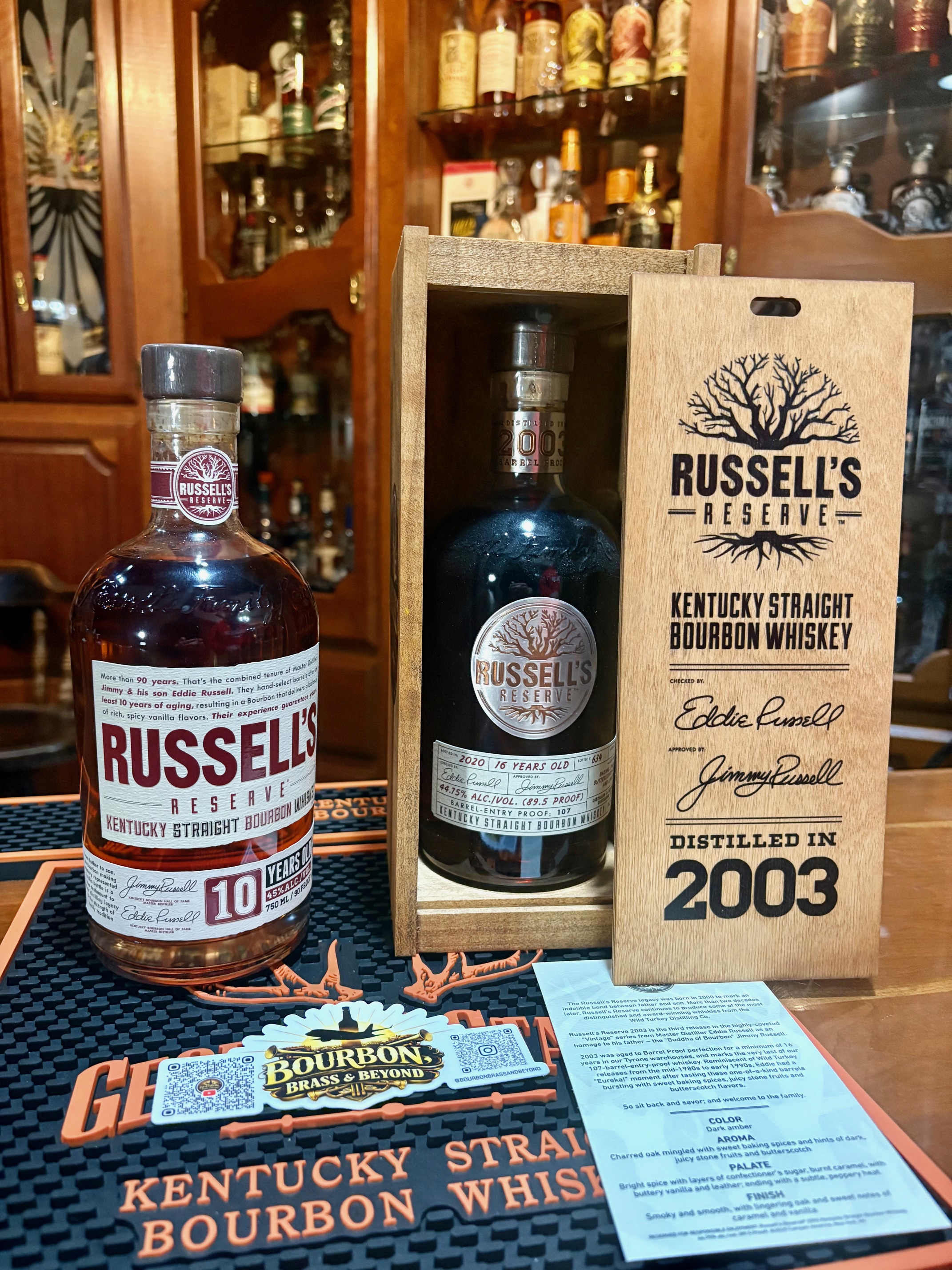
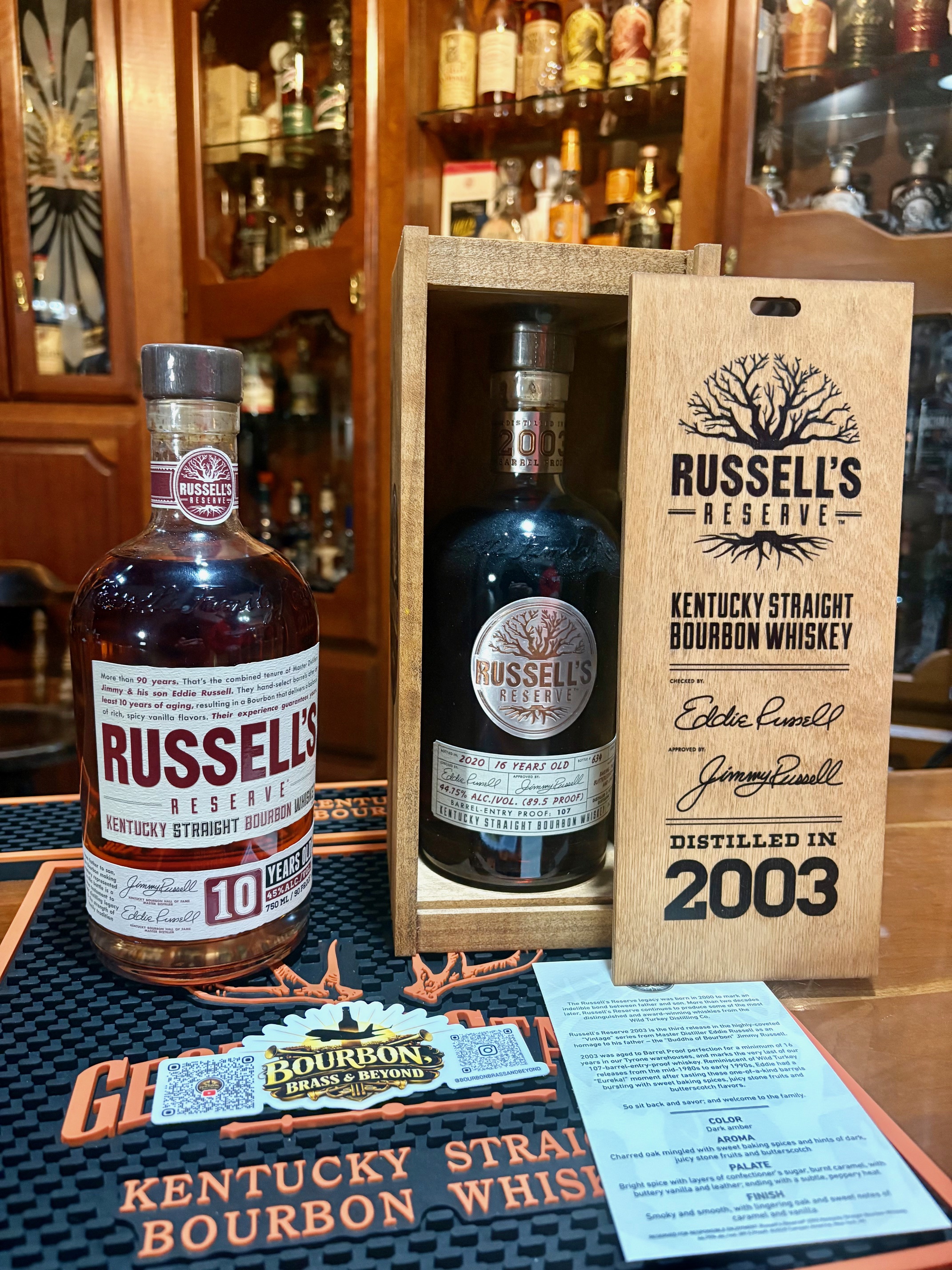
Facing off against this vintage warrior were two modern contenders from the Russell's Reserve line: a Russell's Reserve 10 Year Old and a more mature Russell's Reserve 16 Year Old. Russell's Reserve, of course, carries the distinguished legacy of the Russell family, a lineage deeply intertwined with the history of Wild Turkey itself. These bottlings represent a more contemporary approach to bourbon production, often emphasizing meticulous barrel selection and a refined palate. The 10-year-old, a staple in many whiskey collections, offers a benchmark for modern Wild Turkey craftsmanship, while the rarer 16-year-old promised an even deeper, more aged profile, bottled in 2020.
The stark contrast between the 1983 Wild Turkey and the Russell's Reserves immediately set the stage for an exploration of how a distillery's identity can evolve. We were comparing not just different ages, but potentially different philosophies and production methodologies. This wasn't just about finding the "best" whiskey; it was about understanding the journey of a brand and the factors that shape its liquid over time.
Unpacking the Proof: How Barrel Entry and Bottling Strength Shape Flavor
One of the most fascinating divergences between the 1983 Wild Turkey and its modern Russell's Reserve counterparts lies in their proof. The 1983 Wild Turkey 101, as its name suggests, came in at a robust 101 proof (50.5% ABV). This higher proof at bottling is often indicative of a certain style of bourbon production, one that aims to preserve more of the barrel's influence and the spirit's inherent character. It suggests a spirit that was likely entered into the barrel at a lower proof and bottled without significant dilution, allowing for a more concentrated flavor profile.
The Russell's Reserve 10 Year Old, on the other hand, typically comes in at 90 proof (45% ABV). This lower bottling strength often leads to a smoother, more approachable sipper. It indicates a spirit that has been diluted more significantly before bottling, a common practice to achieve a desirable balance of flavor and drinkability for a broader audience. The Russell's Reserve 16 Year Old, bottled in 2020, presented a slightly different profile at 89.5 proof (44.75% ABV). While very close to the 10-year-old, this marginal difference, combined with the extra six years of aging, would undoubtedly contribute to distinct nuances.
The conversation around proof extends beyond just the numbers on the bottle. It touches upon the barrel entry proof (BEP) and the impact of evaporation over time, often referred to as the "angel's share." A higher BEP can lead to a more intense extraction of wood compounds, potentially resulting in a bolder, more tannic bourbon. Conversely, a lower BEP might lead to a more mellow, fruit-forward spirit. The significant gap in bottling proof between the 1983 Wild Turkey and the Russell's Reserves hinted at potential differences in their original mash bills, yeast strains, and most importantly, their barrel entry proofs. This comparison underscored how decisions made at the outset of a whiskey's life profoundly influence its final character.
Aromatic Adventures: From Dusty Nostalgia to Modern Nuances
The nose of a whiskey is often the first handshake, a prelude to the flavors that will follow. Our 'Whiskey Wars' finale offered a captivating study in aromatic contrasts. The 1983 Wild Turkey 101 was, as expected, a trip down memory lane. The "dusty" notes often associated with older, well-aged bourbons were present, mingled with a rich tapestry of dried fruit, oak, and perhaps a hint of leather or tobacco. There was a certain gravitas to its aroma, a sense of history and a complexity that spoke of decades spent in wood.
The Russell's Reserve bottlings, while also complex, presented a more contemporary olfactory profile. The 10-year-old offered a vibrant bouquet, likely featuring notes of caramel, vanilla, and perhaps a touch of citrus or rye spice, depending on the specific batch. It was clean, inviting, and showcased the bright, youthful energy of a well-executed 10-year-old bourbon. The 16-year-old, with its extended maturation, likely presented a more subdued yet deeper aroma. We anticipated notes of dark fruit, perhaps dried cherries or figs, intertwined with richer oak, toasted nuts, and a more developed sweetness. The difference in aroma between the 10 and 16-year-olds highlighted the transformative power of extended aging, revealing how the harsher edges soften and the deeper, more integrated notes emerge.
The "plastic fighting" and "post-crack aroma" mentioned in the show notes also speak to the visceral, almost primal experience of nosing whiskey, especially those with a higher proof. The volatility of the alcohol can release a burst of aromatic compounds, and the lingering scent after the initial intensity is what often tells the deeper story. Comparing these aromatics allowed us to appreciate the distinct personalities of each whiskey, from the vintage allure of the old Wild Turkey to the refined elegance of the Russell's Reserves.
The Taste Test: Comparing the 10-Year and 16-Year Russell's Reserves
While the 1983 Wild Turkey provided a fascinating historical reference point, the true modern contenders in our tasting were the Russell's Reserve 10 Year and 16 Year Old. The 10-year-old, typically bottled at 90 proof, presented itself as a wonderfully balanced bourbon. The palate likely delivered a pleasing sweetness with notes of caramel and vanilla, balanced by the signature rye spice often found in Wild Turkey products. The texture was probably medium-bodied, leading to a finish that was satisfying but perhaps not exceptionally long.
The 16-year-old, however, was where things got truly interesting. Bottled at a slightly lower 89.5 proof, its extended aging was expected to manifest in a more profound way. We anticipated a richer, more viscous mouthfeel, a testament to the concentration of flavors through evaporation. The tasting notes likely leaned towards darker fruits like dried cherries, raisins, and possibly even plum. The oak influence would be more pronounced, but ideally, it would be well-integrated, offering notes of toasted oak, dark chocolate, and perhaps a hint of leather. The "less bite, more finesse" description from the show notes perfectly captures the essence of a well-aged, lower-proof bourbon. The 16-year-old was designed to be a smooth operator, where the maturation process had tamed any youthful brashness, revealing a sophisticated and layered flavor profile.
The comparison between these two Russell's Reserve expressions was crucial. It demonstrated that within the same distillery family, different age statements can offer vastly different experiences. The 10-year-old represents a benchmark of modern Wild Turkey DNA, while the 16-year-old showcases the potential for depth and complexity that comes with patient maturation. The subtle difference in proof between them, coupled with the significant age gap, made for a fascinating exploration of how these variables interact.
The Aging Game: What Time Does to Bourbon - Bite vs. Finesse
The core of our 'Whiskey Wars' finale revolved around the undeniable impact of aging on bourbon. The 1983 Wild Turkey, a testament to an extended maturation period (though its exact age at bottling from that year is subject to discussion and often older than the stated year on the label), offered a glimpse into what time can do. It was likely less about a sharp, biting proof and more about a mellowed, integrated character. The harsher notes of youth would have been smoothed out, allowing the deeper, more complex flavors of oak, caramel, and dried fruit to come to the fore.
The Russell's Reserve 10 Year Old represented a younger, yet still well-aged, bourbon. Its "bite," if any, would come from the higher proof and less time in the barrel. It's a bourbon designed to be approachable and enjoyable, with bright flavors that are still developing. The 16-year-old, on the other hand, exemplified the finesse that comes with significant aging. The extended time in the barrel allows the spirit to interact more deeply with the wood, extracting a wider array of complex compounds. This interaction, coupled with the evaporation of alcohol and water, results in a more concentrated and sophisticated flavor profile. The "less bite, more finesse" mantra is particularly relevant here. The intense oak and spice notes that might be aggressive in a younger bourbon are softened and integrated into a harmonious whole. The tannins from the oak, rather than being harsh, contribute to a pleasant chewiness and depth.
The show notes' mention of "smoother, darker char" is also key. As bourbon ages, the char on the inside of the barrel, which imparts color and flavor, becomes more integrated and less aggressive. This leads to a smoother, richer flavor profile that is less likely to be dominated by woody tannins. This aging game is a delicate dance between the spirit and the wood, a process that rewards patience and careful observation.
The Champion Revealed: Declaring a Winner in Flavor Longevity and Overall Profile
After much deliberation, tasting, and thoughtful comparison, it's time to declare a champion in our 'Whiskey Wars' finale. The 1983 Wild Turkey 101, while a historical marvel and a testament to a bygone era of bourbon production, presented a different kind of experience. Its charm was in its rarity and its nostalgic allure. The Russell's Reserve 10 Year Old is a fantastic, everyday sipper, offering a reliable and enjoyable taste of modern Wild Turkey.
However, when it comes to flavor longevity and an overall refined profile that stands the test of time, the champion of this particular showdown is the **Russell's Reserve 16 Year Old**. The extended aging had worked its magic, creating a bourbon that was incredibly smooth, deeply complex, and remarkably well-balanced. The flavor notes lingered on the palate, evolving and revealing new nuances with each sip. The oak was present but beautifully integrated, adding layers of depth without overpowering the fruit and caramel characteristics. The "long-lasting flavor" that we sought was most evident here. It wasn't just about the initial impact; it was about the journey the whiskey took you on, from the first sip to the lingering finish.
While the 1983 Wild Turkey offered a unique window into the past, and the 10-year-old Russell's Reserve provided a benchmark of modern excellence, the 16-year-old Russell's Reserve demonstrated the pinnacle of what patient maturation can achieve in the Wild Turkey lineage. It embodied the "less bite, more finesse" principle, offering a sophisticated and deeply satisfying drinking experience that truly stood out.
Final Thoughts: Why Every Bottle is a Winner in its Own Right
As we conclude our recap of the 'Whiskey Wars' finale, it's important to remember that in the world of whiskey, "winning" is often subjective. The 1983 Wild Turkey 101, the Russell's Reserve 10 Year Old, and the Russell's Reserve 16 Year Old each offered something unique and valuable. The vintage Wild Turkey was a tangible piece of history, a reminder of how far bourbon has come. The Russell's Reserve 10 Year Old is an accessible, delicious, and reliable staple that represents the best of modern Wild Turkey production.
And, of course, the Russell's Reserve 16 Year Old emerged as our champion for its exceptional flavor longevity and refined profile. It showcased the power of patience and expert maturation, delivering a complex and deeply satisfying experience. But the true beauty of this tasting was in the comparison, the understanding of how different eras, proofs, and aging strategies contribute to the vast and wonderful world of bourbon.
Each bottle tells a story, and each sip is an opportunity to learn and appreciate. So, whether you're chasing down a rare vintage or enjoying a readily available classic, remember that every pour is a chance to explore. Thank you for joining us on this journey, and until next time, keep sipping and discovering!

Pilot / Dad / Trumpeter / Contract Negotiator / Martial Artist
In his 26th year as an airline pilot, Dan resides in Youngstown, Ohio with his high school sweetheart Stephanie. Combined they have 5 kids (teenagers...). They enjoy travel as a family, and as a couple. Dan has had a bourbon affinity since smelling his Grandfather's JW Dant and Grapefruit soda as a kid. Dan started collecting bourbon in 2015. He has been actively involved in Martial Arts since he was a kid and has Black Belts in two different styles. Dan still plays trumpet. Originally he went to college for music at Ohio University, but after his sophomore year decided he would much rather spend 3 hours in an airplane instead of a practice room. He still helps teach high school band camps, and has assisted with 5th and 6th grade Trumpet, Low Brass, and Percussion. Dan has been a Pilot Union Representative, Contract Negotiator, Merger Specialist, and Contract Compliance Administrator for over 20 years. Dan received the President's Lifetime Achievement Volunteer Service Award in 2024.

Deep Dive into Ass Pocket Whiskey Lot 5: A 20-Year Tennessee Gem