A Deep Dive into Old Forester 117 High Angel's Share
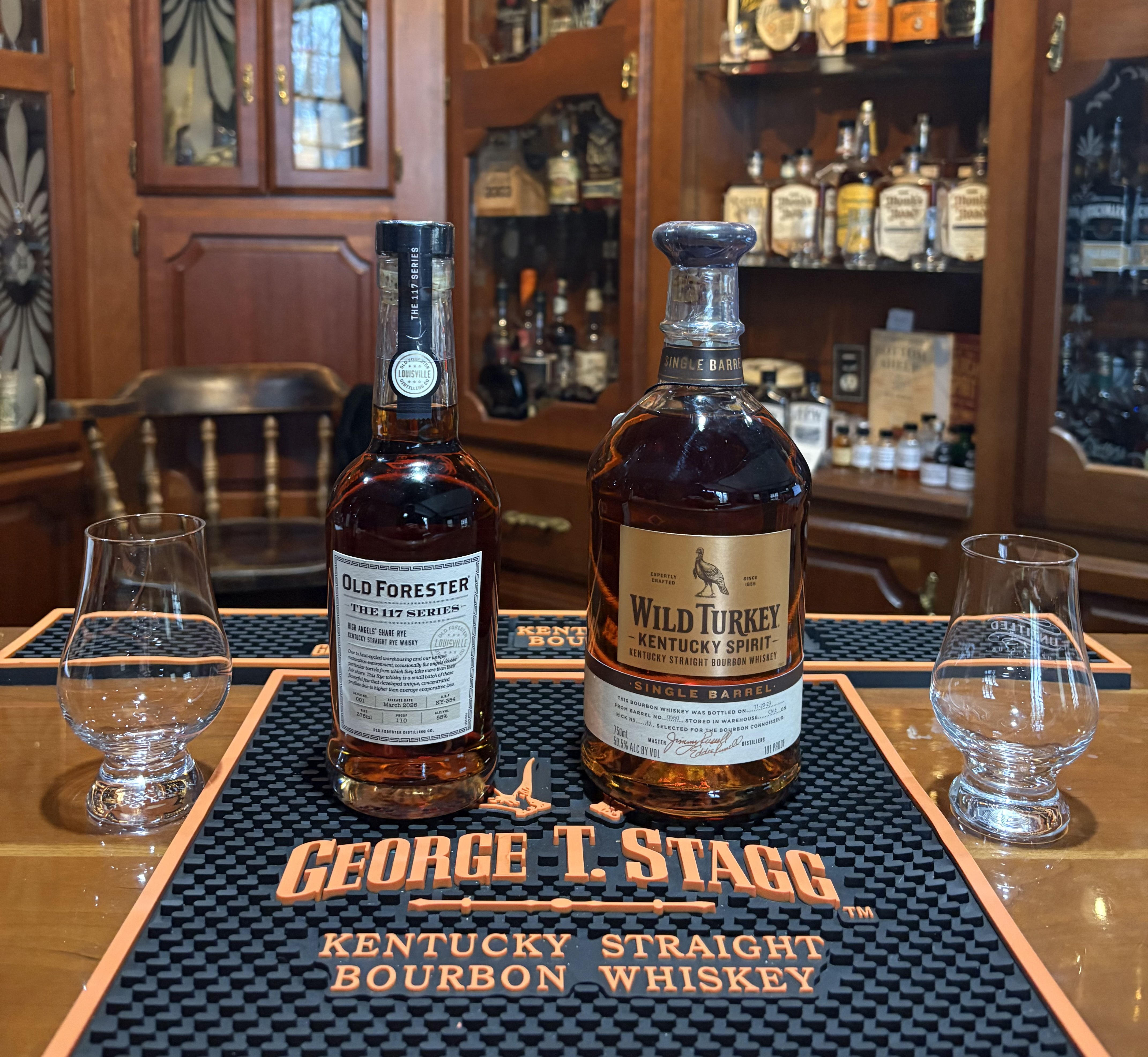
Welcome back to the blog, bourbon enthusiasts! In our latest podcast episode, Ep. 38, we delved into some exciting new releases, and today we're going to expand on one of those in particular: the Old Forester 117 High Angel's Share. This limited edition bourbon has generated quite a buzz, and for good reason. It's not just another bottle on the shelf; it represents a fascinating facet of bourbon production and a unique expression from a brand with a storied history. If you haven't had a chance to listen yet, I highly encourage you to check out the full discussion on our latest episode, New Release Old Forester 117 High Angels' Share and Wild Turkey Kentucky Spirit; Ep. 38. In this blog post, we're going to unpack everything you need to know about this intriguing release, from what "High Angel's Share" truly means to its distinct flavor profile and its place within the esteemed Old Forester family.
What Makes This Release Special: The 'High Angel's Share' Explained
The name itself, "High Angel's Share," is the most immediate indicator of what sets this bourbon apart. In the world of whiskey production, particularly bourbon, barrels are aged in warehouses where evaporation occurs over time. This evaporation is affectionately, or sometimes mournfully, referred to as the "angel's share." The angels, as the legend goes, get their portion of the spirit that evaporates through the wood of the barrel. This is a natural and unavoidable part of the aging process.
Now, when we talk about a "High Angel's Share," it implies that this particular release has experienced a significantly higher rate of evaporation during its maturation. What causes this? Several factors can contribute. The location of the barrels within the rickhouse is paramount. Warehouses have different temperature and humidity zones. Barrels stored on the upper levels, closer to the roof, tend to experience more extreme temperature fluctuations and higher overall temperatures. This leads to faster evaporation and a more concentrated spirit remaining in the barrel. Conversely, barrels on the lower levels, or in more temperate, humid areas, will see less evaporation and a more gradual maturation.
Another factor is the type of rickhouse construction. Open-air warehouses, or those with less climate control, will naturally have higher evaporation rates than tightly sealed, climate-controlled facilities. Old Forester, with its long history, likely utilizes a variety of aging environments, and this 117 release specifically highlights barrels that have resided in locations conducive to this accelerated evaporation. This means less liquid in the barrel at the end of its maturation, but what remains is a more intense, concentrated bourbon.
Maturation and Production Insights
The Old Forester 117 High Angel's Share isn't just about accelerated evaporation; it's about a deliberate selection process. While the exact warehouse locations and specific barrel strata are proprietary information, it's understood that these barrels were chosen for their unique maturation profile. This isn't a standard age-stated release, but rather a selection based on the impact of the aging environment.
Old Forester, being one of the oldest continuously distilled bourbon brands, has a deep understanding of how different barrel locations affect the final product. The 117 series, in general, is designed to showcase these nuances and experiments within their established production. This "High Angel's Share" bottling is a direct reflection of that philosophy. It suggests that the barrels were likely placed in hotter, drier parts of the rickhouse, possibly on higher floors, to encourage this heightened evaporation. This process concentrates the existing flavors and aromas, leading to a bolder, more robust whiskey.
The mash bill for Old Forester bottlings is typically consistent: 72% corn, 18% rye, and 10% malted barley. While the mash bill remains the same, the maturation is where the magic happens, and in this case, the accelerated maturation due to the high angel's share plays a crucial role in shaping the final flavor profile. It's a testament to the fact that while the ingredients are important, the journey the whiskey takes in the barrel is equally, if not more, significant. The concentration of the spirit means that the oak interaction is more intense, and the existing proof will likely be higher as less water evaporates alongside the alcohol.
Tasting Notes: Aroma, Palate, and Finish
Now, let's get to the part that excites most bourbon drinkers: the tasting notes. The "High Angel's Share" is designed to deliver a more concentrated and intense experience. When you nose this bourbon, you're likely to be met with a powerful aromatic profile. Expect notes of rich caramel, dark chocolate, and a pronounced oak presence. There might be hints of dried fruit, like raisins or prunes, a common characteristic of bourbons that have spent significant time in wood and experienced substantial evaporation. The higher proof, as a result of the concentrated spirit, will also contribute to a more robust and perhaps even slightly spicy aroma.
On the palate, the concentration continues to shine. The flavors are likely to be bolder and more layered. You'll probably encounter a rich sweetness, but it won't be cloying. Instead, it will be balanced by a pleasant spiciness from the rye and the intensified oak influence. Think of notes like toasted almonds, brown sugar, and perhaps even a touch of leather or tobacco. The intensity of the oak can sometimes lead to a slightly bitter note, but in a well-executed bourbon like this, it should be integrated and add complexity rather than detract. The higher proof will make its presence known, offering a warming sensation that is both satisfying and indicative of the bourbon's potency.
The finish of the Old Forester 117 High Angel's Share is expected to be long and lingering. The concentrated flavors and higher proof ensure that the palate remains engaged for an extended period. You'll likely experience a pleasant warmth that evolves with notes of dark fruit, spice, and a final, satisfying oakiness. It’s the kind of finish that invites another sip, allowing you to further explore the depths of its character. The oak notes might become more pronounced as the finish develops, but they should be well-integrated, providing a sophisticated conclusion to each taste.
Comparison within the Old Forester Lineup
Old Forester boasts an impressive and diverse lineup, ranging from their classic Old Forester 100 proof to the beloved Birthday Bourbon and the single barrel offerings. Where does the 117 High Angel's Share fit in? It offers a unique perspective that bridges the gap between their more readily available bottlings and their most exclusive releases.
Compared to the standard Old Forester 100 proof, the 117 High Angel's Share is likely to be significantly more intense and complex. The 100 proof is a fantastic daily drinker, offering a solid Old Forester profile, but it lacks the concentrated character that comes from the accelerated evaporation. The Birthday Bourbon, while also a limited edition and often higher proof, focuses on a specific year's bottling, offering a snapshot of that particular aging cycle. The 117 High Angel's Share, on the other hand, specifically highlights the impact of *how* the bourbon matured, regardless of its specific age statement.
When compared to Old Forester's single barrel offerings, the 117 High Angel's Share can be seen as a curated selection of barrels that share a common characteristic – their elevated angel's share. Single barrels offer a true barrel-to-bottle experience, showcasing the individuality of each cask. This release, however, is a blend of barrels that have undergone a similar, extreme maturation process, resulting in a cohesive and amplified flavor profile that speaks to a specific aging phenomenon within the Old Forester rickhouses.
Nick's Experience and Takeaways from Ep. 38
During our discussion on Ep. 38, my co-host Nick and I spent considerable time dissecting the Old Forester 117 High Angel's Share. Nick, with his discerning palate, was particularly impressed by the depth and richness of this bourbon. He highlighted the assertive oak presence, not in an overwhelming way, but as a well-integrated component that added significant complexity. He noted how the higher proof, while certainly present, didn't dominate the other flavors, but rather amplified them, creating a more impactful and memorable tasting experience.
One of the key takeaways from our conversation was the appreciation for Old Forester's willingness to experiment and showcase different aspects of their bourbon-making process. The 117 series is a perfect example of this, allowing enthusiasts to explore the nuances of Old Forester's whiskey beyond their core offerings. Nick emphasized how this release provides a tangible example of how environmental factors in the rickhouse can dramatically alter the final spirit, even when using the same mash bill and general production methods.
We both agreed that this isn't just a novelty; it's a testament to the craft and expertise of the Old Forester distilling team. They are able to identify barrels that have undergone this unique maturation and present them in a way that is both accessible and remarkable. The conversation in Ep. 38 really underscored the idea that bourbon appreciation is a journey of discovery, and bottles like the 117 High Angel's Share are exciting milestones on that path.
Why This Bourbon Stands Out
In a market flooded with new bourbon releases, the Old Forester 117 High Angel's Share manages to carve out its own unique niche. Its standout quality lies in its narrative and its tangible representation of a specific production phenomenon. It’s not just another high-proof bourbon; it’s a bourbon that tells a story of intense aging and the resulting concentration of flavor. This focus on the "angel's share" adds a layer of intrigue and educational value for bourbon drinkers who are interested in the science and art behind their favorite spirit.
Furthermore, it reinforces Old Forester's legacy as a brand that respects tradition while embracing innovation. They are not afraid to highlight the less glamorous, yet essential, aspects of bourbon maturation. This release is a celebration of the barrels that have given more of themselves to the aging process, resulting in a spirit that is richer, bolder, and more profound. It's a testament to the fact that sometimes, the most exciting discoveries come from the most unexpected places within the distillery and the aging warehouses.
Conclusion: Is Old Forester 117 High Angel's Share Worth It?
So, after this deep dive, the burning question remains: is the Old Forester 117 High Angel's Share worth your hard-earned money? Based on our exploration and the experiences shared in Ep. 38, the answer is a resounding yes, especially for those who appreciate complexity and a well-told story in their bourbon.
This release offers a distinct flavor profile that is more concentrated and intense than many other Old Forester offerings. It provides a unique opportunity to experience the impact of accelerated maturation and the resulting amplified flavors and aromas. If you're a fan of Old Forester, or if you're looking to explore a bourbon that showcases the fascinating intricacies of barrel aging, then this is a bottle you should certainly seek out. It’s a well-crafted, thoughtfully presented bourbon that offers a lot to unpack with each sip. It’s more than just a limited edition; it’s a specific expression of Old Forester’s dedication to quality and their willingness to share the nuances of their incredible distilling history with us. So, grab a bottle, pour a dram, and prepare to be impressed by the concentrated magic of the "High Angel's Share."
Pilot / Dad / Trumpeter / Contract Negotiator / Martial Artist
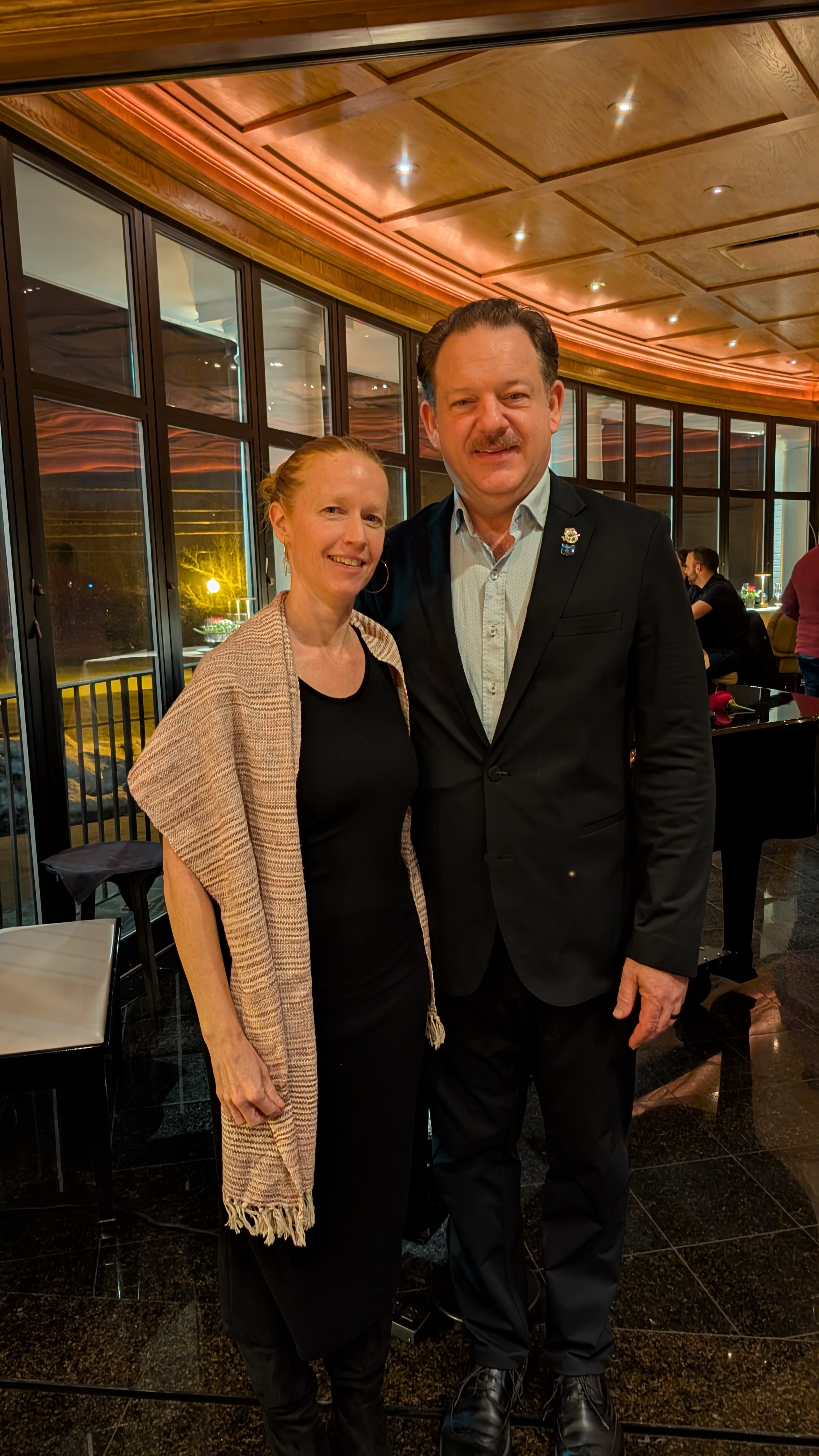
In his 26th year as an airline pilot, Dan resides in Youngstown, Ohio with his high school sweetheart Stephanie. Combined they have 5 kids (teenagers...). They enjoy travel as a family, and as a couple. Dan has had a bourbon affinity since smelling his Grandfather's JW Dant and Grapefruit soda as a kid. Dan started collecting bourbon in 2015. He has been actively involved in Martial Arts since he was a kid and has Black Belts in two different styles. Dan still plays trumpet. Originally he went to college for music at Ohio University, but after his sophomore year decided he would much rather spend 3 hours in an airplane instead of a practice room. He still helps teach high school band camps, and has assisted with 5th and 6th grade Trumpet, Low Brass, and Percussion. Dan has been a Pilot Union Representative, Contract Negotiator, Merger Specialist, and Contract Compliance Administrator for over 20 years. Dan received the President's Lifetime Achievement Volunteer Service Award in 2024.
Elijah Craig: A Legacy of Quality from 18 Year to Barrel Proof